Counting the waves…
Counting the waves…
A refined fusion of water purity, environmental stability, and communal vibrancy for Playa El Manglar de Uchire.
View MethodologyAnalyzed via live sensors and environmental data.
Wave height, wind, and atmospheric stability.
Live footfall and crowd balance metrics.
Community reviews and curated sentiment.
“Call it a beach only in the loosest sense—this is where land and water negotiate through mangrove rather than sand. You'll navigate roots instead of walking open shore, watching the light filter green through leaves…”
Limited recent visitor reports — live OBI telemetry is your best guide for current conditions.
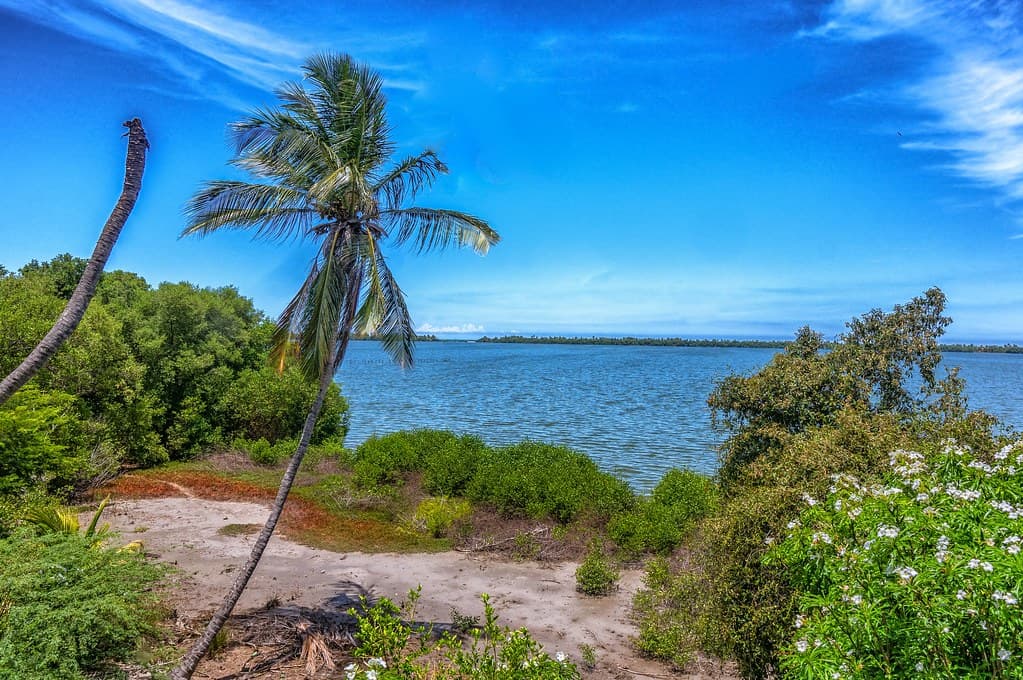
The mangroves announce themselves first by smell—a rich, organic scent of decomposition and salt, not unpleasant but distinctly alive. You approach the water's edge through a tangle of aerial roots, some thick as your forearm, that arch and plunge into water the color of weak tea. This isn't a beach for spreading towels; it's an ecosystem that happens to include a shoreline, and you're entering on its terms.
The water here sits calmer than the open coast, protected by the mangrove buffer and sheltered from direct wave action. It runs shallow and warm, with a soft mud bottom that squishes between your toes and releases tiny bubbles. Crabs the size of your thumbnail scatter at your approach, vanishing into root crevices. Above, in the mangrove canopy, you might spot a green heron frozen in hunting position, waiting for fish with supernatural patience.
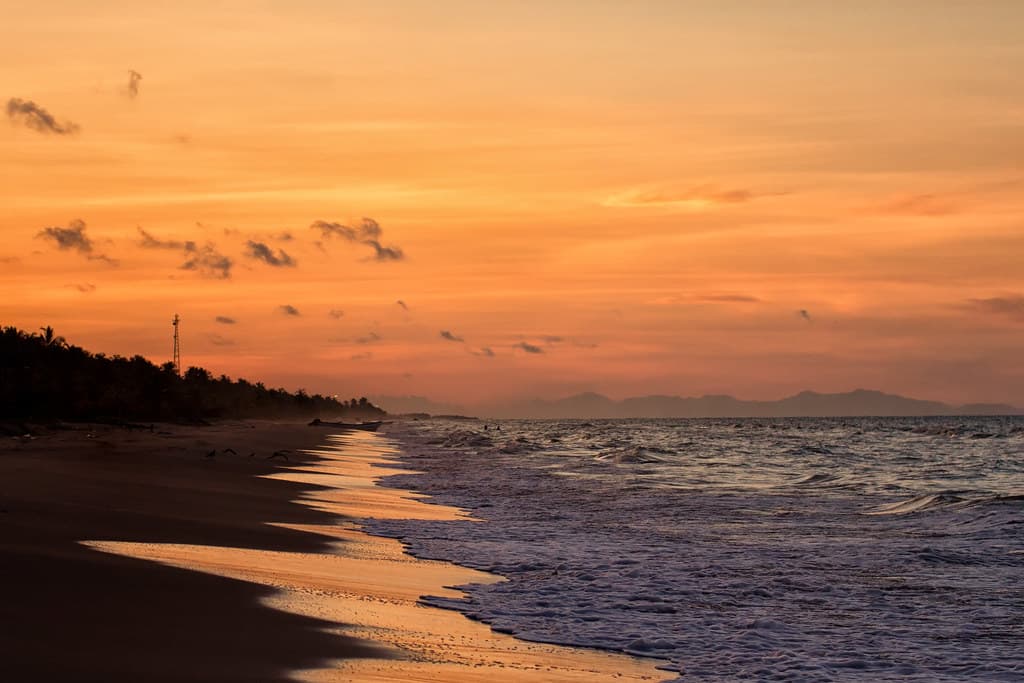
Sunset reflecting on wet sand
Person walking on a sand spit
Arching patterns and reflections
Navigate through root channels
Light through mangrove lattice
Prime Visitation
Best Weather | Less Crowds
Where it is
Playa El Manglar de Uchire
San Juan de Capistrano, Anzoátegui, Venezuela
10.108300°, -65.407200°
Weather
Loading…
Swell
—
Temp
Warm · Restorative
UV Index
Moderate
Wind
—
Tidal State
Last known
Max Sunlight
—
Ideal Shade
—
Jan - Dec (Peak)
May - Nov (Off-season)
Best Weather | Less Crowds
Select a category to load nearby places.
Unlock restaurants, luxury stays and curated maritime experiences within 2km
Swimming at Playa El Manglar de Uchire requires caution due to its mangrove-lagoon environment. Waters are typically calm and shallow in lagoon areas, but mangrove roots and soft muddy bottoms make some sections unsuitable for traditional swimming. The appeal is more ecological than recreational bathing. Check for sharp roots, marine life sheltering in mangroves, and varying water clarity. Wading and wildlife observation are often more appropriate activities than swimming. As with all remote Venezuelan beaches, visit with companions, stay alert to surroundings, and prioritize safety. This is primarily a nature destination rather than a swimming beach.
The dry season from December to April offers the best conditions for visiting this mangrove shoreline, with less rain making access easier and wildlife viewing more comfortable. Early morning hours provide excellent opportunities for bird watching, as mangrove ecosystems attract diverse species. Sunset visits are particularly rewarding, as the beach's tags suggest—mangrove silhouettes create dramatic evening scenery. Fewer crowds occur year-round due to the beach's hidden nature and ecological character. For photography and nature observation, weekdays during dry months are optimal. Bring insect repellent regardless of season, as mangroves can harbor mosquitoes.
Playa El Manglar de Uchire is located near San Juan de Capistrano in Anzoátegui state, within the Boca de Uchire transition coast area. Access requires traveling from regional centers like Barcelona or Puerto La Cruz eastward along coastal routes toward Píritu, then navigating to San Juan de Capistrano. Because this mangrove beach is often categorized as wetland rather than beach, it may lack clear signage—ask locals for guidance. Roads can be challenging, possibly unpaved. A private vehicle is recommended. The final approach might involve walking through natural terrain. Consider hiring a local guide familiar with mangrove areas.
Facilities near Playa El Manglar de Uchire are extremely limited due to its remote, ecological nature. San Juan de Capistrano and nearby Boca de Uchire may have very basic local food options—small eateries serving traditional coastal Venezuelan cuisine—but availability is unpredictable. Always bring your own food, water, and supplies when visiting. Accommodations are sparse; you might find simple rooms in local homes or basic posadas in the area, suitable for budget travelers. Many visitors make this a day excursion from larger towns with better infrastructure. The experience is about nature rather than amenities, so plan accordingly with self-sufficiency in mind.
Playa El Manglar de Uchire's unique mangrove-fringe shoreline creates a distinctive ecosystem rarely categorized as traditional beach. This ecological character attracts nature enthusiasts interested in mangrove wildlife, bird watching, and coastal wetland observation rather than conventional beach activities. The interplay between mangroves, lagoon waters, and coastal environment creates scenic beauty, especially at sunset when reflected light filters through vegetation. Its classification as wetland by many databases means it remains genuinely hidden from typical beach seekers, ensuring tranquility. This destination appeals to eco-travelers and photographers seeking unspoiled natural landscapes and biodiversity rather than swimming and sunbathing.
Photos