

The creek arrives without fanfare, a ribbon of clear water no wider than a yoga mat, braiding across the beach in shallow rills before vanishing into the surf. During the dry months it disappears entirely, leaving only a damp depression; in the wet season it runs ankle-deep, cool from its passage through the coastal forest. You wade across and feel the temperature drop five degrees, taste the mineral tang of mountain runoff, then step back into the Caribbean's bath-warm embrace.
“The only section of Bahía de Cata where you can rinse in mountain-cold freshwater without leaving the beach, a secret known mostly to locals who value the creek's shaded privacy.”
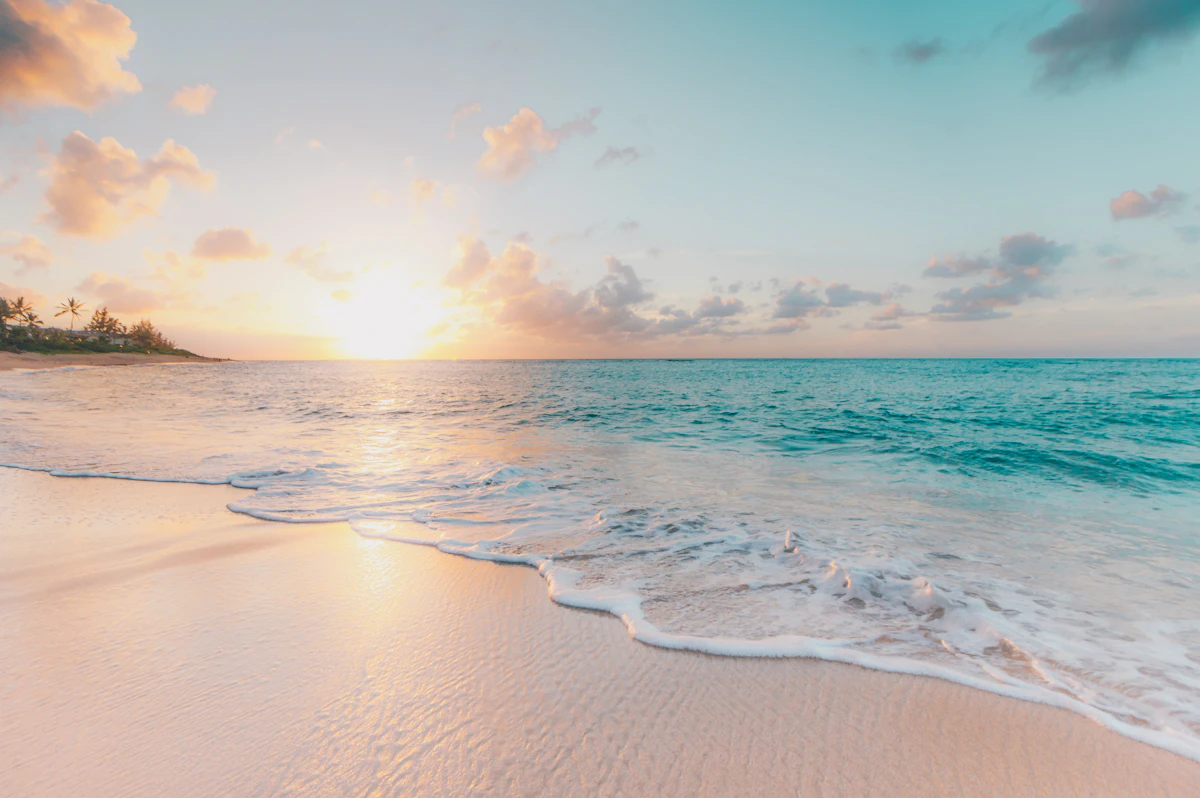 Credit: Unsplash
Aerial view of turquoise tropical bay
Palms lean seaward here, their trunks scrolled with initials and hearts carved by decades of visitors. Osprey nests crown the tallest fronds—shaggy platforms of sticks and seaweed—and you watch the raptors hover above the surf, then plunge talons-first after needlefish. The beach curves in a gentle northern hook, less crowded than Cata proper, though weekends bring families who spread beneath the almond shade and grill chicken on portable grills fashioned from oil drums.
Sunbathing here means surrendering to the sand's soft give, its warmth penetrating shoulder blades and calves while the creek's outflow cools your feet. The water offshore runs shallow for thirty meters, rippled turquoise over sand, before dropping off where the rocks begin. Mornings bring the clearest light, the sun still low enough to turn the creek's mouth into a lens, magnifying pebbles and darting minnows. By afternoon the offshore breeze kicks up, rattling the palms, and the creek's flow stutters and surges with the tidal pulse.


