
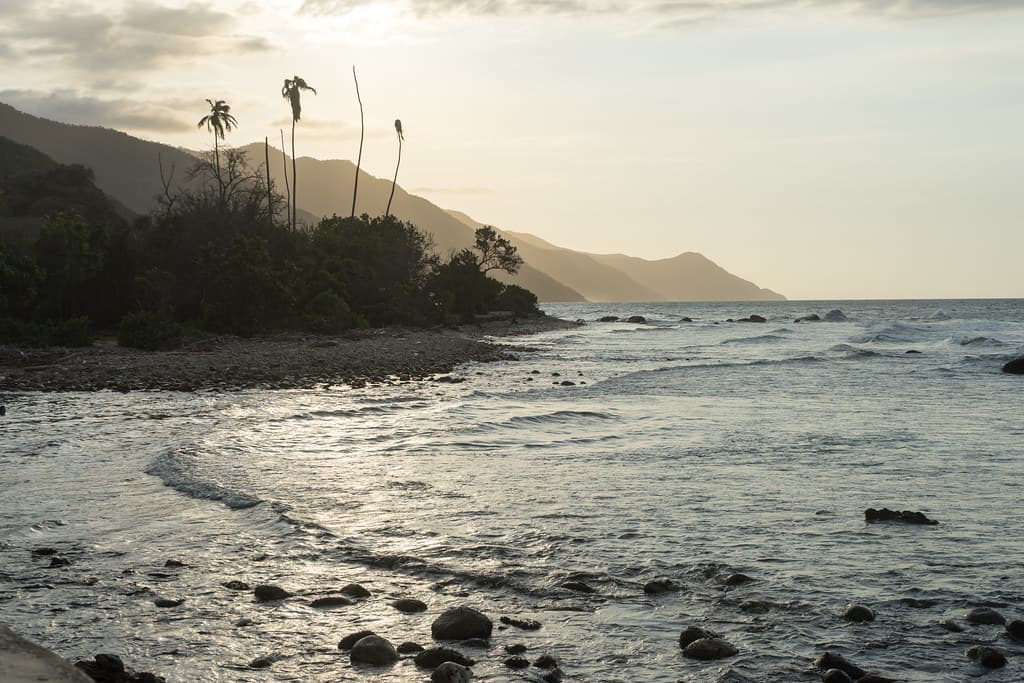
The walk from the main beach takes fifteen minutes over increasingly rocky terrain, and with each step, the noise fades—no drums, no children's laughter, just wind and waves striking stone. Punta Brava earns its name: the point catches swells at angles that send spray ten feet into the air, misting the black rocks with salt that dries white in the sun. You'll want sturdy shoes; the volcanic shelves are sharp and slick with algae.
“The only accessible rocky headland along Cuyagua's predominantly sandy coastline, offering geological drama absent from the main beach.”
 Credit: Flickr
Playa Punta Brava de Cuyagua — photo by tesKing (Italy)
This isn't a swimming beach—the currents are too aggressive, the rocks too unforgiving. But if you're seeking perspective, few spots along this coast deliver it better. Perch on the higher outcrops and watch frigatebirds ride thermals above the breakers. At low tide, the pools reveal ecosystems in miniature: anemones pulsing, small fish darting between crevices, hermit crabs conducting their endless shell exchanges.
Sunset transforms the headland into a theater of color. The western exposure means you get the full spectrum—tangerine bleeding into magenta, silhouetting the palms on the ridge behind you. Bring nothing you can't carry easily; there are no facilities, no vendors, just raw coast and the understanding that some places resist commercialization simply by being inhospitable to crowds. That resistance is Punta Brava's greatest gift.


