

The descent from the mountain pass delivers you to a bay so symmetrical it seems designed rather than discovered. Forested ridges frame both sides of the crescent, their slopes dropping steeply to meet the sand. The water holds that particular Caribbean clarity where you can count rocks on the bottom from waist-deep, and the beach curves just enough that both ends remain visible from the center.
“No other beach in Aragua combines this accessibility, infrastructure, and dramatic natural setting in one location.”
 Credit: Unsplash
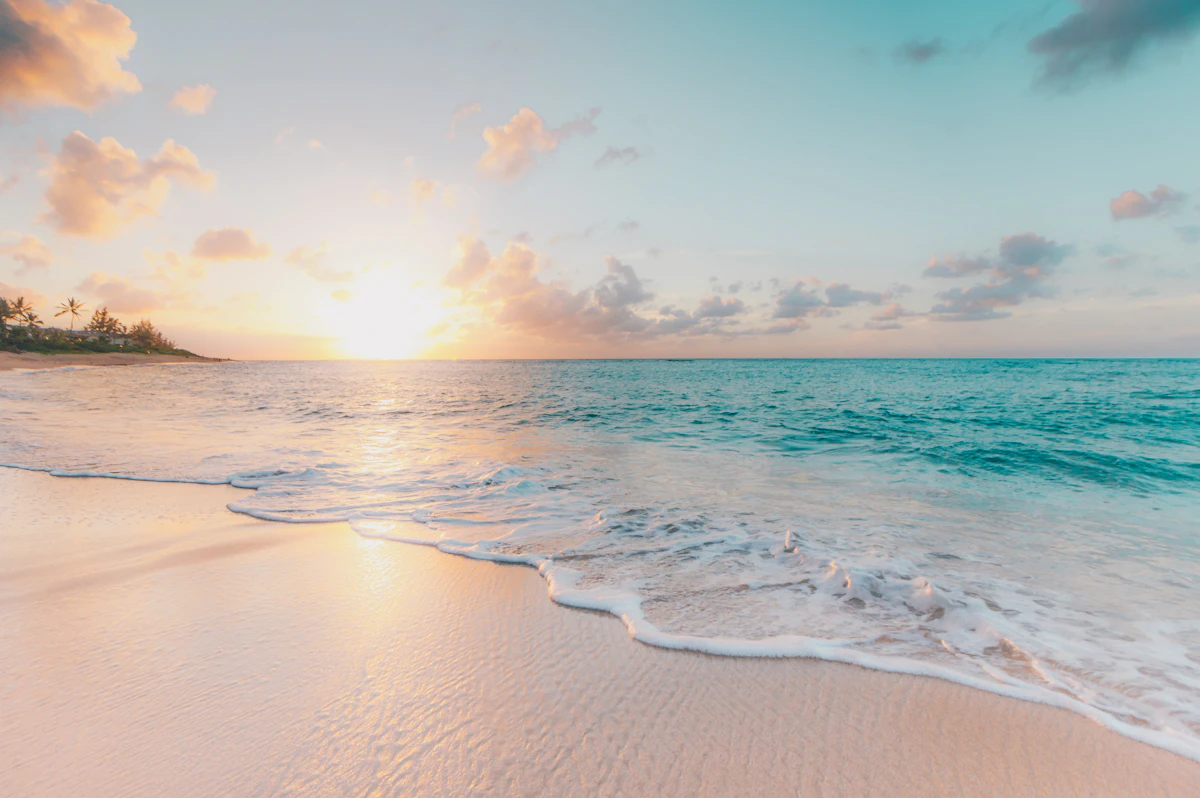
Aerial view of turquoise tropical bay
Palapas dot the upper beach, their palm-thatch roofs providing measured shade over plastic tables where families order fresh fish and cold beer. The sand stays firm and clean, packed tight by daily tides. You'll wade into bathwater warmth, the bottom a mix of sand and smooth stones that massage your feet. Pelicans patrol the bay in formation, occasionally folding their wings and dropping like thrown stones into the surface.
Weekends transform Cata into Venezuela's living room. Caracas empties onto this shore, filling every palapa, claiming every patch of sand. Music competes from different speakers, coolers overflow with ice and Polar beer, and the water becomes a floating social club. But arrive on a Thursday morning and you'll have the bay nearly to yourself—just the palapa operators sweeping sand and a handful of early swimmers testing the water temperature with their toes.


