
The malecón stretches along Puerto Colombia's waterfront like a worn boardwalk, concrete and sand blending into a space that belongs more to daily life than tourism. You walk past blue-painted fishing boats pulled onto the beach, their hulls scarred from years of hauling, nets spread across the sand for mending. Old men sit on overturned buckets, slicing open oysters with practiced flicks of their knives, offering them to passersby with a squeeze of lime.
“This is where Venezuelan coastal life happens in real time, unfiltered and unhurried, with the beach as backdrop rather than destination.”
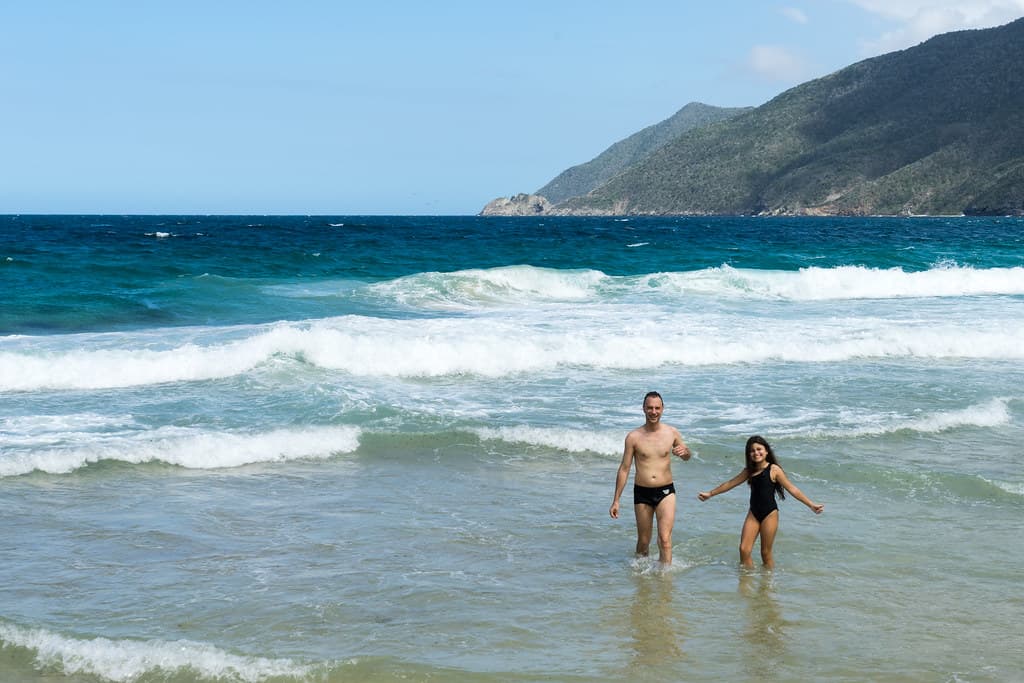 Credit: Flickr
Playa El Malecón — photo by tesKing (Italy)
By afternoon, school lets out and teenagers claim the seawall, legs swinging over the edge, sharing phones and bags of chicharrón. The beach itself is narrow, disappearing entirely at high tide, but the water is accessible, swimmable, forgiving. You wade in up to your knees, feeling the stones smooth under your feet, watching frigatebirds dive for sardines just beyond the boat channel. A vendor pushes a cart along the malecón, bell ringing, selling raspados in paper cones.
Sunset here is an event—not manufactured, just observed. Families arrive with folding chairs, couples lean against the railing, and fishermen time their departures to catch the last light. The mountains behind town glow purple, the water turns copper, and for twenty minutes everyone pauses. Then the streetlights flicker on and someone starts grilling corn from a cart, and the evening properly begins.


