

You'll recognize La Ceiba immediately by its namesake sentinel, a tree that has weathered decades of storms and salt spray. The beach extends east and west from this landmark, a modest crescent of tan sand that never quite empties of human presence. Locals treat the ceiba as a community center, meeting beneath its branches to share thermoses of coffee and discuss village matters while children play in the gentle surf.
“The centuries-old ceiba creates a sense of permanence and community focus that typical beach infrastructure can never replicate.”
 Credit: Pexels
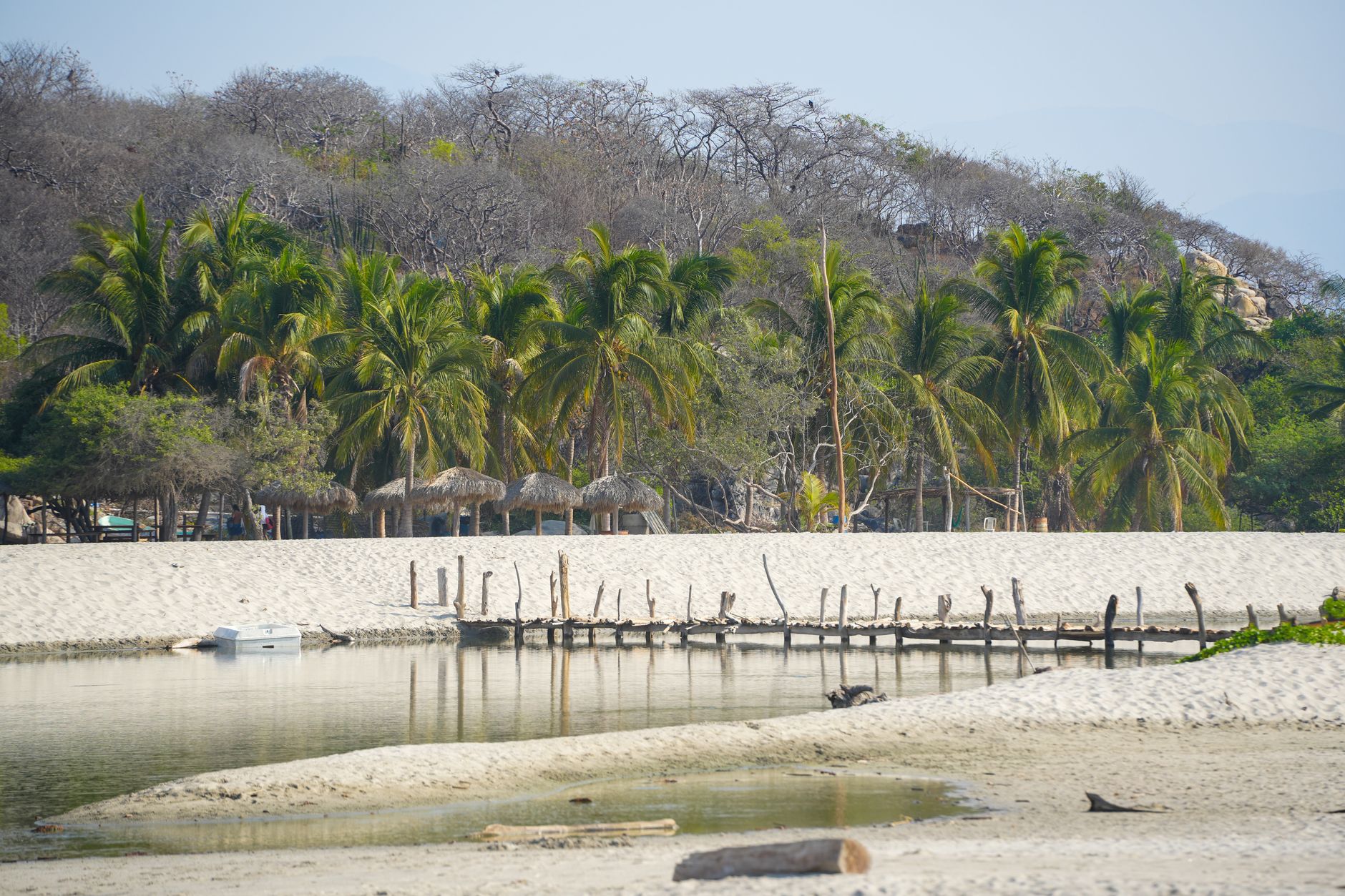
A serene tropical beach in Barra de la Cruz, Mexico featuring palm trees and a rustic footbridge.
The sand here carries more shell fragments than neighboring beaches, creating a slight crunch underfoot and a mosaic appearance when wet. The gulf's calm extends across the bay, ensuring that waves arrive as ripples rather than breakers. You can walk far into the water before losing your footing, the bottom sloping so gradually that snorkeling requires swimming several hundred meters offshore. Pelicans use the shallows as a fishing ground, diving from height and emerging with silver flashes of sardines.
Afternoon transforms the ceiba's shadow into the beach's most valuable real estate. You'll watch the shade creep eastward across the sand as the sun arcs overhead, locals adjusting their positions to remain within its cooling reach. Vendors appear with practiced timing, offering cold coconuts and bags of chicharrón just as the heat peaks. By sunset, the beach belongs to couples and solitary walkers, the ceiba's silhouette dramatic against the dimming sky, its branches hosting roosting birds that add their evening chorus to the sound of small waves.


