
Waikiki announces itself with noise before you even see the water—competing music from beach shacks, the referee's whistle from ongoing volleyball tournaments, vendors shouting their inventories of cold drinks and fried fish. You navigate through families camped beneath rented umbrellas, past teenagers tossing footballs, around couples sharing plastic chairs at the water's edge. The beach operates at full capacity most weekends, a democratic free-for-all where everyone claims their temporary territory on the sand.
“You're experiencing Venezuela's urban beach democracy at peak intensity—no exclusivity, no curation, just pure coastal accessibility embraced by an entire city.”
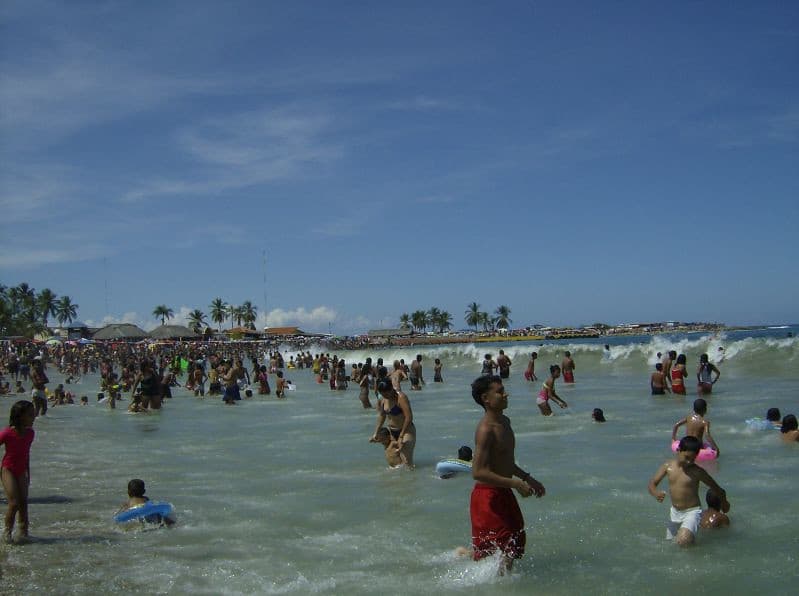 Credit: Flickr
Playa Waikiki — photo by Alexys (El Abuelo)
The shoreline curves gently here, creating a natural amphitheater of activity. You wade into water that stays shallow for twenty meters, warm and cloudy from constant foot traffic, perfectly safe for the toddlers doggy-paddling near their watchful mothers. Food vendors work the beach in shifts—empanadas in the morning, fruit salad by noon, grilled corn as afternoon turns golden. You buy a plastic cup of coconut water, overpay slightly because you're clearly not local, and settle into the rhythm of organized chaos that defines urban beach life.
By evening, the character shifts but the crowds remain. Teenagers commandeer the volleyball nets, their games growing more competitive as onlookers place informal bets. Sound systems amplify, coolers empty, and the beach takes on the atmosphere of a neighborhood block party that happens to front the sea. You're either delighted by the energy or exhausted by it—Waikiki doesn't accommodate ambivalence. This is Puerto Cabello showing you how its residents cool off, socialize, and claim their Caribbean coastline without apology or pretense.


