
The road narrows to rutted dirt as you approach Tiraya, a signal that you've left the peninsula's tourism corridor behind. The beach unfurls in both directions, wide enough that even on weekends you can walk a hundred meters and claim your own stretch of shore. The Caribbean here runs in shifting bands of jade and turquoise, the sandy bottom visible through water that warms quickly in the sun.
“This is the Paraguaná coast before tourism planning, a beach that functions first for fishermen, second for visitors.”
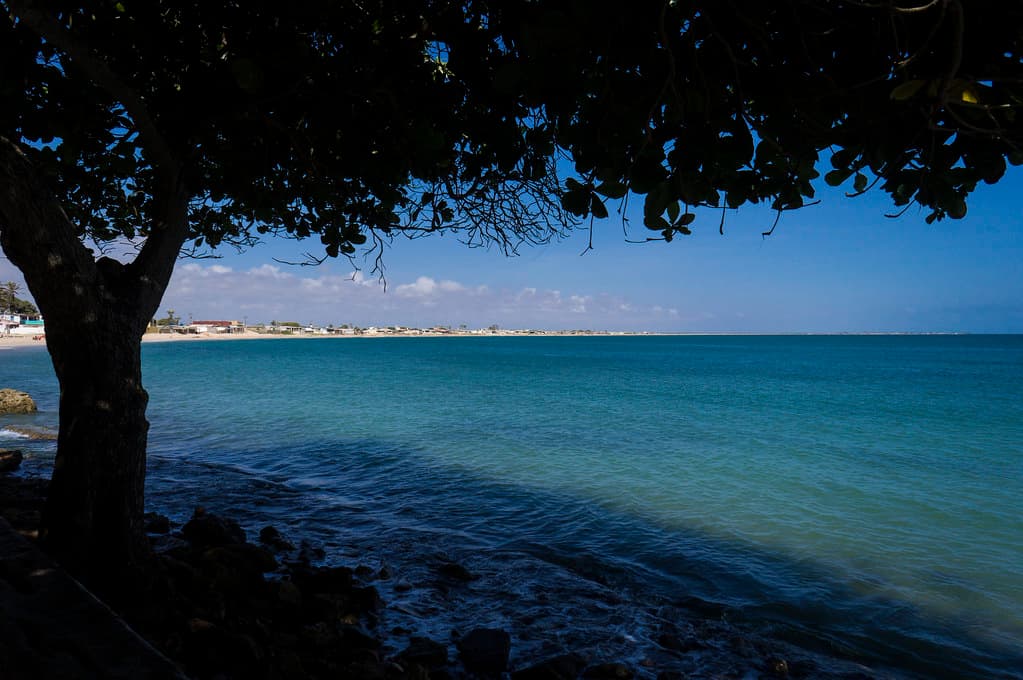 Credit: Flickr
Playa Tiraya — photo by danielito311
A handful of fishing families work this coast, their boats anchored offshore, their nets drying on wooden frames that lean against wind-bent dividivi trees. There's no restaurant infrastructure—a single tienda sells cold drinks and crackers from a house near the beach access. You'll hear the waves before the traffic, roosters before motorcycles.
Mid-afternoon brings the best light, when the sun illuminates the water's gradients and casts the surrounding arid hills in relief. Bring your own shade, your own snacks, your own sense of when to leave. Tiraya doesn't cater or accommodate—it simply exists, a functional beach for people who live with sand in their daily routines.


