

The point is where geography asserts itself—a rocky finger extending into the Caribbean, with water flowing past on both sides like a river around a stone. On the eastern flank, the current runs smooth and green; on the western, it rebounds off submerged ledges in standing waves and foam. You navigate the margin between, where tide pools collect in the basalt and the rocks still hold the day's heat after the sun has set.
“The only westward-facing point along this stretch of coast where unobstructed sunset views combine with active tidal currents that create exceptional birdwatching and wave dynamics.”
 Credit: Unsplash
Aerial view of turquoise tropical bay
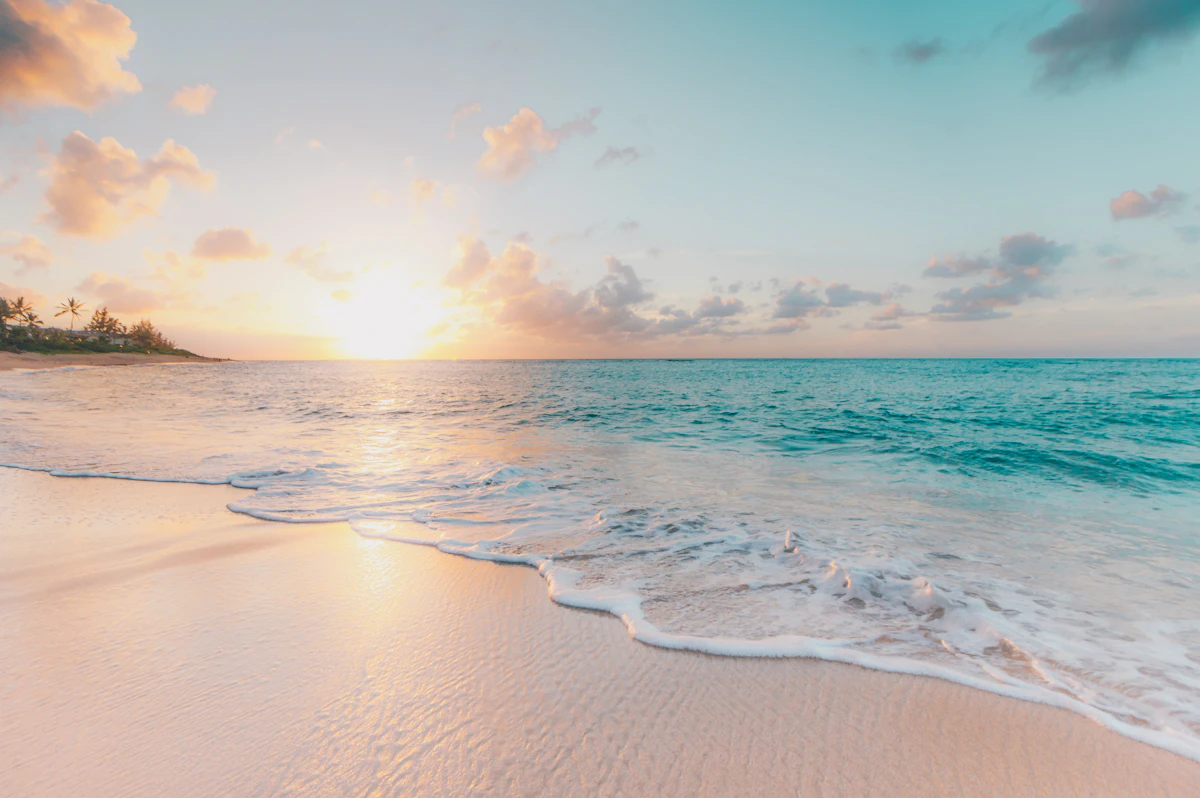
This isn't a beach for settling in. The 'sand' is more accurately described as coarse sediment wedged between boulders, and the slope is steep enough that waves withdraw with a grinding clatter of stone. What you get instead is position—an unobstructed western view, with the sun's descent tracked in real time as it flattens from sphere to yolk to crimson line. Pelicans work the nearshore current, folding their wings and dropping like stones into the upwelling where baitfish gather.
By the time the sky has cycled through its full palette—tangerine to rose to purple—the rocks have released their heat and the breeze off the water carries a chill. The main beach of Oricao is a ten-minute walk back through the scrub, but most visitors linger here past dark, watching the stars emerge over water still faintly luminous with the day's last photons. There's a reason locals call this 'la punta'—it's not hyperbole, just simple geography: the point where land ends and everything else begins.


