
The walk from Naiguatá's last bus stop takes fifteen minutes along a dusty track lined with trumpet vines and the occasional roadside arepa stand. When you round the final bend, the beach opens up: a half-moon of tawny sand framed by low volcanic rocks and a handful of weathered fishing boats dragged past the tide line. The water here shifts from jade near shore to a deeper teal where the shelf drops, and you'll see pelicans fold their wings mid-dive, emerging with silvery anchovies.
“One of the few beaches along this coast where working fishing boats still outnumber sunbathers, anchoring you in coastal tradition.”
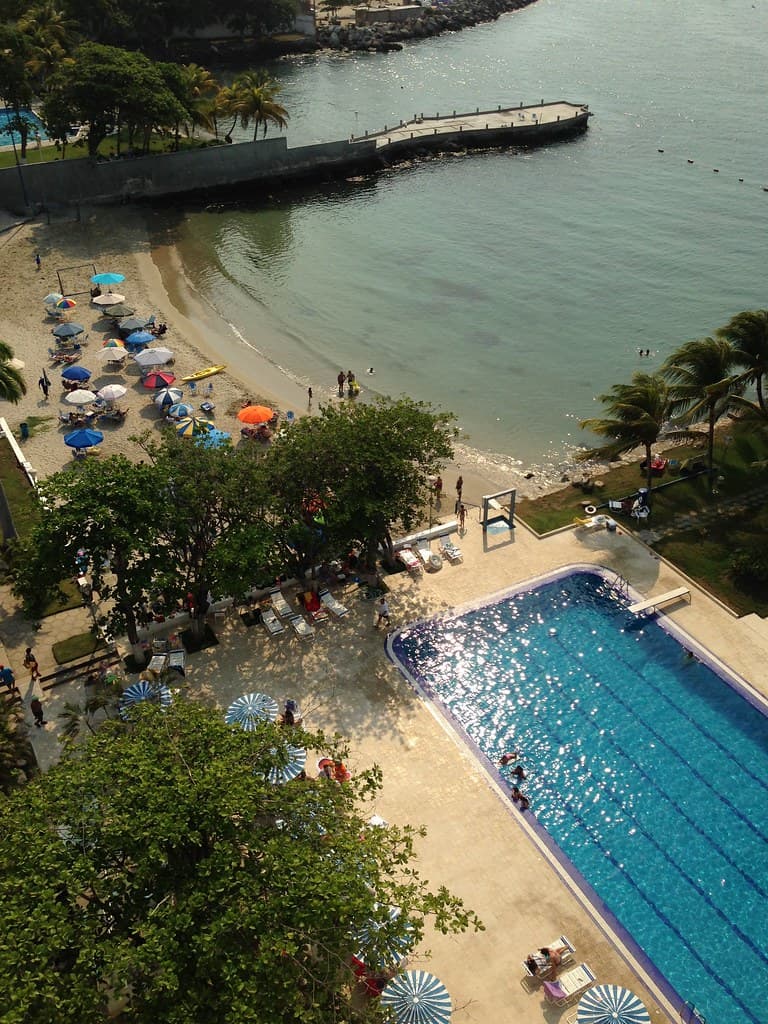 Credit: Flickr
Playa El Ancla — photo by huguito
Mid-afternoon brings a onshore breeze that smells of salt and sun-warmed seaweed. Local fishermen mend nets in the shade of beached hulls, their voices a low murmur beneath the hiss of waves. A few families claim the sparse shade beneath sea-grape trees, their coolers packed with malta and empanadas wrapped in foil. No vendors patrol this sand; you bring what you need.
As the sun drops behind the coastal range, the light goes honeyed and long, stretching your shadow across the rippled sand. The mountain silhouette turns purple, the sky a wash of tangerine and rose. This is when the beach empties, leaving you with the rhythmic thump of shore break and the first stars pricking through the dusk.


