

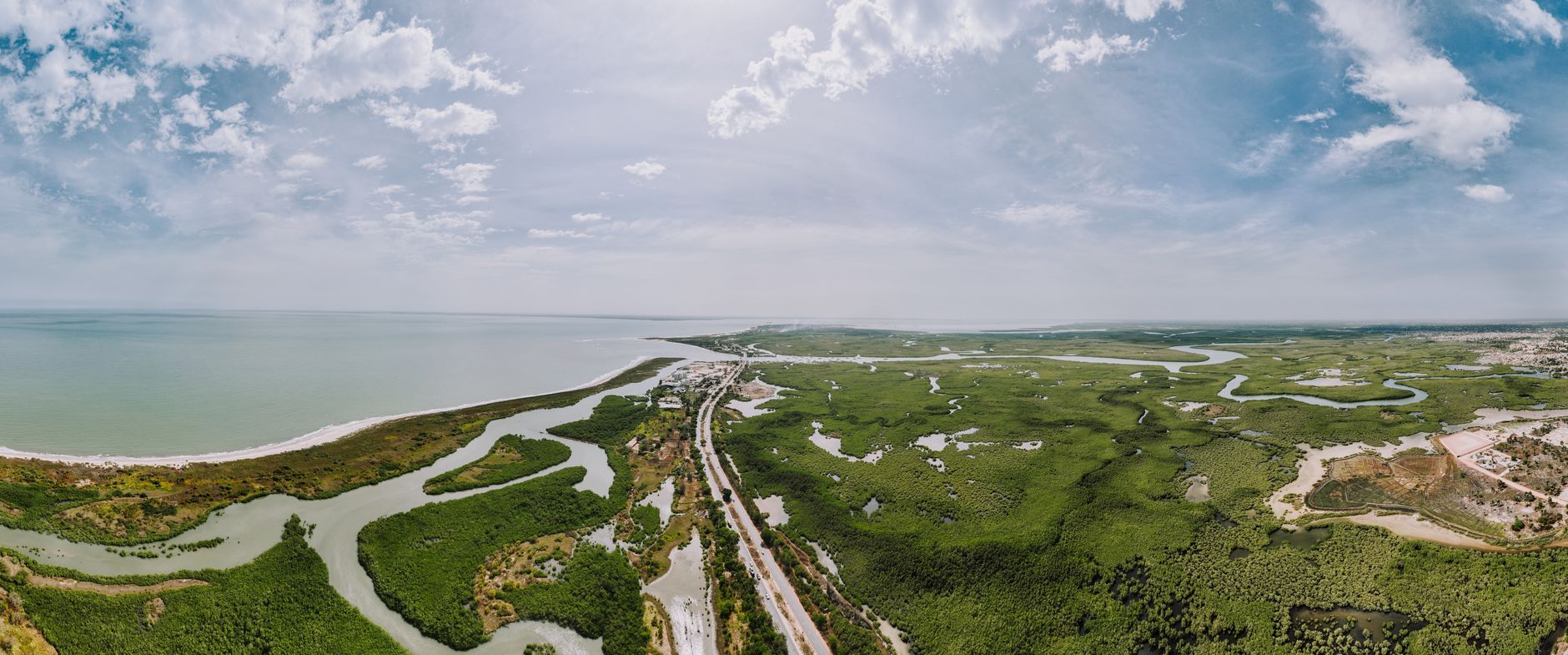
This is geography in motion, landscape as verb rather than noun. The San Juan Delta spreads its fingers here, dozens of channels braiding through mangrove islands before finally exhausting themselves into the Caribbean. The beach exists wherever the current deposits enough sediment to rise above the waterline—sometimes a broad crescent of sand, sometimes just a narrow ridge barely wider than your towel. You can wade a hundred yards offshore at low tide and still be knee-deep, the bottom composed of silt so fine it clouds the water with every step.
“The delta's geographic hinge, where freshwater and saltwater create an ever-evolving shoreline that never repeats itself exactly.”
 Credit: Pexels
A breathtaking aerial view of a lush coastal landscape with winding waterways and vibrant greenery.
Mangroves define everything. They island the channels, arch over the narrower waterways, send roots questing into the tidal zone like grasping fingers. At high tide, they appear to float, their trunks submerged, their canopies hovering over dark water. Birds use them as launch pads and landing strips—herons, ibis, egrets, kingfishers. The air smells of decomposition and salt, that peculiar delta perfume of life constantly recycling itself. Crabs patrol the waterline, their tracks writing cursive across the wet sand.
Sunset here is operatic. The channels become ribbons of copper and rose, the mangroves silhouette themselves against improbable colors, and the water—part river, part ocean—reflects it all back doubled and shimmering. You need a boat to get here, and you need a boatman who knows the channels, who can read the water and navigate by landmarks invisible to you. The beach will be different when you return tomorrow. That's the point. That's the gift.


