
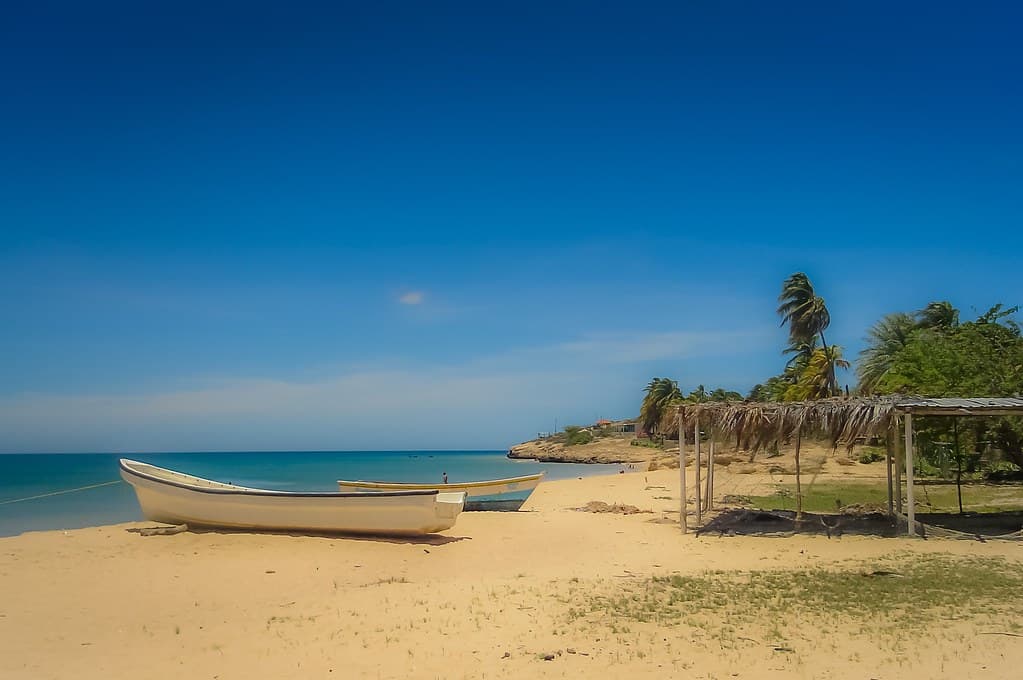
At Punta Manicuare, the land surrenders to the sea in slow motion. Dark boulders—some the size of automobiles, others small enough to pocket—emerge from turquoise shallows like the vertebrae of a sleeping giant. You navigate carefully, bare feet reading the texture of each stone: some are slick with algae, others barnacle-rough, a few warm and dry as bone.
“The rocky point creates a 270-degree ocean panorama found nowhere else on the peninsula's north shore.”
 Credit: Pexels
A family entering a tropical beach resort on a sunny summer day, perfect for vacations.
The geography demands your camera. Water fills the spaces between rocks in shades that shift from jade to sapphire depending on depth and cloud cover. Small fish dart through these natural aquariums, and hermit crabs scuttle sideways when your shadow falls across them. The wind arrives unfiltered from the open Caribbean, carrying the calls of terns and the percussion of waves meeting stone.
Sunset transforms the point into a theater. The rocks glow rust-orange, their shadows lengthening across tidal pools that reflect the changing sky. You wedge yourself into a natural seat carved by erosion and watch the sun melt into the sea, painting everything—water, stone, skin—in shades of copper and rose. The lighthouse on the distant peninsula blinks to life as darkness gathers, and you make your way back across the rocks by phone light, feet remembering the path.


