
The beach sits in a gentle curve of coastline just east of town, accessible by a sandy street that dead-ends at a row of modest houses. Fishing nets dry on wooden frames. Someone's laundry flaps on a line strung between palms. The sand is dark blonde and coarse, scattered with the working debris of a fishing village—rope fragments, bits of net, the occasional buoy washed up from offshore.
“This beach functions as a genuine community space rather than a tourist destination, preserving authentic coastal culture.”
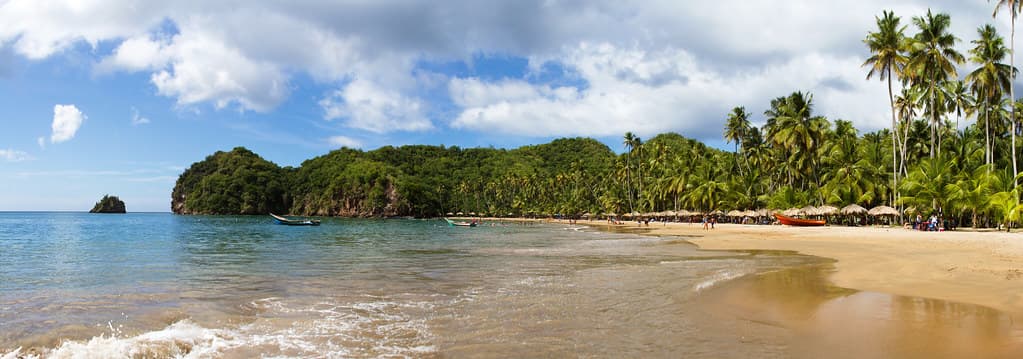 Credit: Flickr
Playa Cangua — photo by César González - Destinos360
Mornings, you'll find fishermen preparing boats, checking outboards, loading ice into coolers. By midday the beach quiets, too hot for anything but a quick swim to cool off. Then around four, as heat breaks, families emerge. Kids in school uniforms strip down to swimsuits and race into the water. Women chat in the shade while keeping eyes on children. Someone's grandfather sits in a beach chair smoking, watching the Caribbean as he has for decades.
The beach's ordinariness is its appeal. There are no lounge chairs to rent, no waiters taking orders. A woman sells raspados from a cart, shaving ice by hand and dousing it with homemade syrups. Another sells arepas from a small window in her house facing the beach. You buy one and eat it sitting on a low wall, watching pelicans work the waves. This is a beach as daily utility, a resource used rather than displayed, valued for function over beauty though it happens to be beautiful anyway.


