
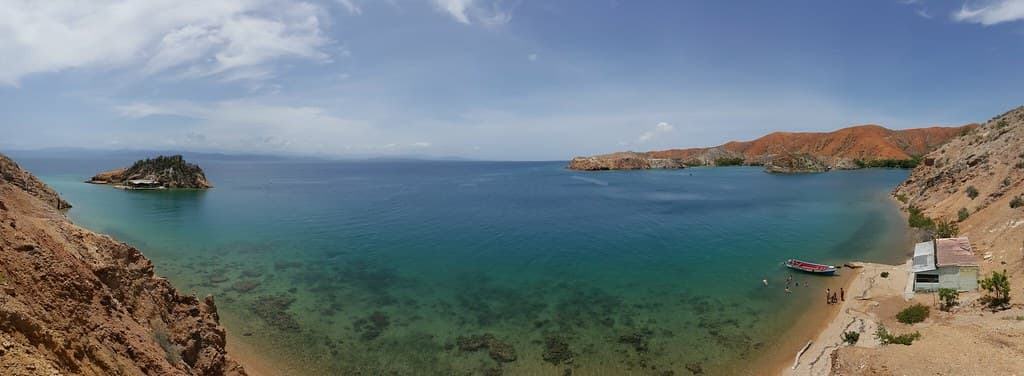
Taguapire announces itself through absence. No music from speakers, no jet skis carving white scars across the water, no rows of palapas marching toward the surf. The beach curves gently between headlands, a band of tawny sand bordered by scrub vegetation that releases the scent of dry earth and wild oregano when you brush past.
“This mid-peninsula beach remains genuinely undiscovered, offering solitude that has vanished from most Caribbean shores.”
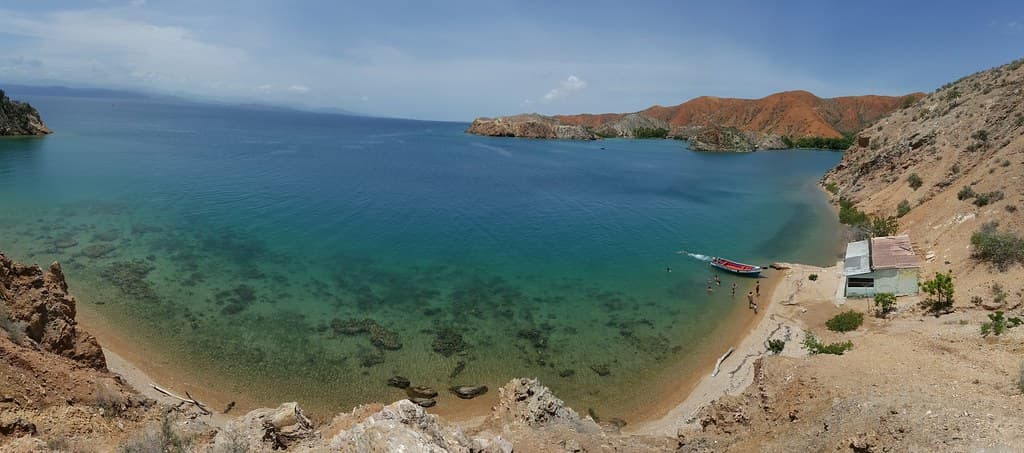 Credit: Flickr
Playa Taguapire — photo by LuisCarlos Díaz
The sand here tells stories: crab burrows pock the upper beach like a lunar surface, and the tide line is a museum of what the sea rejects—bleached conch shells, sea fans dried to lace, the occasional fishing float trailing rope. You claim any spot you wish, spreading your towel where the sand is firmest. The water enters gradually, warm and calm, the color of tourmalines in the shallows deepening to cobalt where the bottom drops away.
Afternoon stretches into evening with the patience of honey dripping from a spoon. Fishermen pass in the distance, standing in their boats with the stillness of herons. The sun descends behind the western headland, and the entire beach becomes a canvas—sand gilded, water burnished, clouds ignited. You might see a local family arrive for the evening cool, children splashing while parents set up a small grill. Otherwise, the beach keeps its own counsel, content with wind and waves and the slow revolution of stars.


