
You're swimming in Lake Maracaibo, the vast inland sea that fuels the nation's economy, its waters neither fresh nor fully salt but somewhere in between—warm, murky, and flecked with algae that tickles your legs. The shore is a concrete malecón with patches of gray sand, backed by palms bending in the petroleum-scented breeze that blows across the lake from refineries on the opposite shore. Derricks rise like skeletal sentries in the middle distance, and tankers inch across the water, their hulls disappearing into haze.
“Venezuela's only significant lakefront beach, swimming in the petroleum-rich waters that built the nation.”
 Credit: Flickr
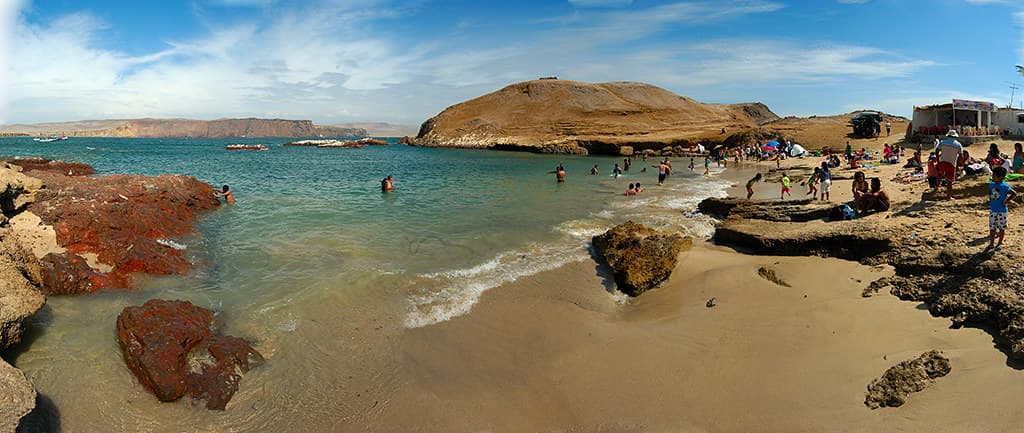
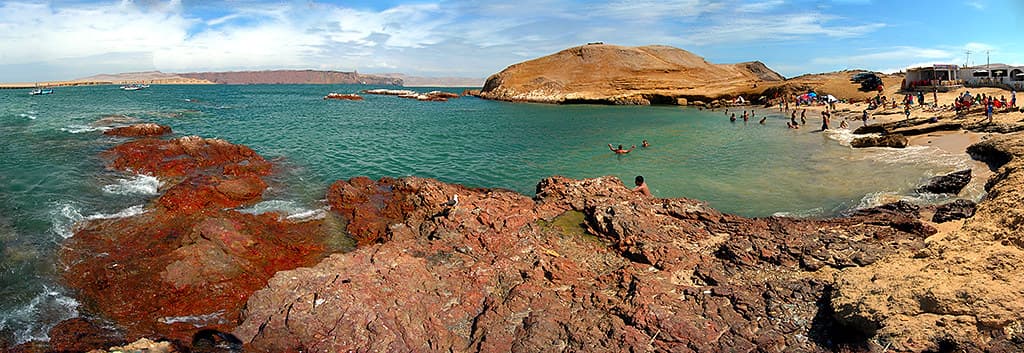
Playa Lagunillas, Paracas, Peru
Families arrive early to claim shelters—concrete pavilions with peeling paint and built-in benches—spreading checkered tablecloths and unloading pressure cookers of chicken stew. Music from competing speakers creates a salsa-reggaeton-vallenato mashup that carries across the waterfront. Vendors push carts loaded with raspados in neon colors, their ice already melting by mid-morning. The lake stretches to a horizon that blurs into white sky, vast enough that you can't see the western shore where Zulia state continues.
This beach has none of the postcard qualities of Venezuela's Caribbean, but it pulses with regional pride. Maracuchos claim this lake as their own—the economic engine, the geographic anchor, the reason this corner of the country feels distinct. You'll hear it in the accent, taste it in the fried platano consumption, feel it in the way people gather here not despite the industrial backdrop but because of it. This is where the oil economy comes up for air.


