
This stretch of Lake Maracaibo's shore serves the fishermen of San Rafael de El Moján first, beachgoers second. Early morning, you'll find men loading ice into boats, checking engines, heading out onto the lake's calm surface. By midday, the beach empties except for a few families seeking shade under makeshift shelters—tarps strung between posts, branches leaned together. The sand is coarse, littered with shells, rope fragments, and the occasional fish scale glinting in the sun.
“A genuine fishing village shore where daily labor and leisure coexist without pretense.”
 Credit: Flickr
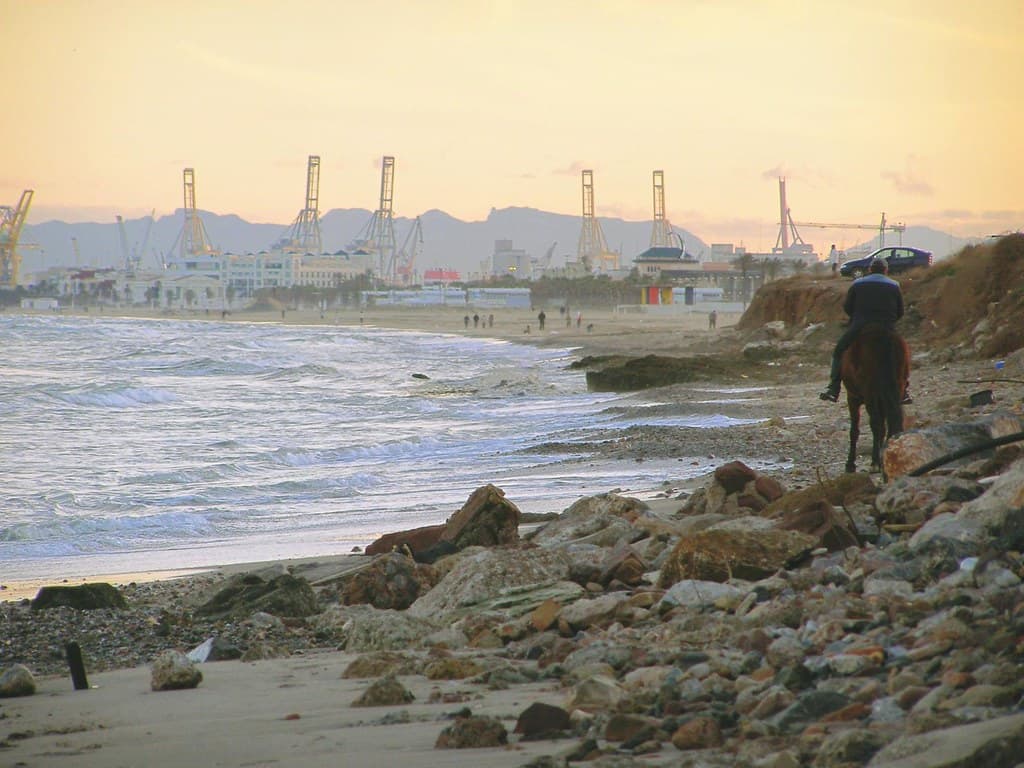
Riding by the sea
The water is shallow for dozens of meters, warm and murky, with a soft bottom that sucks at your feet when you wade in. Children play in the shallows while their mothers wash clothes in buckets nearby, scrubbing and wringing in the same water. It's not picturesque in any conventional sense, but it pulses with purpose. You'll hear the rhythmic slap of wet laundry, the creak of boat hulls settling, the call of gulls circling overhead hoping for scraps.
Late afternoon brings the boats back. Fishermen haul their catch onto the sand—snapper, catfish, sometimes a small shark—and begin the work of cleaning and sorting. Buyers arrive, haggling in rapid Spanish, while the day's unsold fish are packed in ice. If you linger, someone might offer you a beer, ask where you're from, wonder why you're photographing their everyday work. This is Puerto Caballo: functional, unglamorous, and unapologetically real.


