
The name promises what the beach delivers—a hidden harbor feeling, even though no actual port infrastructure remains. You park along the narrow shoulder where the paved road ends, walking past a weathered boat hull someone has converted into a planter sprouting wild peppers. The beach unfolds in a compact half-moon, intimate rather than expansive, with mangroves crowding the southern edge and open water stretching north.
“The beach's mangrove-framed setting and western exposure create sunset conditions that draw evening pilgrims who time their arrivals precisely.”
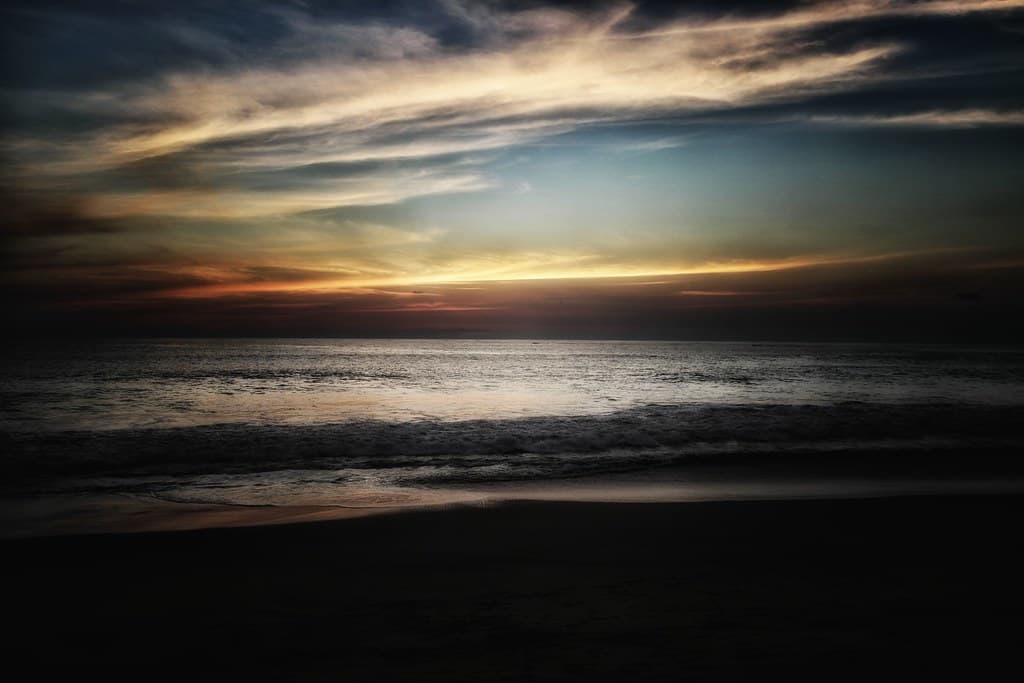 Credit: Flickr
Playa Puerto Escondido, Santa Rita
Families arrive in the late afternoon, timing their visits to the cooling hours when the sun loses its fiercest heat. You watch fathers wade in with toddlers perched on their shoulders, mothers arranging snacks on blankets anchored with shoes against the breeze. The water here feels slightly cooler than the main beaches, perhaps fed by underground springs or shaded by the mangrove canopy. You float on your back and notice how the vegetation creates natural privacy screens, sectioning the beach into smaller territories.
As the sun drops toward the western horizon across the lake, you understand why locals make the drive here specifically for this hour. The sky ignites in layers—magenta closest to the water, then coral, then violet bleeding into the first stars. The lake surface goes molten, and every ripple catches fire. Cameras appear from bags. Even the children pause their splashing to watch. The show lasts perhaps fifteen minutes before fading to dusk's soft blue, and families begin their migrations back to cars, speaking in hushed voices as though unwilling to break the spell.


