
Counting the waves…
Counting the waves…
A refined fusion of water purity, environmental stability, and communal vibrancy for Fortuna Bay Beach.
View MethodologyAnalyzed via live sensors and environmental data.
Wave height, wind, and atmospheric stability.
Live footfall and crowd balance metrics.
Community reviews and curated sentiment.
“You step onto the same pebbles Ernest Shackleton touched in 1916, relief flooding through exhausted legs. Around you, elephant seals snort in tussock grass while Antarctic fur seals patrol the tideline. Behind, glaciers…”
Limited recent visitor reports — live OBI telemetry is your best guide for current conditions.
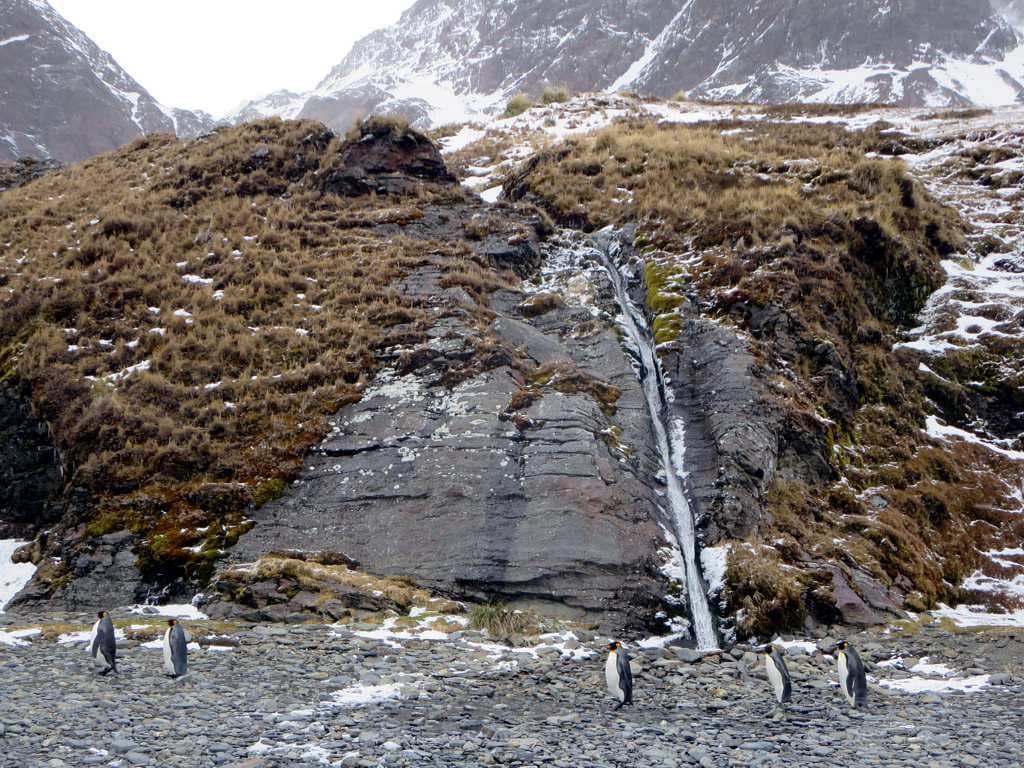
The zodiac bumps against Fortuna Bay's shore and you swing your legs over the side, boots crunching onto smooth basalt pebbles worn round by Southern Ocean swells. Meltwater streams braid through the stones, milky with glacial silt, and the air smells of kelp, guano, and something mineral you can't name. King penguins waddle past with the baffled dignity of diplomats who've lost their briefcases, while elephant seal weaners—600-pound toddlers—belch at one another in the beach grass.
This is the bay where Shackleton and his two companions finally reached civilization's edge after crossing South Georgia's interior mountains without map or rope. You can hike part of that route inland, climbing through tussock bogs into valleys where hanging glaciers calve house-sized blocks into meltwater lakes. The wind carries ice-breath down from the Neumayer Glacier, and every twenty minutes another piece of the mountain surrenders to gravity with a crack you feel in your sternum.
Follow his 1916 crossing tracks
Breeding grounds amid tussock grass
Watch ice calve into lakes
Prime Visitation
Best Weather | Less Crowds
Where it is
Fortuna Bay Beach
Grytviken, Antártida e Islas del Atlántico Sur, Argentina
-54.131500°, -36.794800°
Weather
Loading…
Swell
—
Temp
Warm · Restorative
UV Index
Moderate
Wind
—
Tidal State
Last known
Max Sunlight
—
Ideal Shade
—
Jan - Dec (Peak)
Mar - Nov (Off-season)
Best Weather | Less Crowds
Select a category to load nearby places.
Unlock restaurants, luxury stays and curated maritime experiences within 2km
Swimming is not recommended at Fortuna Bay Beach due to extremely cold water temperatures that hover near freezing year-round. The sub-Antarctic conditions pose serious hypothermia risks within minutes of immersion. Additionally, strong currents and unpredictable weather make water activities dangerous. Visitors should maintain safe distances from wildlife, including elephant seals and fur seals that can be aggressive. Always follow expedition guide instructions and wear appropriate cold-weather gear when visiting the shoreline.
The optimal visiting window is during the South Georgia summer from November through March, when temperatures are slightly milder and wildlife is most active. December and January offer the best weather conditions with longer daylight hours. This period coincides with penguin breeding seasons and elephant seal activity. Expedition cruises primarily operate during these months. Keep in mind that even summer temperatures rarely exceed 10°C, and weather can change rapidly regardless of season.
Access to Fortuna Bay Beach is exclusively via expedition cruise ships, as there are no commercial flights or scheduled ferries to South Georgia. Most visitors arrive on Antarctic cruise itineraries departing from Ushuaia, Argentina, or the Falkland Islands. The journey involves a rough two-day ocean crossing. Landing at Fortuna Bay requires Zodiac boat transfers from anchored ships, weather permitting. All visits must be coordinated through licensed tour operators with proper permits from the South Georgia government.
There are no hotels, restaurants, or any permanent facilities at Fortuna Bay Beach. All accommodation and meals are provided aboard expedition cruise ships, which serve as floating hotels during South Georgia visits. The nearest settlement is Grytviken, approximately 15 kilometers away, which has a small research station and museum but no tourist lodging. Visitors spend only a few hours ashore during landings before returning to their vessel. Self-sufficiency and advance planning through tour operators are essential.
Fortuna Bay Beach is famous as part of Ernest Shackleton's legendary 1916 rescue route. After crossing South Georgia's interior mountains, Shackleton and his companions descended into Fortuna Bay on their final approach to the Stromness whaling station. Today, some expedition cruises offer guided hikes retracing portions of this historic traverse. The beach also provides spectacular views of glaciers and mountains, alongside abundant wildlife including king penguins, elephant seals, and Antarctic fur seals, making it an essential South Georgia landing site.
Photos