

You arrive at Marian Cove aboard a Zodiac that threads between brash ice and the rust-colored hull of a supply vessel anchored offshore. The beach itself is a narrow apron of rounded pebbles—obsidian, slate, russet—polished smooth by tides that pulse with the Southern Ocean's cold breath. Behind you, Collins Glacier sprawls in fissured sheets of white and cerulean, calving house-sized chunks into Maxwell Bay with percussive cracks that echo across the cove.
“One of the few Antarctic beaches accessible on foot from a permanent research station, where glaciology unfolds in real time.”
 Credit: Pexels
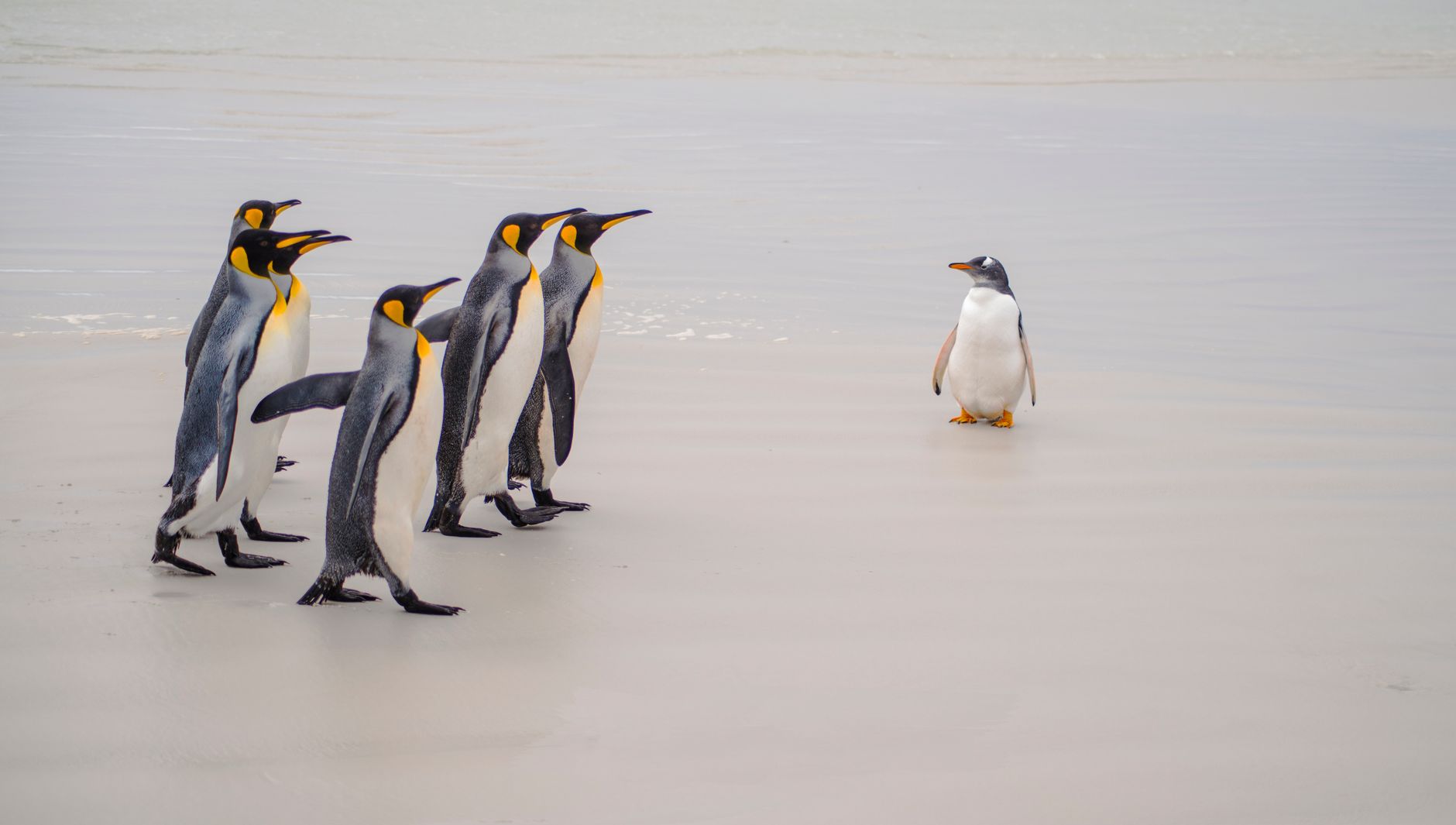
A group of King penguins and a Gentoo penguin on a peaceful shoreline.
This is not a beach for swimming or sandcastles. The water temperature hovers just above freezing; the seals lounging on the rocks are Weddells and southern elephant seals, indifferent to your presence until you venture too close. Researchers from nearby Carlini station cross the cove on foot, ferrying equipment to the small jetty, their bright parkas the only splash of warmth against the monochrome landscape. You'll share the pebbles with gentoo and chinstrap penguins, who waddle past in single file, intent on their own inscrutable errands.
The light here is relentless in summer—midnight sun glancing off glacial facets, turning the sky opalescent. You kneel to examine the stones: some bear the scars of ancient volcanic fury, others the green bloom of algae that thrives in the brief Antarctic thaw. This is a beach that demands reverence, not recreation, where every visit feels like trespass on a world still assembling itself.


