
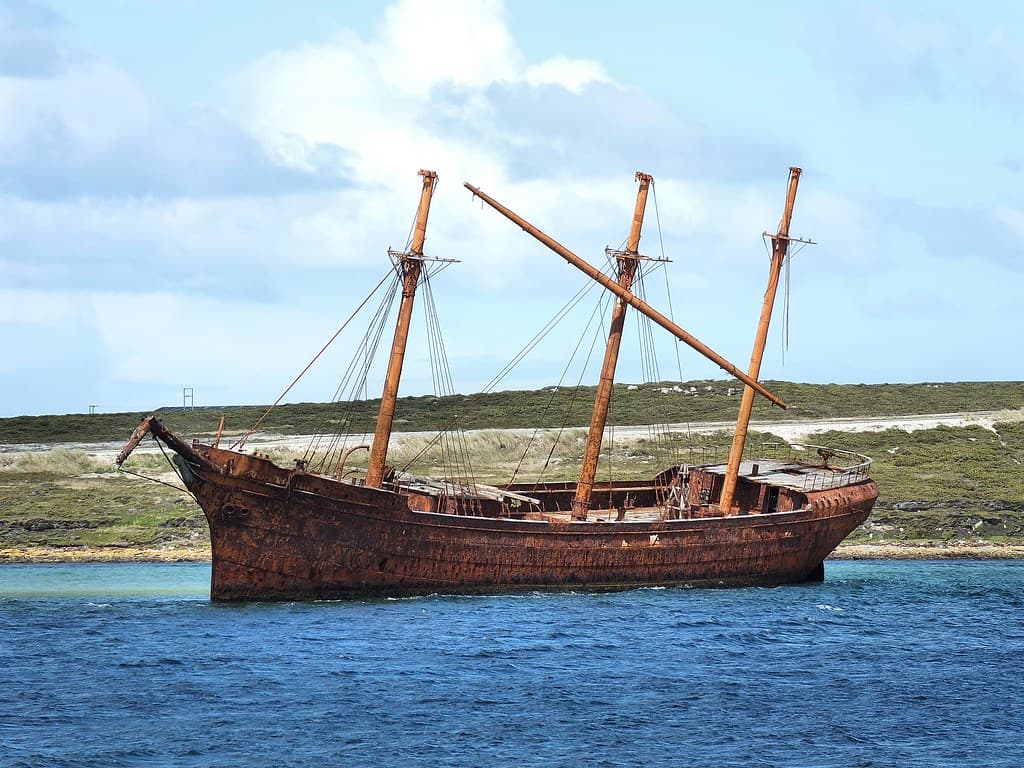
Whalebone Cove sits tucked below the coastal track that winds east from Stanley, a crescent of coarse sand and smooth stones where the South Atlantic meets grassland bluffs. The cove earned its name from the whale ribs that once littered its shores—remnants of the islands' whaling past—and today it remains a place where natural history unfolds quietly. Kelp geese pick through the wrack line while Magellanic penguins waddle past tussac grass, unperturbed by the occasional walker.
“One of the few beaches in the world where you might share the shore with five species of penguins in a single afternoon.”
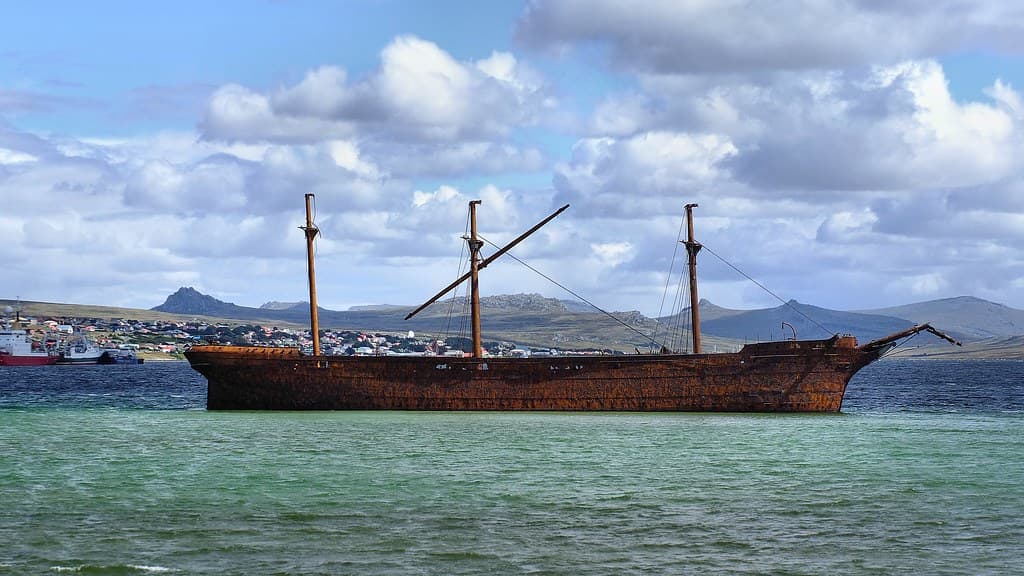 Credit: Flickr
Lady Elizabeth, Whalebone Cove, Falklands 250
The water here is too cold for anything but the briefest dip, even in the austral summer, but the cove rewards those who come to observe rather than swim. At low tide, rockpools teem with limpets and anemones, and the exposed reefs reveal layered sedimentary bands that tell millions of years of geological stories. The wind is constant, sometimes ferocious, carrying the cries of gulls and the distant growl of elephant seals from neighboring beaches.
You'll likely share the cove with more wildlife than people. Local families come on calm afternoons to explore the tidepools, and photographers arrive at dawn when the light turns the water pewter and gold. There are no facilities, no vendors, no umbrellas—just the raw, unvarnished coast of the Falklands, where the elements dictate the rhythm of your visit.


