

Vega Island emerges from the Weddell Sea like a geological textbook torn open, its eastern beaches a mosaic of charcoal-dark pebbles and rust-streaked boulders that speak to volcanic upheaval millions of years old. You step from the Zodiac onto stones worn smooth by pack ice, the shore crunching underfoot with a sound somewhere between gravel and broken glass. Behind you, tabular icebergs the size of city blocks drift in water so cold it steams against the comparatively warmer air, their edges sharp enough to draw blood from the sky.
“One of the few accessible beaches where you can stand on active paleontological sites yielding Cretaceous fossils beneath Antarctic ice.”
 Credit: Pexels
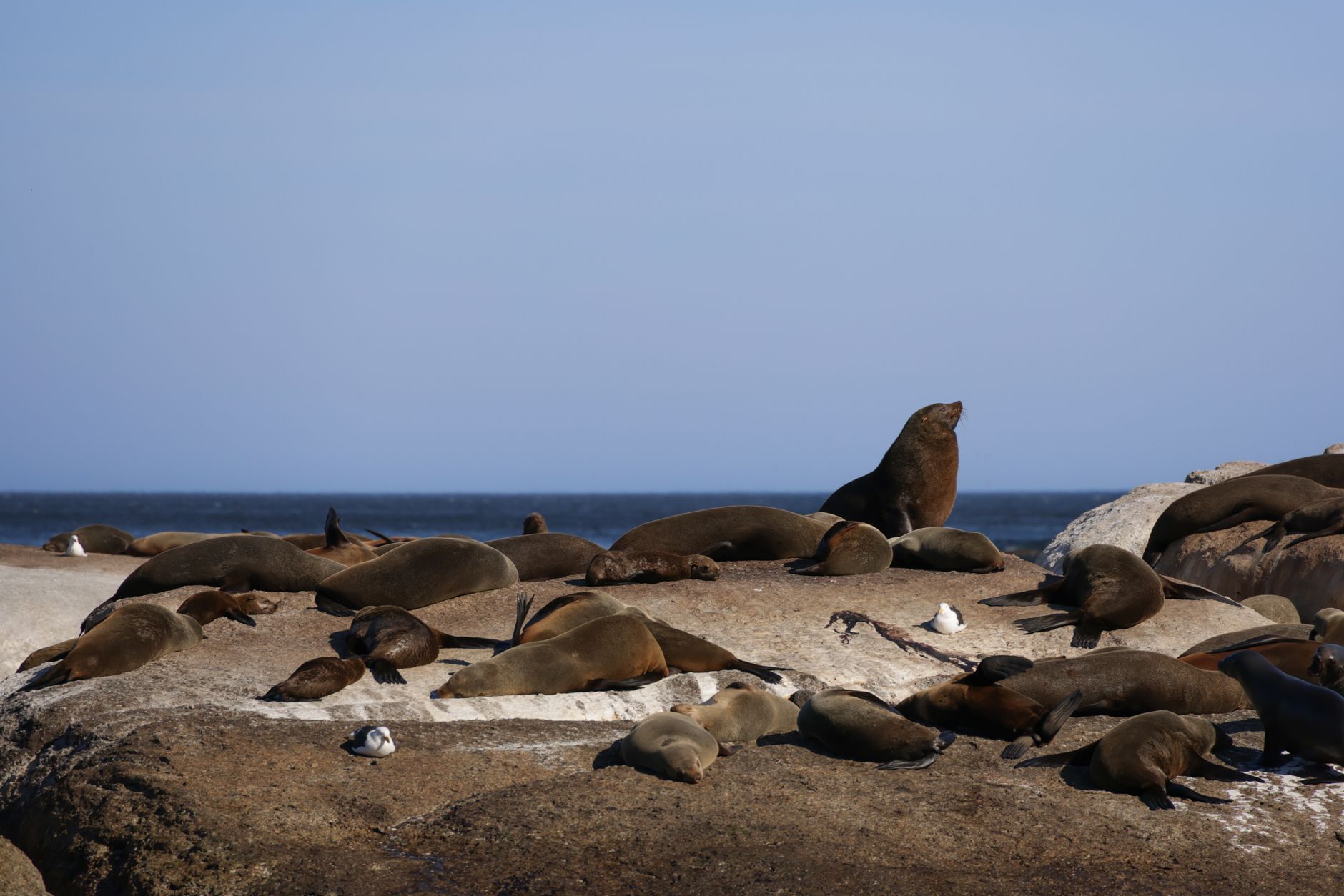
Group of sea lions lounging on rocks by the ocean under clear blue skies.
This is expedition territory, not vacation—no surf shacks, no beach bars, no footprints from yesterday because the tide erased them hours ago. You're here because a ship's captain read the ice charts correctly and because the Antarctic Peninsula's notoriously fickle weather opened a narrow window. Paleontologists have pulled Cretaceous-era fossils from these slopes, remnants of forests that thrived here 70 million years before the first iceberg calved.
The light does strange things this far south. At the height of the austral summer, the sun circles without setting, casting shadows that rotate like clock hands across the pebbles. You pocket a stone—smooth, black, heavy—then return it. Some beaches ask to be conquered; this one asks only that you witness.


