
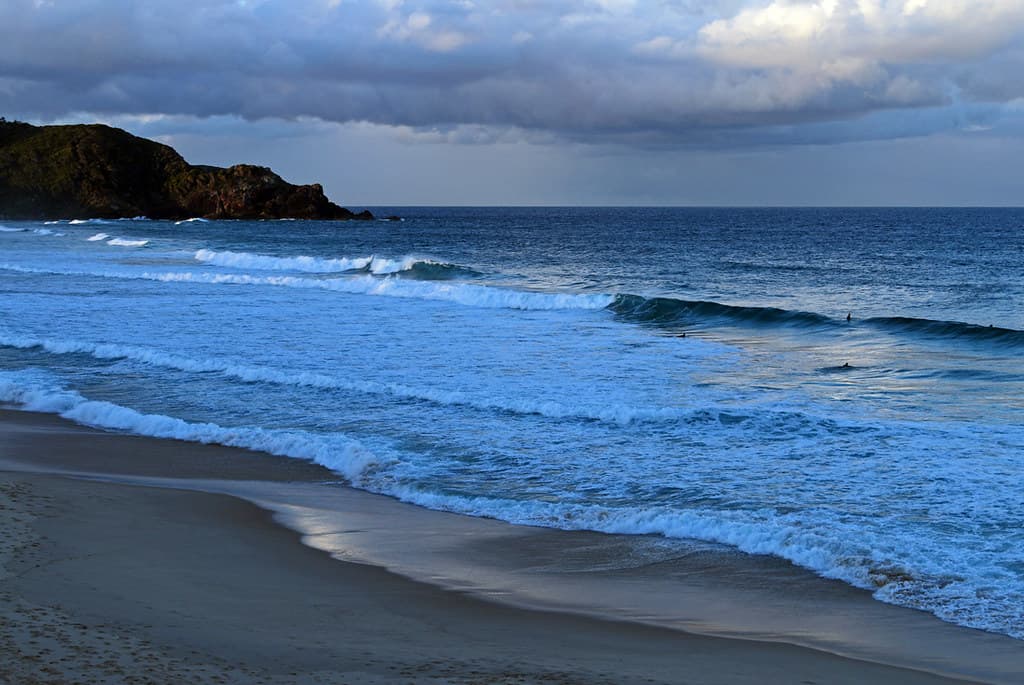
The first thing you notice isn't the shape—though the crescent is unmistakable from the clifftop car park—but the sound. Boomerang's reef break detonates with a bass thump that reverberates through the sandstone headlands, a metronome audible from the weatherboard cottages lining Boomerang Drive. You'll descend wooden stairs to find a beach that delivers on its cult status: peeling right-handers off the southern rocks, forgiving beach breaks in the middle, and a rip that veteran locals read like a familiar novel.
“The crescent geometry and consistent reef setup create waves that break with textbook perfection more days per year than almost any beach along the mid-north coast.”
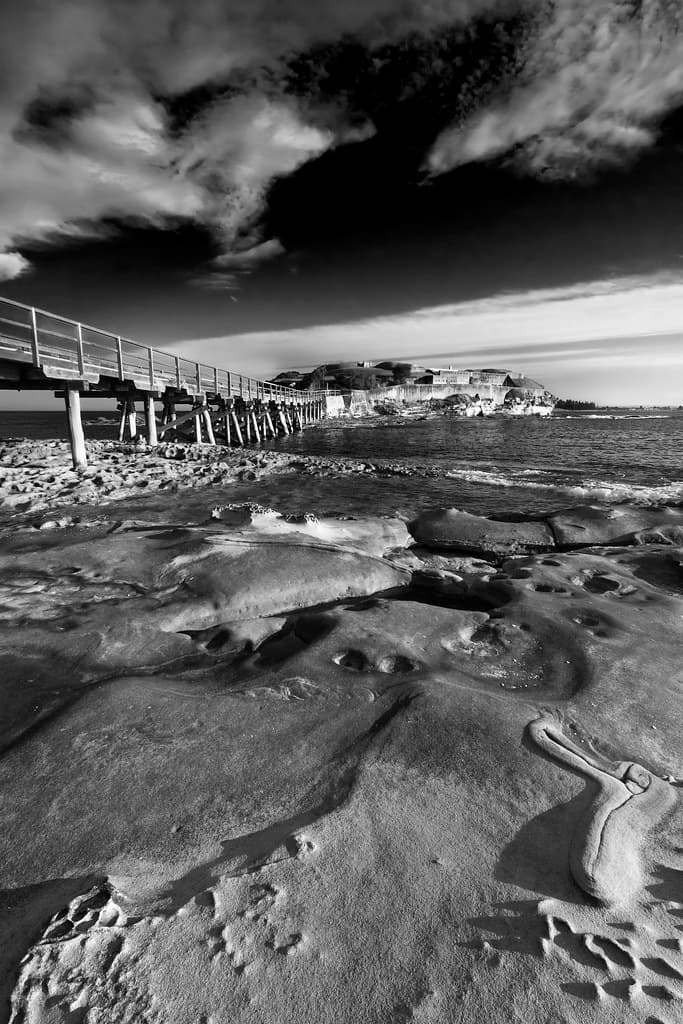 Credit: Flickr
Bare Island
Mid-morning, the offshore northwesterlies groom the swell into glassy walls. Wetsuit-clad figures bob beyond the break, waiting with the patience of herons. Between sets, you can walk the entire crescent in eight minutes, your feet sinking into coarse, mineral-heavy sand studded with cuttlebone and banksia cones. The rockshelf at low tide reveals anemones the color of pomegranate and cunjevoi gripping barnacled stone.
By afternoon, the nor'easter typically arrives, turning the surface to chop, and the locals vanish. This is when you'll have the southern end nearly alone—just oystercatchers working the tideline and the occasional hang glider lifting off Cape Hawke behind you, their nylon wings bright against the eucalyptus-dark ridge. The water here holds a chill even in February, the East Australian Current bypassing this stretch in favor of faster channels offshore.


