
Pormpuraaw Beach unfurls along the eastern shore of the Gulf of Carpentaria, where saltwater country stretches flat and endless beneath skies that seem to press down with physical weight. The strand itself is wide and firm, ribboned with tidal channels that shift daily, and backed by mangroves whose roots claw into the mud like arthritic fingers. This isn't postcard Australia—there are no white sands or reef corals here—but something rawer: a working shoreline where the Thaayorre people have fished, hunted, and navigated by seasonal winds for millennia.
“This is one of the few Gulf beaches where you can witness traditional Aboriginal fishing methods still practiced daily by community members.”
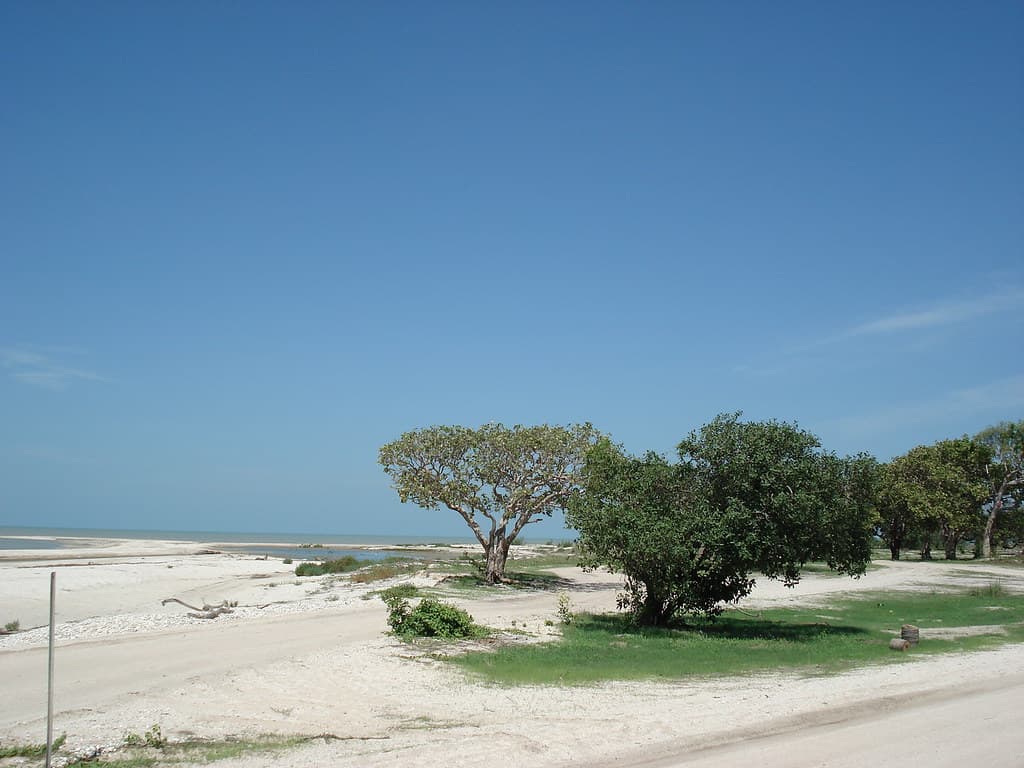 Credit: Flickr
Pormpuraaw Coast
You'll arrive dusty and road-weary, having negotiated washboard corrugations and creek crossings to reach this remote Aboriginal community of fewer than a thousand souls. The beach reveals itself gradually: first the smell of brine and decomposing seagrass, then the cacophony of waders—godwits, sandpipers, curlews—probing the exposed flats. At high tide, the Gulf pushes brown water against the shore with surprising force; at low, the horizon retreats two hundred meters, leaving behind a glistening plain dimpled with crab holes.
Timing here is everything. Come during the Dry (May through October) when humidity relents and barramundi run thick in the estuaries, or brave the Wet's theatrical storms if you want the place entirely to yourself. Either way, you'll leave understanding that beauty isn't always photogenic—it's the pelican skimming six inches above the chop, the mangoes ripening in town, the knowledge that some places remain profoundly, defiantly themselves.


