Counting the waves…
Counting the waves…
A refined fusion of water purity, environmental stability, and communal vibrancy for Hill Inlet Beach.
View MethodologyAnalyzed via live sensors and environmental data.
Wave height, wind, and atmospheric stability.
Live footfall and crowd balance metrics.
Community reviews and curated sentiment.
“You'll spot the swirl from the lookout above—ribbons of bone-white sand folding through shallows that shift from aquamarine to cobalt with every tide. Reaching the inlet means a boat ride to Whitsunday Island, then a…”
Limited recent visitor reports — live OBI telemetry is your best guide for current conditions.
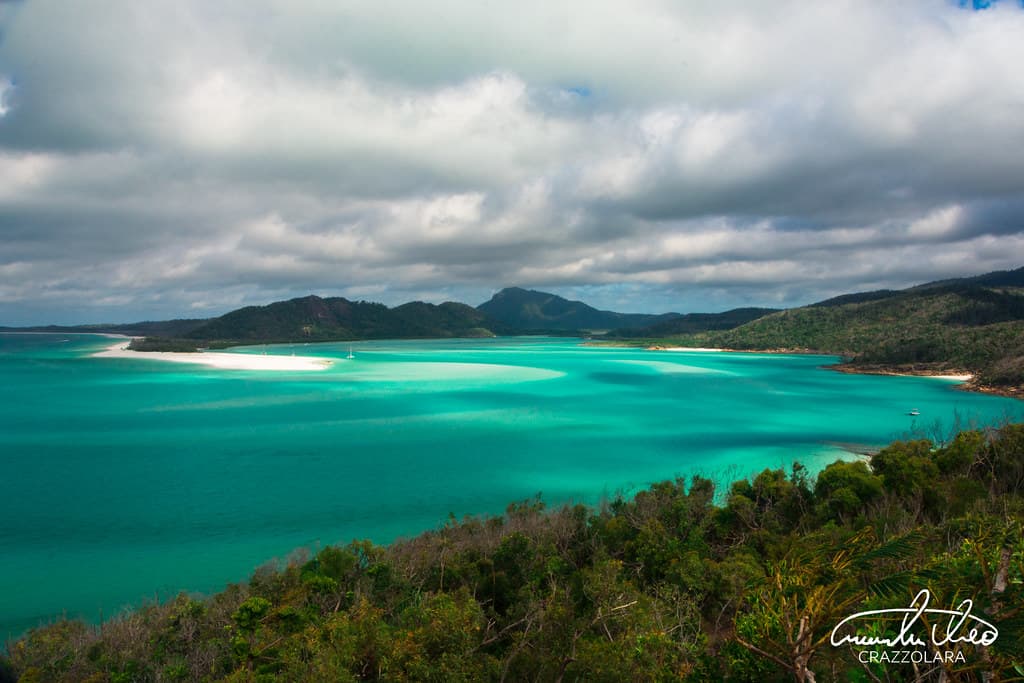
The sand beneath your feet at Hill Inlet isn't ordinary beach sediment—it's 98-percent pure silica, fine as powdered sugar and bright enough to make you squint even through sunglasses. As the tide retreats across Tongue Bay, it sculpts this white sand into curves and channels that shift daily, creating marbled patterns visible from the lookout trail above. The inlet sits on the northern edge of Whitsunday Island, sheltered from the Coral Sea's swells, so the water here lies calm, layering shades of turquoise over the pale bottom like watercolor on silk.
Most visitors first glimpse Hill Inlet from the air—seaplanes and helicopters orbit above to let passengers photograph the swirls—but standing at the lookout after a forty-minute uphill walk delivers a quieter thrill. Below, the forest meets the shore in a tangle of paperbarks and pandanus palms. Arriving at low tide lets you wade into the inlet itself, where the water barely reaches your knees and the sand feels cool and squeaky underfoot.
Summit trail for swirl views
Patterns peak mid-outgoing tide
Knee-deep turquoise at inlet mouth
Where it is
Hill Inlet Beach
Whitsunday Island, Queensland, Australia
-20.245400°, 149.038800°
Weather
Loading…
Swell
—
Temp
Warm · Restorative
UV Index
Moderate
Wind
—
Tidal State
Last known
Max Sunlight
—
Ideal Shade
—
May - Sep (Peak)
Jan - Dec (Off-season)
Historical data suggests peak visibility and stable sea temperatures occur during the prime visitation window.
Select a category to load nearby places.
Unlock restaurants, luxury stays and curated maritime experiences within 2km
Hill Inlet is primarily known for viewing rather than swimming. The swirling sand patterns are best seen from lookout points like the Hill Inlet Lookout. The inlet itself has shallow, calm waters during high tide, but swimming conditions vary significantly with tidal changes. Strong currents can occur, and there are no lifeguards or safety equipment on-site. Most visitors focus on walking the sandbars at low tide and photographing the landscape. If swimming, stay cautious of tides and currents, and never swim alone in this remote location.
Hill Inlet is stunning year-round, but May through September offers the best weather with lower humidity, minimal rainfall, and comfortable temperatures around 20-27°C. The iconic swirling sand patterns are most dramatic during the transition between tides, approximately 2-3 hours before or after low tide. Visit during the dry season for clearer skies and better photography conditions. Avoid December through March when jellyfish are present and tropical storms are possible. Early morning light provides optimal conditions for viewing the turquoise water contrasts from the lookout.
Hill Inlet Beach is accessible only by boat, seaplane, or helicopter, as Whitsunday Island has no road access or vehicle infrastructure. Most visitors join day tours departing from Airlie Beach or Hamilton Island, which typically include stops at both Hill Inlet and Whitehaven Beach. Half-day and full-day tours are available via catamaran, yacht, or powerboat. Scenic flights offer aerial views of the swirling sands. You can also reach it by private boat, anchoring at nearby Tongue Bay, then walking approximately 20 minutes to the lookout.
Hill Inlet Beach has no facilities, amenities, or services whatsoever. There are no cafes, toilets, shelter, or fresh water available. Whitsunday Island is entirely undeveloped national park land. Visitors must bring everything they need, including water, food, sun protection, and waste bags. Most day tours from Airlie Beach or Hamilton Island provide meals, snacks, and refreshments as part of the package. For overnight stays, camping is permitted at designated sites on Whitehaven Beach with permits, but you must be completely self-sufficient.
The distinctive swirling patterns at Hill Inlet form when tides shift the brilliant white silica sand across the shallow turquoise waters. The inlet acts as a funnel where tidal movements create temporary channels and sandbars that constantly change shape and position. The 98% pure silica sand is exceptionally fine and bright white, creating dramatic contrast against the blue-green water. These patterns are most visible from elevated viewpoints like the Hill Inlet Lookout, located along the Solway Circuit walking track, offering spectacular panoramic views of this natural phenomenon.
Photos