
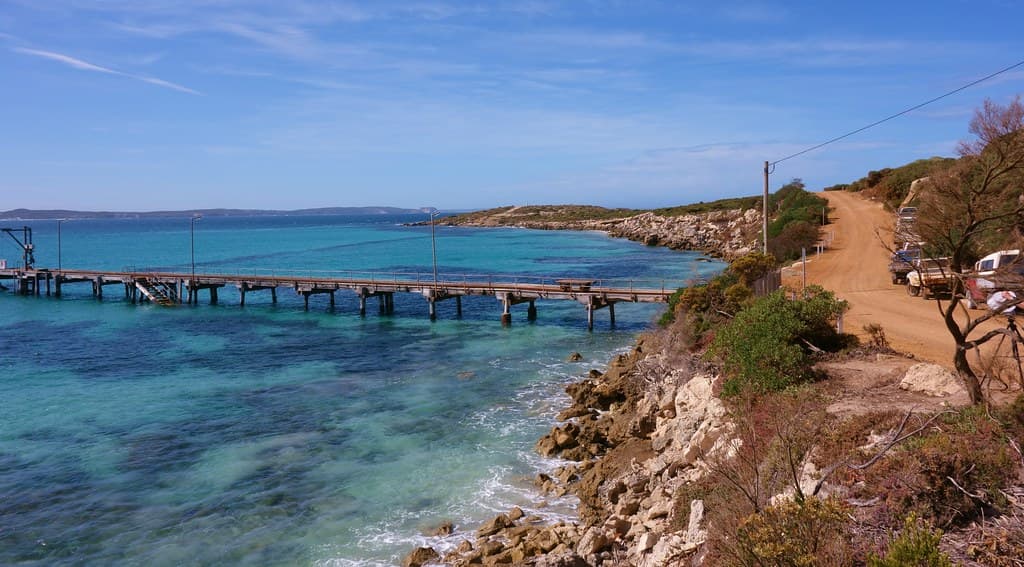
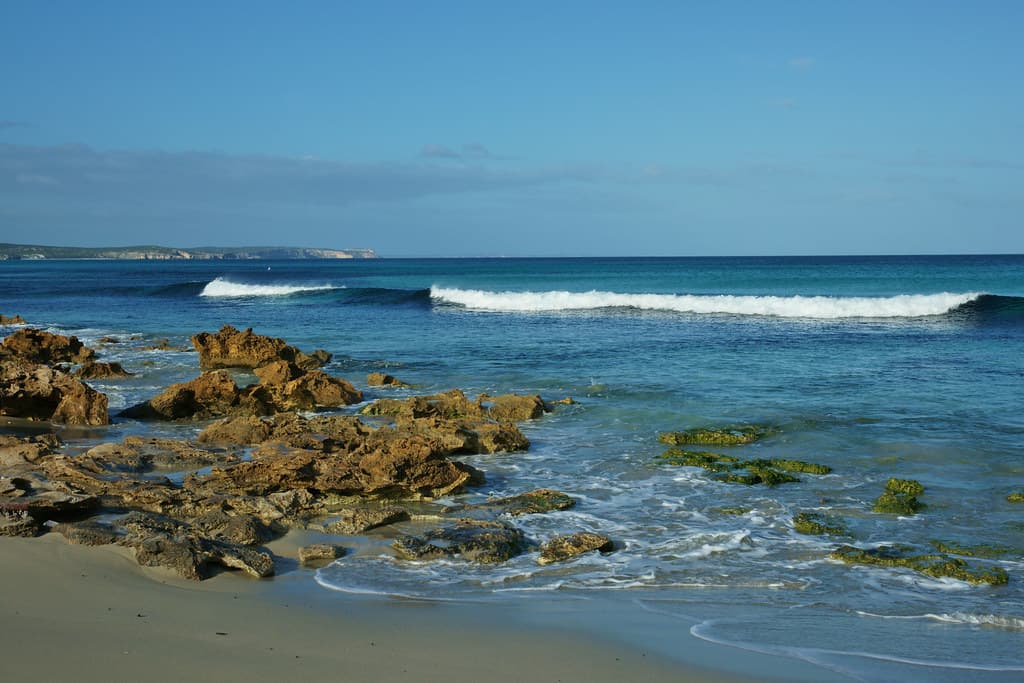
The drive from Kingscote takes you through eucalyptus forests and past mob after mob of western grey kangaroos before the road drops toward the coast. When you first glimpse Vivonne Bay, the contrast stops you: bone-white sand against water that shifts from peacock to navy depending on the clouds racing overhead. The beach stretches five kilometers, wide enough that even in peak summer you'll find sections where the only footprints are yours and those of the hooded plovers nesting in the dunes.
“The sand composition—99% pure quartz—creates an audible squeak underfoot found at fewer than a dozen beaches worldwide.”
 Credit: Flickr
Vivonne Bay ~ Kangaroo Island
The water here is Southern Ocean-fed, bracingly cold even in January, but the gradual slope means you can wade out fifty meters and still touch bottom. Locals arrive at dawn with fishing rods, casting for salmon and mulloway from the eastern rocks. By midday, the nor'westers kick up, sending sand devils spinning across the beach and sculpting the dunes into knife-edge ridges. The general store near the boat ramp sells meat pies and milkshakes; grab both and eat on the weathered picnic tables overlooking the bay.
As afternoon softens into evening, the light turns the sand nearly pink. You'll want to linger until the sun drops behind the coastal scrub, watching New Zealand fur seals body-surf the shorebreak. They know something you'll learn quickly: this beach doesn't need embellishment. It simply exists, vast and uncomplicating, at the bottom of the world.


