
Counting the waves…
Counting the waves…
A refined fusion of water purity, environmental stability, and communal vibrancy for Murray Lagoon Beach.
View MethodologyAnalyzed via live sensors and environmental data.
Wave height, wind, and atmospheric stability.
Live footfall and crowd balance metrics.
Community reviews and curated sentiment.
“You'll navigate a rough track through coastal scrub before Murray Lagoon Beach reveals itself—a long, blonde arc of sand backed by swampland teeming with waterfowl. The Southern Ocean rolls in unchecked, its salt spray…”
Limited recent visitor reports — live OBI telemetry is your best guide for current conditions.
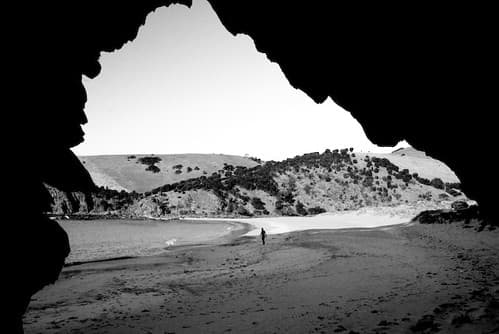
The final stretch to Murray Lagoon Beach is a commitment: the corrugated track rattles your suspension, and the last kilometer feels longer than it is. But when the scrub opens to reveal this two-kilometer sweep of sand, you understand why so few make the journey. Driftwood the size of small trees lies bleached and skeletal above the tideline. The beach curves gently south, backed not by dunes but by the state's largest permanent water body—a brackish lagoon separated from the ocean by a narrow strip of land.
You won't find amenities here. No bins, no benches, no changing rooms. What you will find are hundreds of bird species moving between lagoon and shore—pelicans gliding low over breakers, stilts picking along the shallows, the occasional sea eagle circling overhead. Bring binoculars. The lagoon side offers calm water thick with reeds; the ocean side delivers consistent swell that crashes onto firm sand, leaving foam patterns that shift with each retreat.
Stilts, ibis, and black swans
Two kilometers of firm sand
Cold Southern Ocean currents
Where it is
Murray Lagoon Beach
Penneshaw, South Australia, Australia
-35.693900°, 137.533300°
Weather
Loading…
Swell
—
Temp
Warm · Restorative
UV Index
Moderate
Wind
—
Tidal State
Last known
Max Sunlight
—
Ideal Shade
—
Jan - Dec (Peak)
Mar - Nov (Off-season)
Historical data suggests peak visibility and stable sea temperatures occur during the prime visitation window.
Select a category to load nearby places.
Unlock restaurants, luxury stays and curated maritime experiences within 2km
Murray Lagoon Beach is quite remote and generally has calm waters, but conditions can vary. There are no lifeguards or safety flags, so swim at your own risk and exercise caution. The beach is more popular for walking and birdwatching than swimming. Always check weather conditions before visiting, be aware of rips and currents, and never swim alone. The isolation means help is not readily available in emergencies. If you're unfamiliar with ocean swimming in remote areas, it's best to paddle in shallow water only.
Murray Lagoon Beach can be visited year-round, with each season offering different appeal. Spring (September-November) and autumn (March-May) provide mild temperatures ideal for walking and birdwatching, with many migratory species present. Summer (December-February) offers warmer weather but can be windy. Winter (June-August) is cooler but quieter, perfect for solitude-seekers. Early morning visits any time of year are best for wildlife viewing and photography. The beach's remote nature means it's rarely crowded regardless of season, making it appealing whenever you visit Kangaroo Island.
Murray Lagoon Beach is located on Kangaroo Island's south coast, accessible via unsealed roads from Penneshaw. You'll need a vehicle, preferably a 4WD, as the access track can be rough and sandy. From Penneshaw, drive south following signs toward Cape Gantheaume Conservation Park. The journey takes approximately 30-45 minutes. Limited informal parking is available near the beach access point. The road conditions can deteriorate after rain, so check locally before setting out. Ensure your vehicle has adequate fuel and supplies, as this is a remote area with no facilities.
Murray Lagoon Beach has no facilities whatsoever—no toilets, water, shelters, or food options. It's a completely untouched, remote beach. Visitors must bring all supplies, including drinking water, food, and sun protection. The nearest town is Penneshaw, approximately 30-40 minutes away, where you'll find cafes, restaurants, shops, and various accommodation options including hotels, B&Bs, and holiday rentals. Pack out all rubbish and leave no trace. Some visitors base themselves in Penneshaw and make Murray Lagoon a day trip, ensuring they're fully self-sufficient for the visit.
Murray Lagoon and the surrounding beach area are excellent for birdwatching, particularly waterbirds and shorebirds. The lagoon system attracts various species including pelicans, black swans, ducks, herons, and cormorants. Migratory waders visit during different seasons, and you may spot oystercatchers and plovers along the shoreline. The adjacent Cape Gantheaume Conservation Park provides habitat for coastal birds. Bring binoculars and move quietly for best viewing. Early morning and late afternoon are prime times for bird activity. The remote, undisturbed nature of the area makes it particularly valuable for observing birds in their natural habitat.