
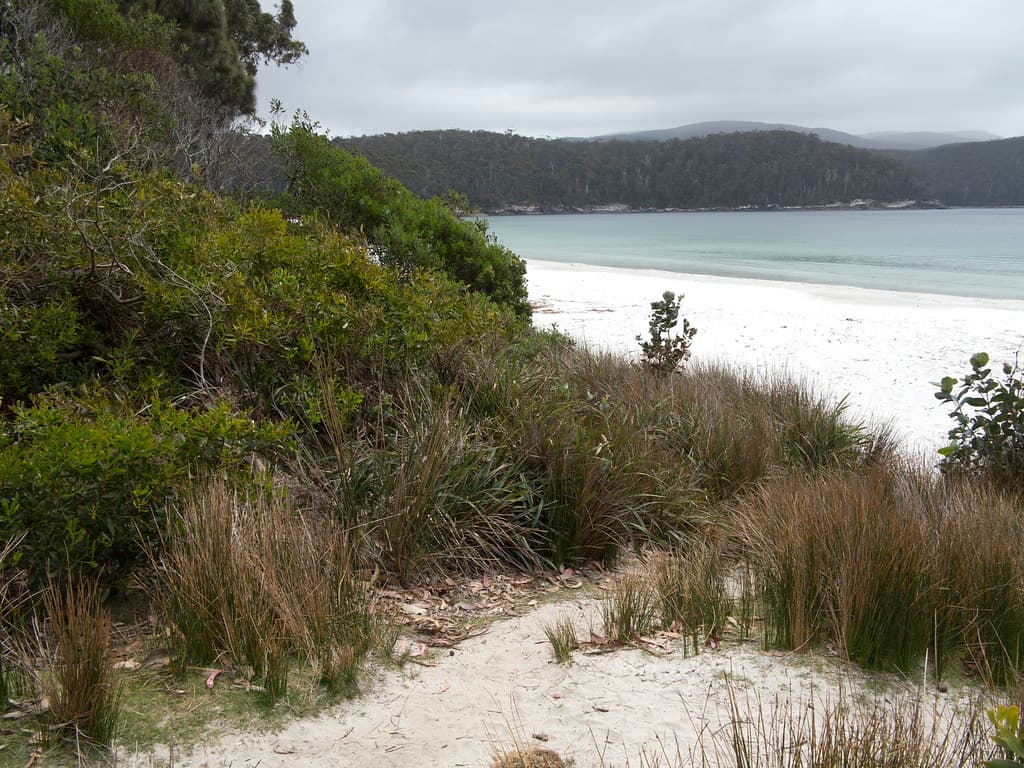
Fortescue Bay sits at the end of a corrugated track that discourages casual visitors, ensuring you share the beach with wallabies as often as people. The sand here feels coarser underfoot than city beaches, studded with fragments of shell and kelp that the Southern Ocean deposits twice daily. Behind the shoreline, scribbly gums lean toward the water, their paperbark peeling in long scrolls that collect in drifts near the high-tide mark.
“One of Tasmania's few beaches where you can camp directly beside the sand inside a UNESCO-listed wilderness reserve.”
 Credit: Flickr
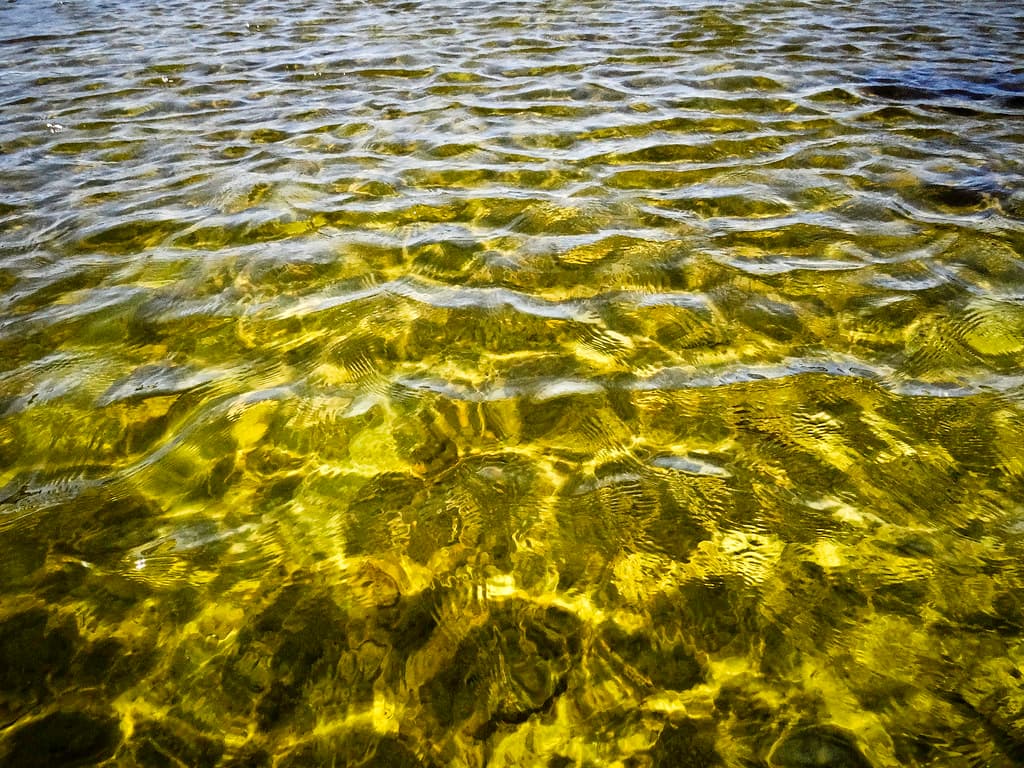
Yellow sea, Fortescue Bay, Tasman National Park
The bay curves into protected waters where families wade while their children hunt for periwinkles in rockpools stippled with orange lichen. On your left, the Cape Hauy track begins its climb through coastal heath—banksias release their honeyed scent in summer, and the path rewards walkers with granite columns that plunge into churning sea. Even in January, the water temperature hovers around fifteen degrees Celsius, a bracing reminder that you're swimming in waters that stretch unbroken to Antarctica.
Camp among the tea-trees just back from the beach and you'll wake to the guttural calls of black cockatoos tearing at seed pods overhead. The bay's remoteness within Tasman National Park means no cafés, no surf shops, no boardwalk—just the elemental meeting of land and water that shaped this coastline over millennia. Pack everything in, pack everything out, and let the rhythm of the swells measure your days.


