
Counting the waves…
Counting the waves…
A refined fusion of water purity, environmental stability, and communal vibrancy for St Helens Beach.
View MethodologyAnalyzed via live sensors and environmental data.
Wave height, wind, and atmospheric stability.
Live footfall and crowd balance metrics.
Community reviews and curated sentiment.
“You'll sink ankle-deep into sand so powdery it squeaks underfoot, while gentle waves roll in from Georges Bay. The shoreline stretches far enough that even on peak summer afternoons, you'll find a patch of coast…”
Limited recent visitor reports — live OBI telemetry is your best guide for current conditions.
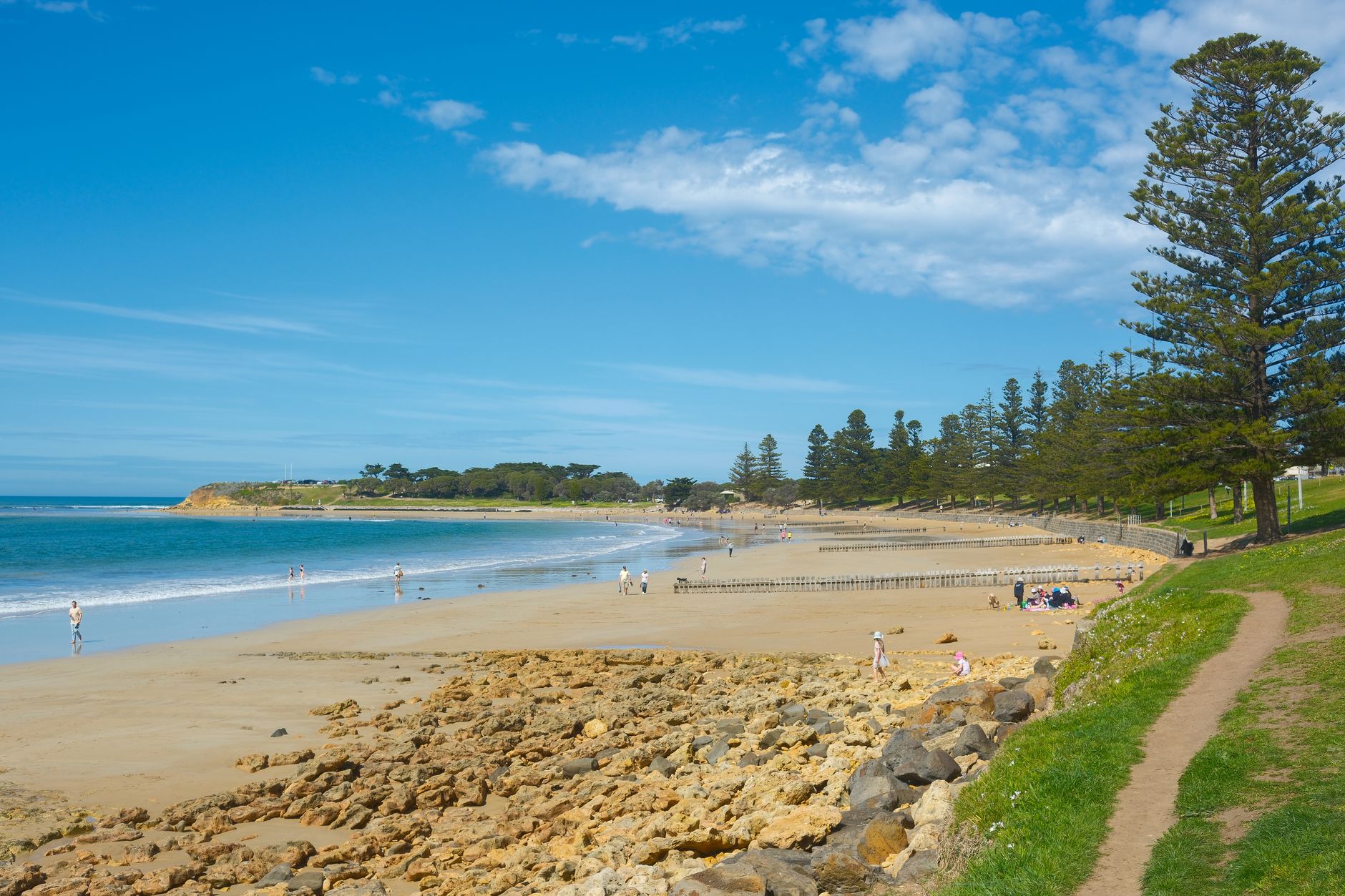
The sand here doesn't behave like sand elsewhere. It compresses under your toes with an audible crunch, a byproduct of granite weathered over millennia into particles so uniform they might have been sieved. You can walk north from the boat ramp for what feels like an hour, passing driftwood sculpted silver by salt and sun, watching black swans glide across the bay's protected shallows.
Families stake claim to the southern end near the grassy foreshore reserve, where Norfolk pines provide late-afternoon shade and children build elaborate sandcastle cities in sand that holds its shape beautifully. The water stays shallow for thirty meters out—warm enough in January to swim without a wetsuit, cold enough in July to make you gasp. Flathead and flounder patrol the sandy bottom, visible through water that shifts from turquoise to pewter depending on the cloud cover.
Warm water extends fifty meters
Catch fishing boats heading out
Buy direct from marina sheds
Where it is
St Helens Beach
St Helens, Tasmania, Australia
-41.292100°, 148.267000°
Weather
Loading…
Swell
—
Temp
Warm · Restorative
UV Index
Moderate
Wind
—
Tidal State
Last known
Max Sunlight
—
Ideal Shade
—
Jan - Dec (Peak)
Mar - Nov (Off-season)
Historical data suggests peak visibility and stable sea temperatures occur during the prime visitation window.
Select a category to load nearby places.
Unlock restaurants, luxury stays and curated maritime experiences within 2km
St Helens Beach is generally safe for swimming, with calm, sheltered waters ideal for families. The beach faces Georges Bay rather than the open ocean, resulting in gentler conditions. However, there are no patrolled areas or lifeguards on duty, so swimmers should exercise caution and stay aware of changing conditions. Check local weather and tide information before entering the water. The shallow, gradual entry makes it suitable for children, but adult supervision is essential. During summer, jellyfish may occasionally be present.
St Helens Beach is enjoyable year-round, though summer (December-February) offers the warmest weather for swimming, with temperatures reaching 20-25°C. Autumn (March-May) provides mild conditions and fewer crowds, perfect for beach walks. Winter can be cool but scenic, while spring brings wildflowers to surrounding areas. The Bay of Fires region experiences a temperate maritime climate, so weather can be changeable. For the best beach experience with warm water and sunny days, visit between December and March.
St Helens Beach is located right in the town of St Helens, approximately 2.5 hours' drive from Launceston via the Tasman Highway. The beach is easily accessible from the town center, with several parking areas available along the foreshore. Free parking can be found near the waterfront and boat ramp area. St Helens is well-signposted and accessible by car year-round. No public transport runs directly to St Helens from major cities, so a private vehicle or tour is necessary.
St Helens town offers diverse accommodation from caravan parks and holiday units to motels and bed & breakfasts, many within walking distance of the beach. For dining, you'll find cafes, seafood restaurants, bakeries, and a supermarket for self-catering. The area is known for fresh local seafood, particularly crayfish and abalone. Several establishments offer fish and chips perfect for beachside dining. Booking accommodation ahead is recommended during peak summer and Easter periods when the town becomes particularly busy with holidaymakers.
St Helens Beach serves as the southern gateway to the famous Bay of Fires Conservation Area. The iconic orange-lichen covered granite boulders that give Bay of Fires its name begin just 15-20 minutes' drive north of St Helens. Popular Bay of Fires locations like Binalong Bay are easily accessible for day trips from St Helens. Many visitors base themselves at St Helens Beach for its amenities while exploring the pristine coastline northward, making it an ideal hub for discovering this stunning region.