
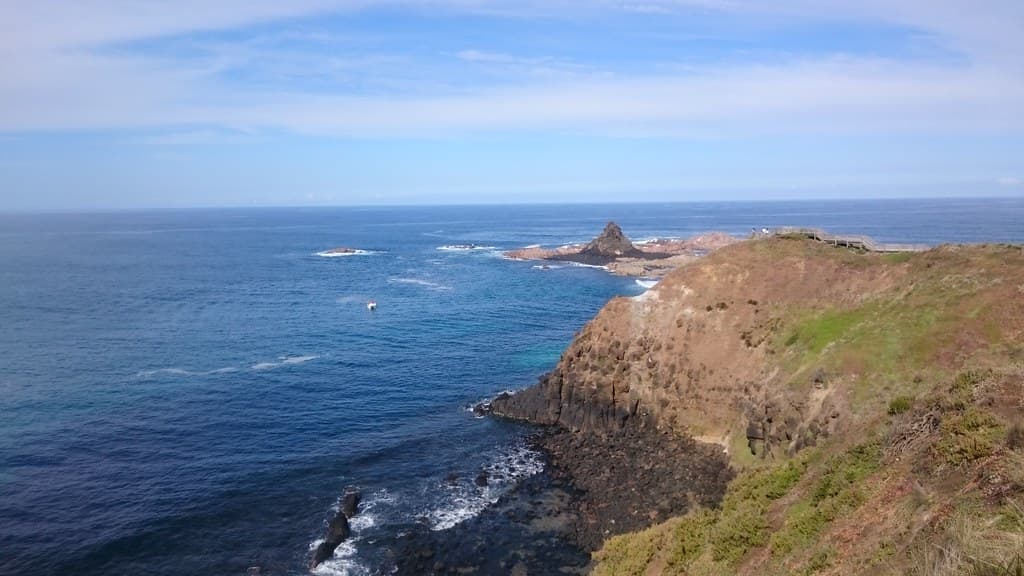
The name says headland, but your feet will touch sand first—a gentle crescent where the Westernport foreshore meets volcanic remnants carved by millennia of Bass Strait swells. Pyramid Rock itself rises ahead, a tiered formation of basalt that fractures into geometric columns, their dark surfaces slick with spray when the tide pushes in. At low water, rockpools reveal anemones the color of burgundy wine and tiny fish darting between kelp fronds.
“Volcanic basalt columns share the shoreline with one of Australia's largest little penguin colonies.”
 Credit: Flickr
Pyramid Rock, Phillip Island - First viewing platform - sxz3
Families spread blankets near the carpark end, where the sand stays soft and the water rarely climbs past knee-height. Children squat with nets, hunting for hermit crabs while parents watch swallows dive low over the dunes. The beach curves southwest, sheltered enough that even January afternoons feel manageable, though the wind picks up most evenings and whips sand into tiny eddies along the tideline.
Stay until the sun drops behind the farmland inland, and you might spot little penguins waddling from the waves to their burrows in the dune scrub—Phillip Island's famous residents treating this beach as their front door. Boardwalks keep you from trampling nesting sites, and rangers patrol in summer, reminding visitors that camera flashes disorient the birds. The rock itself glows amber in the last light, each basalt edge catching the angle just so.


