
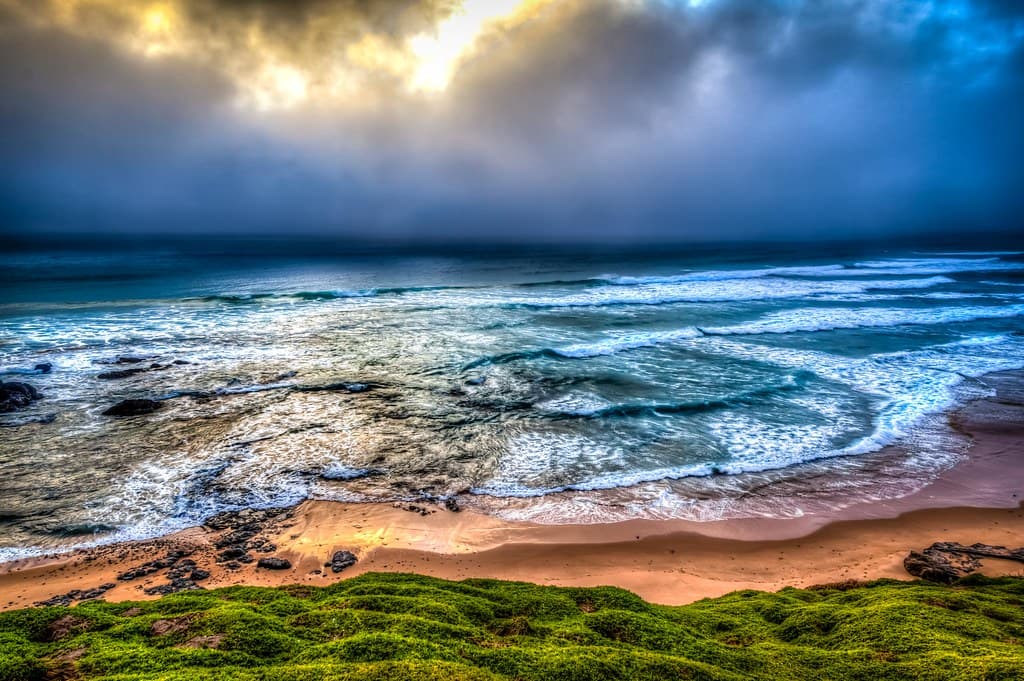
The walk from the car park winds through low heath where wallabies graze at dawn, and already you can hear the ocean's low roar. Round the final bend and the beach opens wide—a sweeping crescent where the Tasman meets Bass Strait in perpetual collision. The sand here isn't powder; it's coarse underfoot, studded with shell grit and dark mineral streaks, packed firm enough for long walks but yielding where the tide has just retreated.
“One of Victoria's few ocean beaches where you can watch thousands of shearwaters return to their cliff burrows at twilight during spring and autumn migrations.”
 Credit: Flickr
Phillip Island Instameet-99
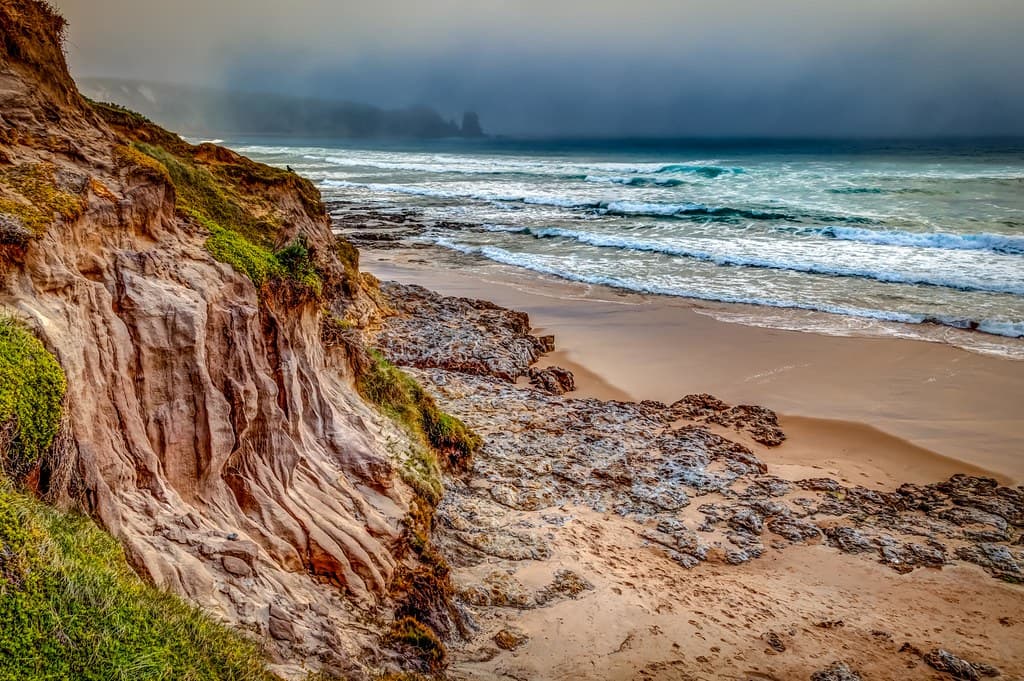
Surfers dot the lineup near the rocks, waiting for sets that march in with metronomic precision. Families stake out territory near the patrol flags, children squealing as shorebreak crashes ankle-deep, then retreats in a hiss of foam. The cliffs at the southern end glow amber in afternoon light, their layered sediment marking millennia of tidal memory. Gulls wheel overhead, and if you time it right in spring, you'll spot short-tailed shearwaters threading back to their clifftop burrows by the thousand.
When the wind swings westerly, the beach empties fast—locals know the shelter of the headland tracks, where you can still watch the white water from behind native grasses. The water stays cold year-round, hovering near fourteen degrees in winter, sixteen in summer. You'll want a wetsuit even in January, but that chill is part of the contract: this is Bass Strait, unfiltered and unapologetic.


