Counting the waves…
Counting the waves…
A refined fusion of water purity, environmental stability, and communal vibrancy for London Arch.
View MethodologyAnalyzed via live sensors and environmental data.
Wave height, wind, and atmospheric stability.
Live footfall and crowd balance metrics.
Community reviews and curated sentiment.
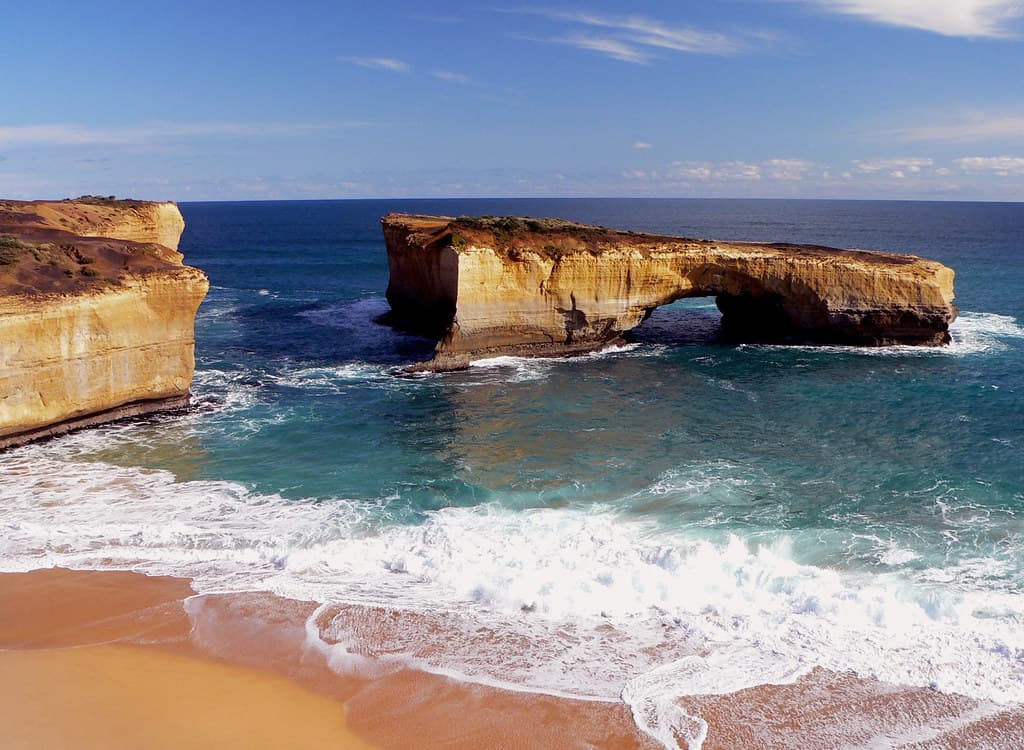
“You'll smell the salt spray before you see the arch—wind-whipped mist rises from turquoise channels cutting through 20-million-year-old limestone. The formation that gave this beach its name partially collapsed in 1990,…”
Limited recent visitor reports — live OBI telemetry is your best guide for current conditions.
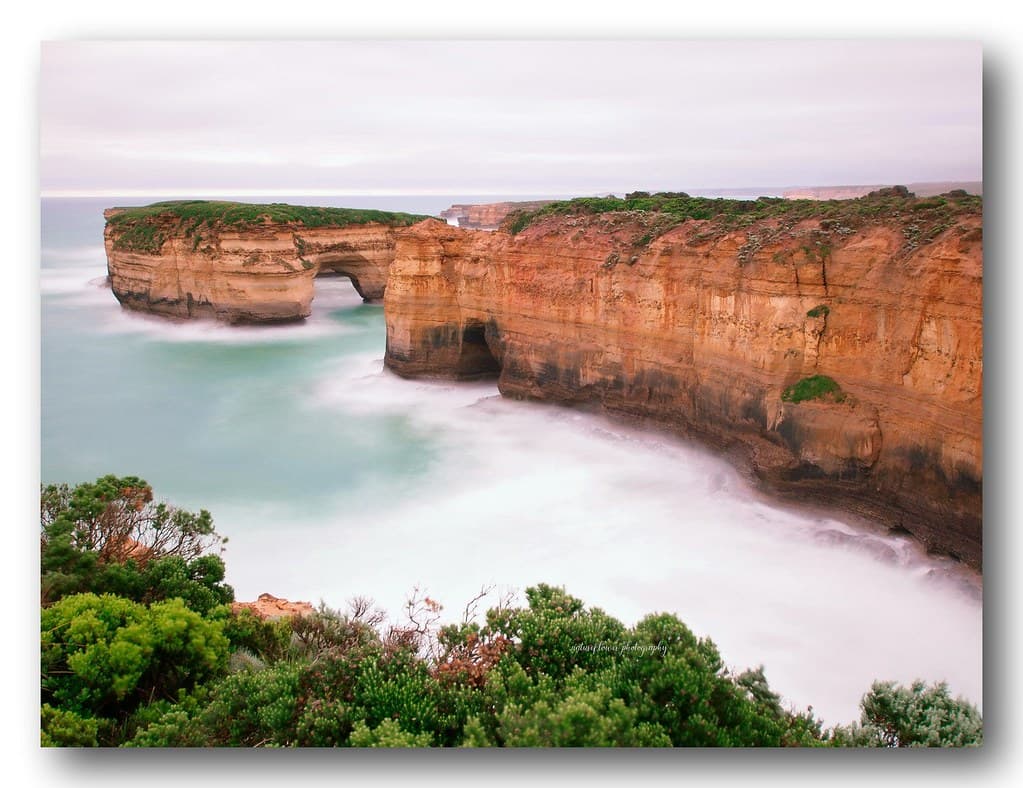
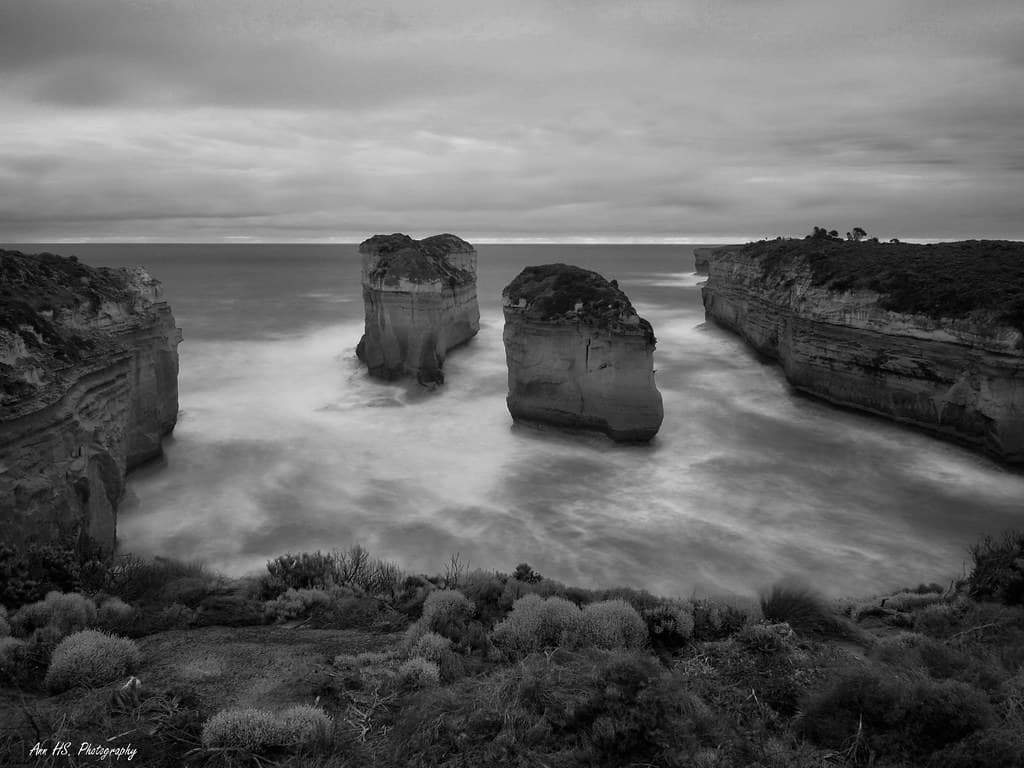
Stand at the clifftop lookout and watch waves explode against the base of London Arch, sending white plumes thirty feet into the air. The rust-streaked limestone towers rise from a platform of wave-cut rock, their surfaces pocked with caves and hollows carved by millennia of Southern Ocean swells. This is the Shipwreck Coast in full dramatic form—where more than 700 vessels foundered on submerged reefs and jagged outcrops between 1836 and 1932.
The beach itself curves in a protected cove west of the formation, accessible via a steep staircase that delivers you to blonde sand littered with kelp and rounded stones. In winter, grey seals haul out on the rocks. Year-round, the water remains a bracing 13 to 18 degrees Celsius, more suited to wading than swimming. Overhead, silver gulls wheel and cry, riding updrafts against sheer sandstone cliffs that glow apricot in afternoon light.
Credit: FlickrFrame the Stacks
Golden hour lights the limestone
Boardwalk reveals multiple vantage points
Search for weathered cuttlebone pieces
Where it is
London Arch
Port Campbell, Victoria, Australia
-38.690400°, 143.442000°
Weather
Loading…
Swell
—
Temp
Warm · Restorative
UV Index
Moderate
Wind
—
Tidal State
Last known
Max Sunlight
—
Ideal Shade
—
Jan - Dec (Peak)
Mar - Nov (Off-season)
Historical data suggests peak visibility and stable sea temperatures occur during the prime visitation window.
Select a category to load nearby places.
Unlock restaurants, luxury stays and curated maritime experiences within 2km
Swimming at London Arch is not recommended and is generally unsafe. The area features powerful ocean currents, unpredictable waves, and rocky coastline that create dangerous conditions. The site is primarily a viewing destination rather than a swimming beach. Visitors should stay behind safety barriers on the viewing platforms and keep a safe distance from cliff edges. The Southern Ocean here is particularly treacherous, with strong rips and cold water temperatures year-round. Enjoy London Arch from designated lookout points for your safety.
London Arch can be visited year-round, with each season offering different experiences. Summer (December-February) provides the warmest weather and longest daylight hours, ideal for photography. Winter (June-August) can be dramatic with rougher seas and fewer crowds, though weather is cooler and more unpredictable. Spring and autumn offer mild temperatures and good conditions. Early morning or late afternoon visits provide the best lighting for photos. Weather along the Great Ocean Road changes quickly, so bring layers regardless of season.
London Arch is located along the Great Ocean Road, approximately 8 kilometres west of the Twelve Apostles and 260 kilometres southwest of Melbourne. It's accessible by car via the B100, with a well-marked turn-off from the main road. Free parking is available at the dedicated London Arch car park. From the parking area, it's a short walk along paved pathways to the viewing platforms. The site is approximately 3 hours' drive from Melbourne. No public transport serves the site directly, so a car or organised tour is necessary.
London Arch itself has no facilities, but the nearby town of Port Campbell (10 kilometres east) offers various accommodation options including motels, holiday parks, and bed and breakfasts. Port Campbell has cafes, restaurants, general stores, and fuel stations. Peterborough, about 15 kilometres west, also has limited services. For more extensive dining and lodging options, consider staying in Warrnambool (60 kilometres east) or Apollo Bay. Many visitors explore London Arch as part of a Great Ocean Road day trip. Bring water and snacks as on-site facilities are unavailable.
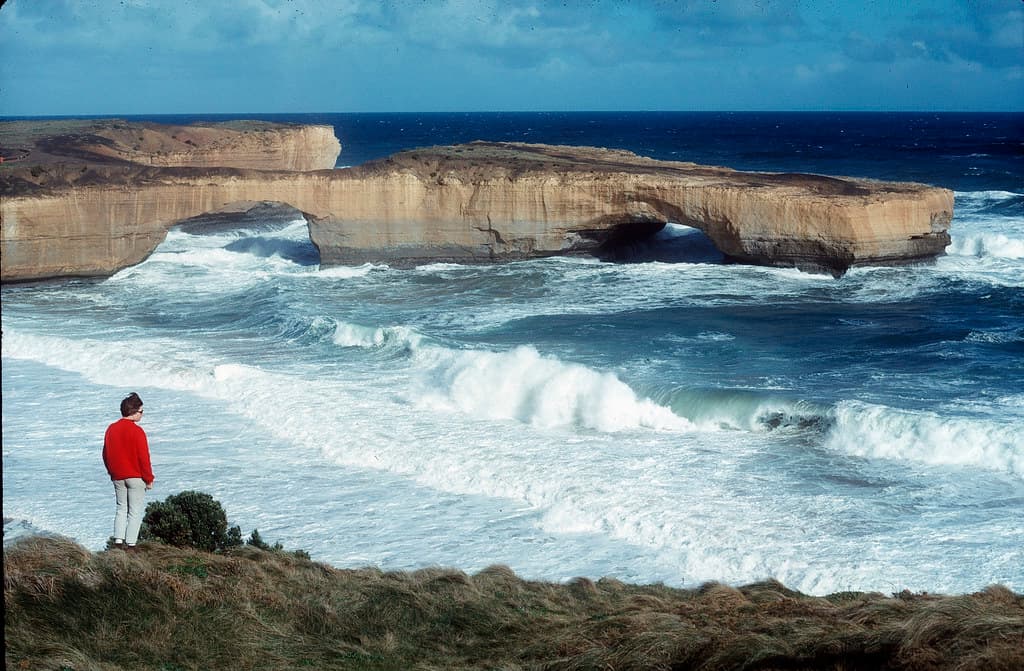
London Arch was originally called London Bridge because its double-arch structure resembled the famous Thames crossing. In January 1990, the inner arch collapsed unexpectedly, stranding two tourists on the outer section (they were rescued by helicopter). The formation became a single arch and was renamed London Arch. This natural event demonstrates the ongoing coastal erosion along this dramatic coastline. The remaining arch continues to erode and will eventually collapse. Viewing platforms offer safe vantage points to observe this spectacular example of coastal geology and natural change.
Photos