
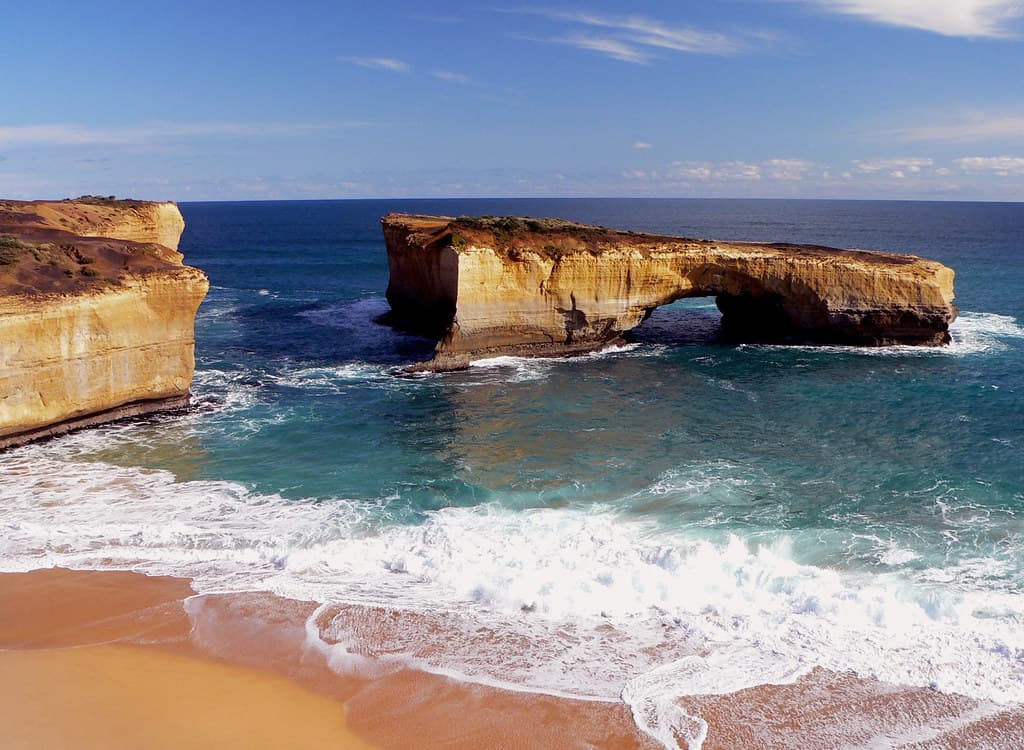
Stand at the clifftop lookout and watch waves explode against the base of London Arch, sending white plumes thirty feet into the air. The rust-streaked limestone towers rise from a platform of wave-cut rock, their surfaces pocked with caves and hollows carved by millennia of Southern Ocean swells. This is the Shipwreck Coast in full dramatic form—where more than 700 vessels foundered on submerged reefs and jagged outcrops between 1836 and 1932.
“This is one of the few places where you can witness geological change within a human lifetime—the arch's collapse stranded two tourists who were later rescued by helicopter.”
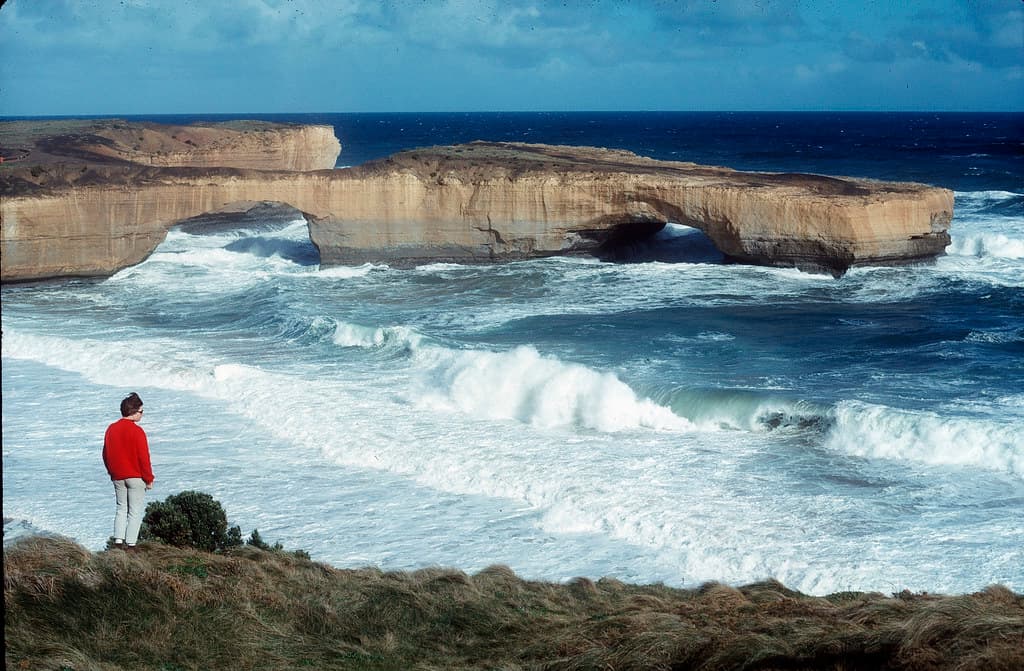 Credit: Flickr
B3R59-127 Seascape with crashing waves with some Kodachrome red & London Bridge VIC along the coast now named London Arch
The beach itself curves in a protected cove west of the formation, accessible via a steep staircase that delivers you to blonde sand littered with kelp and rounded stones. In winter, grey seals haul out on the rocks. Year-round, the water remains a bracing 13 to 18 degrees Celsius, more suited to wading than swimming. Overhead, silver gulls wheel and cry, riding updrafts against sheer sandstone cliffs that glow apricot in afternoon light.
You'll share this stretch with day-trippers driving the Great Ocean Road, but arrive early or late and the beach empties. The air tastes of brine and eucalyptus from the coastal scrub above. Oystercatchers probe tide pools. The arch—or what remains of it—commands every view, a monument to erosion's patient work and the ocean's refusal to compromise.


