
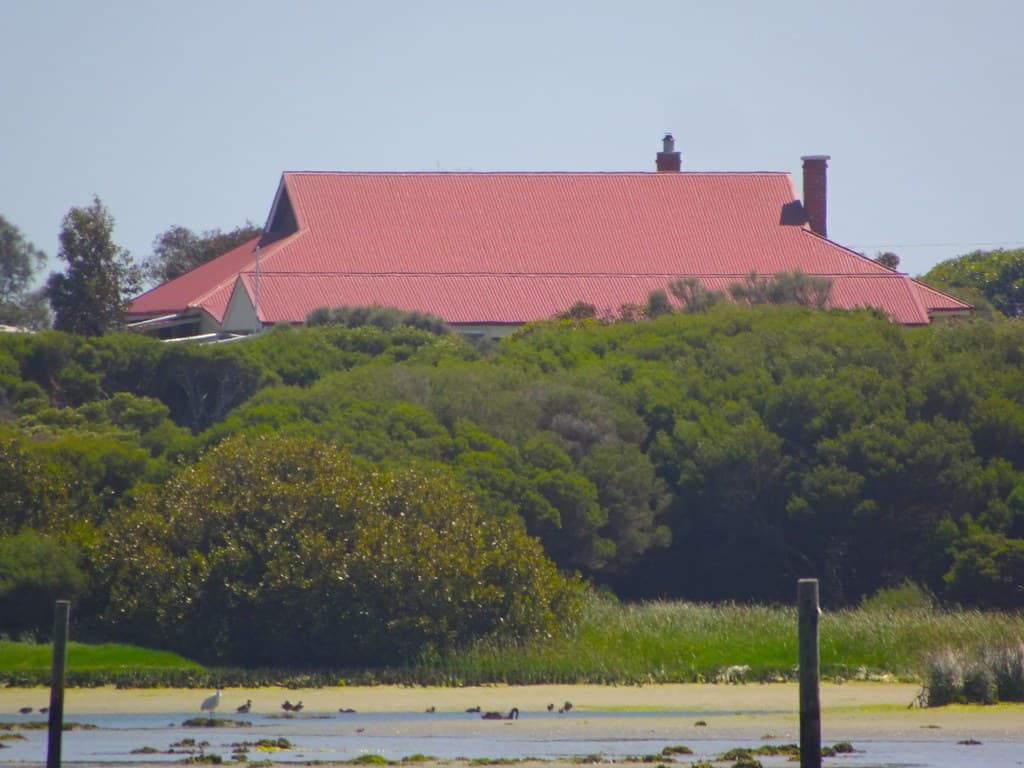
The turn-off from the Broome–Cape Leveque Road is unmarked save for a faded sign, and the four-wheel-drive track dips through spinifex and acacia until the Indian Ocean appears as a strip of impossible blue. You'll park on red dirt hardpan and walk through low scrub to the cliff edge, where the land simply ends—sheer ochre walls dropping to a beach the colour of burnt honey. At low tide, exposed reef platforms reveal 130-million-year-old sauropod tracks, three-toed impressions pressed into Cretaceous mud now hardened to stone.
“One of the planet's few accessible sites where you can walk among dinosaur footprints revealed twice daily by the tide.”
 Credit: Flickr
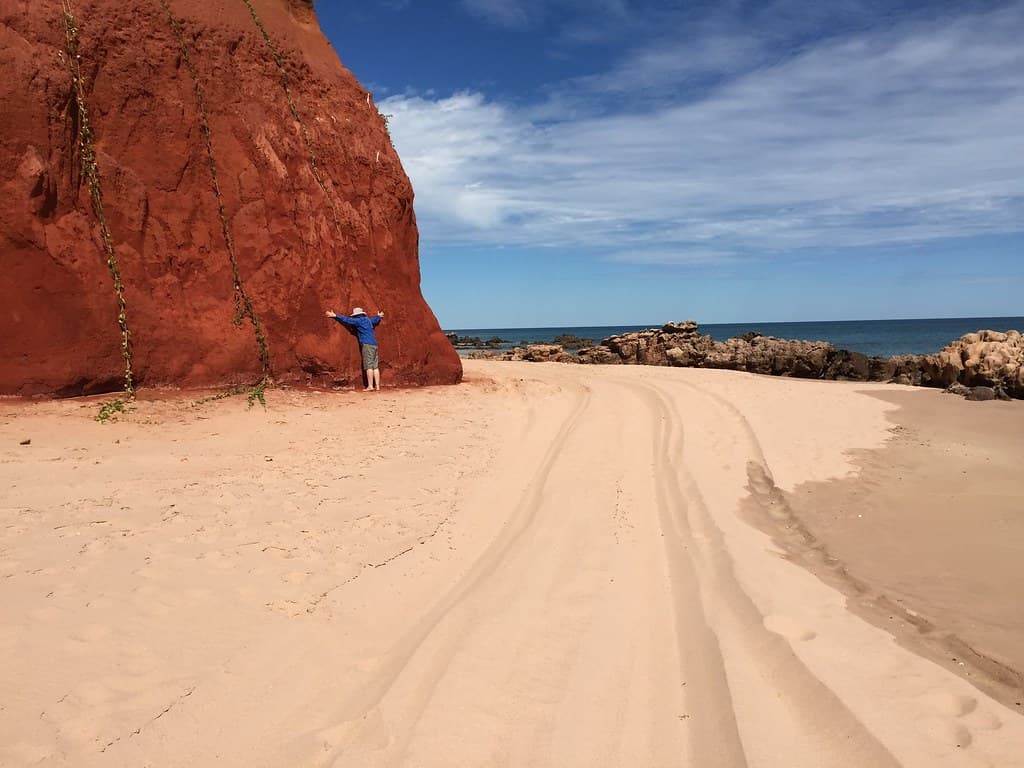
Lovin' the red rock and cream sand of James Price Point, West Australia
The beach curves north beneath the cliffs, a ribbon of coarse sand littered with bleached driftwood and fragments of coral. Waves fold onto the shore in lazy turquoise scrolls, warm even in the dry season, while offshore the water deepens to indigo where the continental shelf falls away. Between June and October, humpback whales cruise past on their northern migration, blowing spouts visible from the clifftop.
There are no facilities, no shade, no mobile signal. Bring every litre of water you'll need, and time your visit for the falling tide if you want to walk the dinosaur trackways. The Goolarabooloo people consider this country sacred; tread lightly, pack out your rubbish, and resist the urge to touch the ancient footprints—oil from human hands accelerates their erosion.


