
The beach reveals itself slowly. First comes the iron-rich soil staining the shoreline rust-orange, then the mangroves—gnarled, salt-tolerant sentinels framing tidal creeks. You step onto sand that shifts from pale gold to near-white depending on the angle of the Kimberly sun. The water here moves with purpose, driven by some of the world's most extreme tidal ranges; at low tide, vast flats emerge, ribbed and glistening.
“One of Australia's most inaccessible mainland beaches, reachable only by air and boat, preserving an encounter with coastline unchanged since the Dreamtime.”
 Credit: Flickr
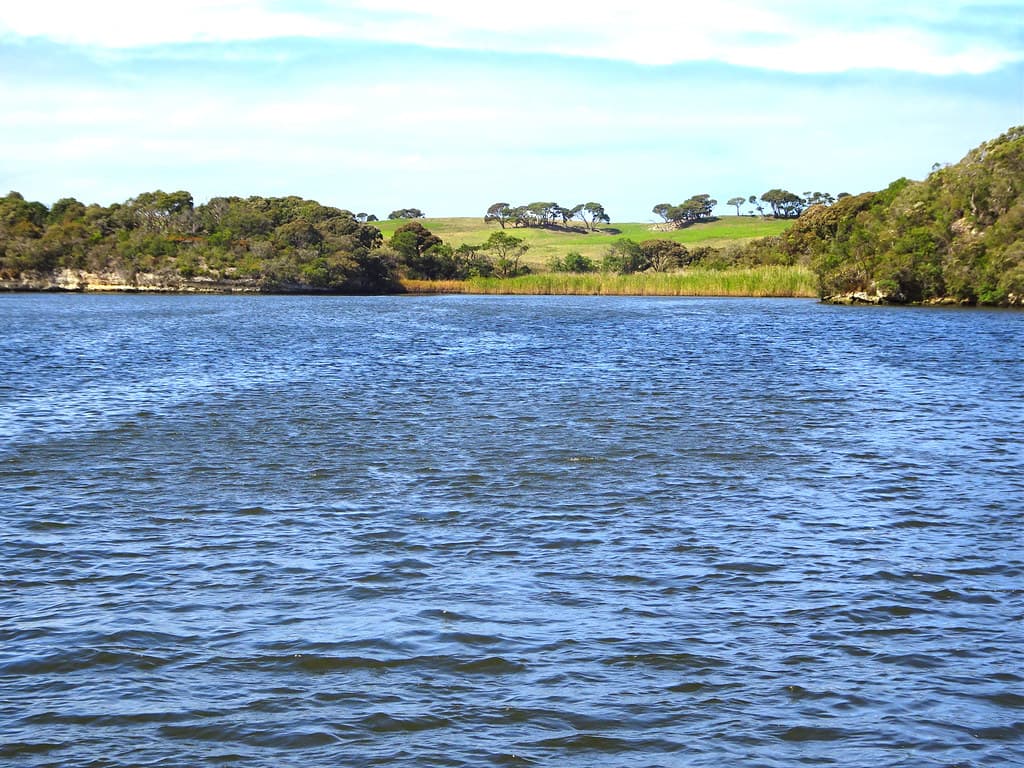
Nelson Victoria. Major Thomas Mitchell explored and named the Glenelg River in 1836. Limestone cliffs and water reeds and pasture lands along the river. .
This is not a place for casual crowds. The remoteness demands planning—charter flights from Broome, arranged boat transfers, awareness of seasons when the wet turns dirt roads to chocolate slurry. But that barrier filters out all but the genuinely curious. You'll share the beach with oystercatchers probing the shallows and the occasional fishing boat anchored offshore, its crew hauling barramundi from the estuary.
The silence here carries weight. No beach bars, no lifeguard towers, no ice cream vendors. Just the lap of water against hull, the rustle of spinifex in the breeze, and the knowledge that you're standing on a coast that has looked much the same for millennia. Bring everything you need—shade, water, respect for the tides—and the Kimberley will let you stay awhile.


