
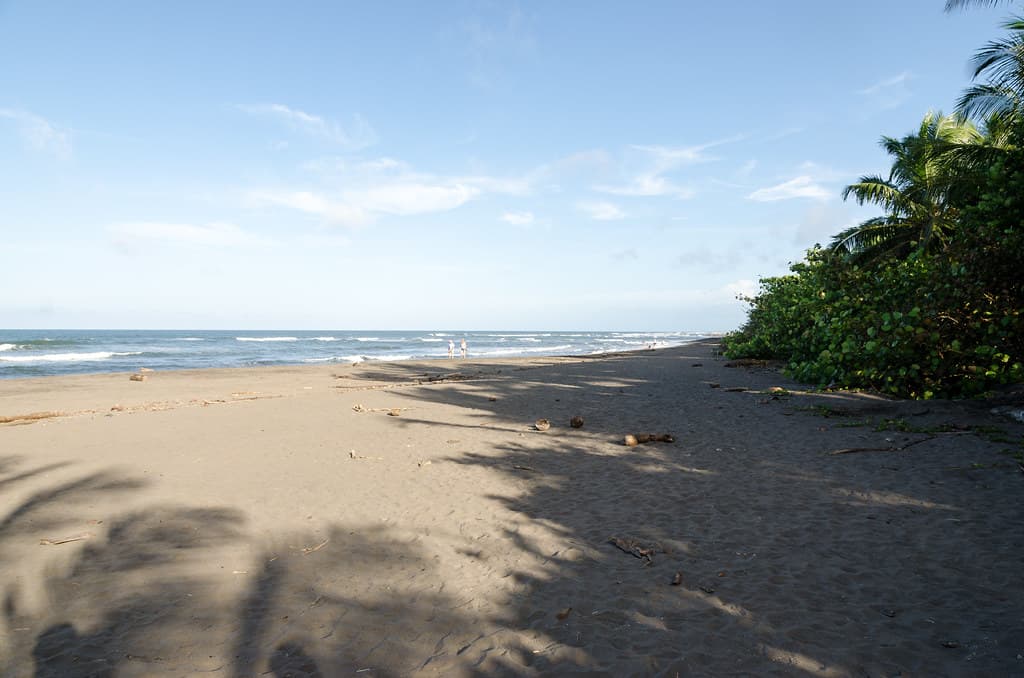
You reach Caño Palma by boat through the Tortuguero canal system, then follow a boardwalk through swamp forest until the trees part and the Caribbean appears—a ribbon of tan sand bordered by sea grape and coconut palms. The beach belongs to the turtles first: leatherback furrows zigzag across the upper beach, each track wide as a tractor tire, leading to nesting pits excavated in the night.
“The only beach access point to Caño Palma Biological Station, where conservation work shapes daily rhythms.”
 Credit: Flickr
Playa Caño Palma — photo by CharlieBro
The research station operates at the forest edge, a cluster of screened buildings where biologists catalog arribadas and monitor nest temperatures. You'll hear the work before dawn: the rustle of researchers returning from night patrol, data sheets crackling, the metallic click of calipers measuring carapace width. By first light, the beach is yours to walk, but you tread carefully—every divot might be a nest, every shadow a hatchling track. Ghost crabs emerge from burrows, their sideways scuttle punctuating the crash and hiss of waves.
The forest presses close here. Strangler figs drape the canopy edge; morpho butterflies flash electric blue in the understory. At high tide, waves lap within meters of tree roots. You can swim, but the pull is strong and the water carries sediment from rivers to the north. Most visitors come for what's behind them: howler monkey troops, three-toed sloths, poison dart frogs the color of strawberries.


