

Muanaicake sits on Fulaga's inner shore, facing not open ocean but the intricate lagoon system that makes this island famous among cruisers and divers. The sand is fine and white, deposited by currents that swirl through the limestone labyrinth. At low tide, the beach extends fifty feet further, exposing tide pools where sea stars cling to volcanic rock and anemones pulse in the shallows.
“The combination of white sand, accessible snorkeling, and Fulaga's surreal limestone architecture creates a landscape unlike anywhere else in the Pacific.”
 Credit: Pexels
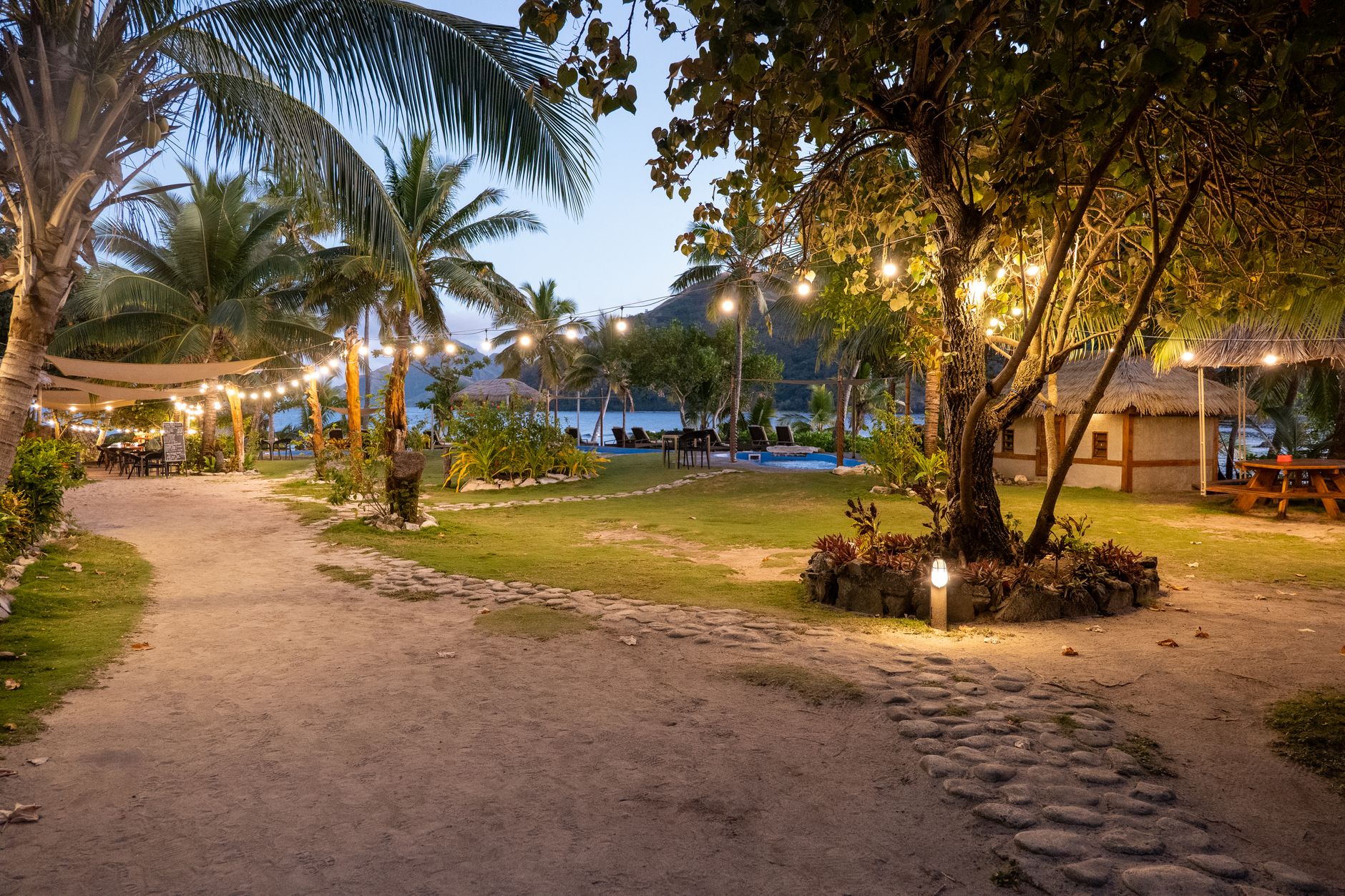
Charming evening view of a tropical resort pathway in Fiji, adorned with glowing string lights.
You wade into water so clear you can count scales on parrotfish fifteen feet down. The bottom drops gradually—first sand, then scattered coral heads, then the edge of the reef system where hard corals build fortresses in shades of brown, purple, and green. Damselfish guard their territories aggressively, nipping at your fingers if you drift too close. Schools of fusiliers shimmer past like silver ribbons. Above water, the limestone pinnacles create a skyline of organic sculpture, each formation unique, carved by rain and tide into shapes that suggest ruins or cathedrals.
Few people make it to Muanaicake—it requires navigating the lagoon's narrow channels, reading currents and reef edges, trusting local knowledge or good charts. The beach remains mostly empty except for the occasional fisherman checking traps or a family collecting shells. You spend hours here, alternating between snorkeling and resting on sand that radiates stored heat, watching the light shift through the limestone gates.


