
The beach stretches longer than you expect—five miles of blonde, compacted sand that slopes gently into the gray-green Channel. At low tide, the waterline retreats so far you can walk for ten minutes before reaching the surf. Gulls wheel overhead; dog walkers and joggers trace the firm sand near the dunes. But the bluffs are always there, pockmarked and steep, and the simple monuments—the obelisk, the plaques, the preserved bunkers—pull you back into what happened here.
“No other beach on earth carries the same density of sacrifice, memory, and pilgrimage woven into every square meter of sand.”
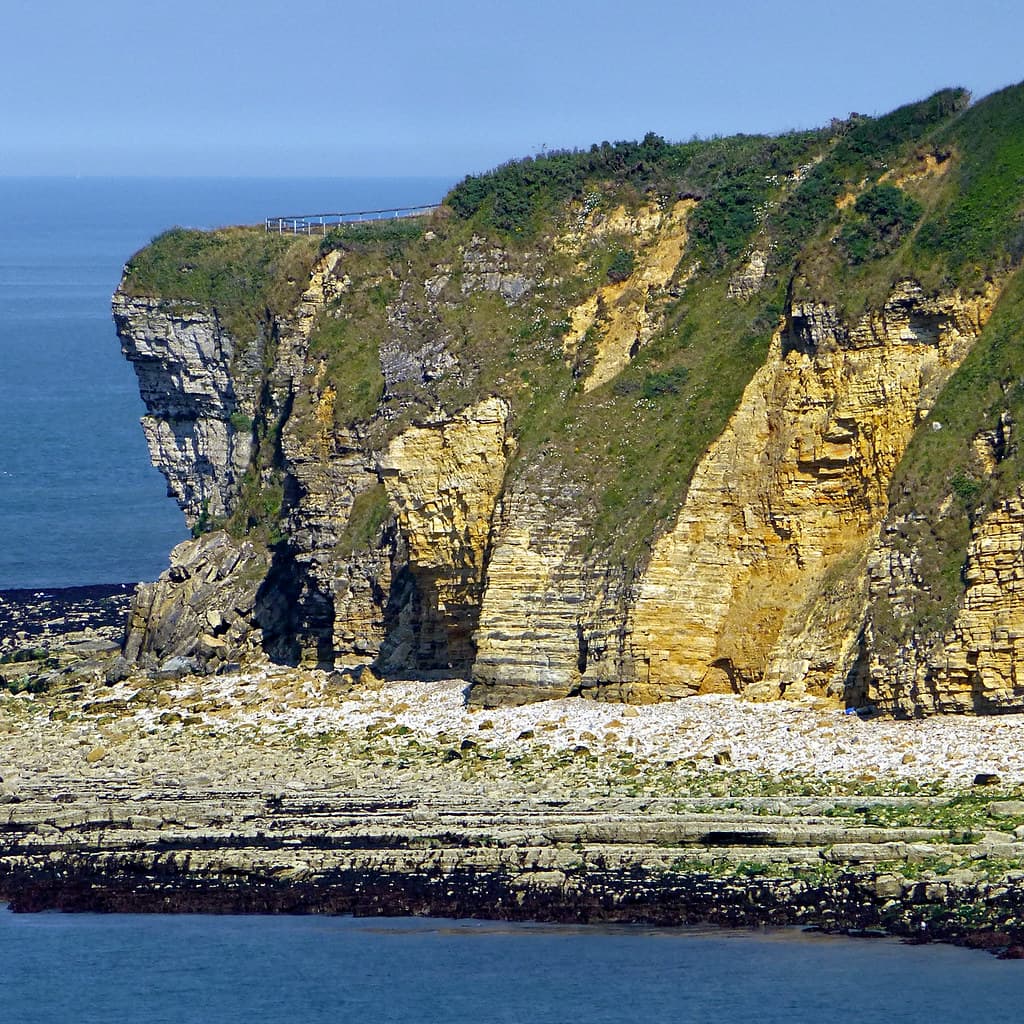 Credit: Flickr
D-Day Cliffs, Normandy, France
You don't come to Omaha Beach to sunbathe, though families do spread blankets near the seawall on warm afternoons. You come because this sand saw the fiercest fighting of D-Day, because the names of villages—Colleville, Vierville, Saint-Laurent—carry weight you can't ignore. The American Cemetery sits on the bluff just inland, its white crosses visible from the beach. The Normandy American Cemetery Visitor Center opens daily, and the memorials along the shore are always accessible.
Visit at dawn or dusk when the beach empties. The light slants low, gilding the surf and throwing long shadows across the sand. The wind never stops. You'll notice how exposed it all feels, how little cover the beach offers. That realization—quiet, physical—is why you came.


