Counting the waves…
Counting the waves…
A refined fusion of water purity, environmental stability, and communal vibrancy for Plage du Débarquement.
View MethodologyAnalyzed via live sensors and environmental data.
Wave height, wind, and atmospheric stability.
Live footfall and crowd balance metrics.
Community reviews and curated sentiment.
“You'll find no ice-cream kiosks or beach-chair battalions here. Just the scrape of pebbles underfoot, the scent of salt and wild fennel, and the same chalky cliffs that watched Allied landing craft grind ashore in June…”
Limited recent visitor reports — live OBI telemetry is your best guide for current conditions.
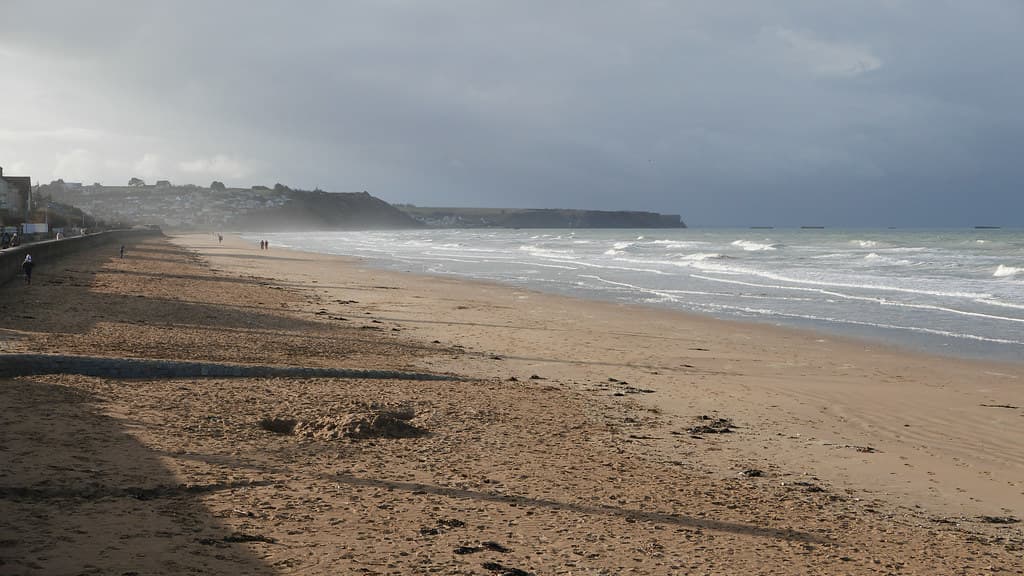
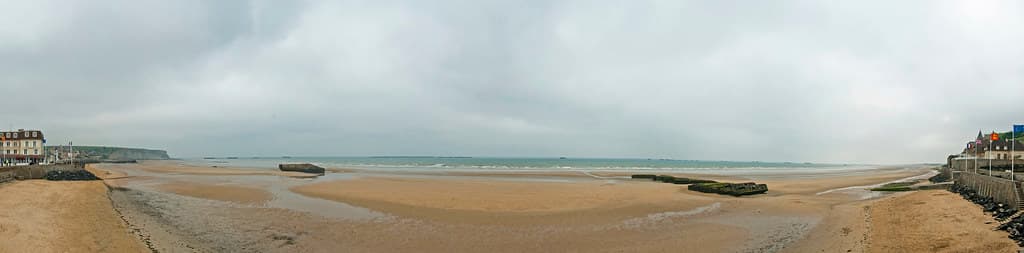
The narrow road through Tracy-sur-Mer winds past stone farmhouses before dropping you onto a crescent of sand and shingle that curves westward toward Arromanches. No plaques interrupt the strand itself—just a concrete pillbox half-buried in marram grass and the faint tracery of rust on tide-washed rebar. The beach smells of kelp and diesel from the fishing boats moored offshore, and in late afternoon the chalk cliffs turn butter-gold, then rose.
You'll share the foreshore with Norman retirees walking spaniels and the occasional historian running fingers over pocked blockhouse walls. Low tide exposes ribbed sand that holds boot-prints for hours, and children in wellies poke at hermit crabs in tidal pools edged with bladderwrack. The water stays cold even in July—plan on sixteen degrees Celsius and a breath-stealing plunge.
Weathered concrete in golden hour
Two kilometers along firm sand
Sixteen degrees, even in summer
Where it is
Plage du Débarquement
Tracy-sur-Mer, Calvados, France
49.348200°, -0.646300°
Weather
Loading…
Swell
—
Temp
Warm · Restorative
UV Index
Moderate
Wind
—
Tidal State
Last known
Max Sunlight
—
Ideal Shade
—
May - Sep (Peak)
Jan - Dec (Off-season)
Historical data suggests peak visibility and stable sea temperatures occur during the prime visitation window.
Select a category to load nearby places.
Unlock restaurants, luxury stays and curated maritime experiences within 2km
Swimming conditions at Plage du Débarquement vary with tides and weather. The beach is exposed to the English Channel, so currents can be strong, particularly during high tide. The beach is not typically supervised by lifeguards, especially outside summer months. Check tide times before visiting, as low tide reveals rocky areas. Families with children should exercise extra caution. The beach's historical significance means some areas may have remnants from D-Day, so stay within designated swimming zones and follow any posted warnings.
Plage du Débarquement can be visited year-round, with each season offering different experiences. Summer (June-August) provides warmest weather and longest days, ideal for beach activities. Spring and autumn offer fewer crowds and comfortable temperatures for walking and photography. The beach is particularly atmospheric at sunset throughout the year. Winter visits can be dramatic but windy. For D-Day history enthusiasts, early June coincides with anniversary commemorations. Morning visits often feature calmer conditions, while evening light enhances the scenic coastline views.
Plage du Débarquement is located in Tracy-sur-Mer, between Arromanches-les-Bains and Courseulles-sur-Mer along the D514 coastal road. By car from Bayeux, it's approximately 15 kilometers northwest. Limited roadside parking is available near the beach access points along the coast road. The beach is less developed than neighboring Arromanches, so parking facilities are modest. Public transport options are limited; hiring a car or joining a guided D-Day tour is recommended. The beach is accessible via a short walk from the road.
Tracy-sur-Mer is a small village with limited on-site amenities. Basic services and a few gîtes or chambres d'hôtes are available in the village itself. For more restaurant options and accommodations, nearby Arromanches-les-Bains (2 kilometers) offers several hotels, cafés, and seafood restaurants. Bayeux, about 10 kilometers inland, provides the widest selection of hotels and dining. It's advisable to bring refreshments if planning an extended beach visit, as facilities directly at this quieter stretch are minimal compared to busier Gold Beach sectors.
Plage du Débarquement is part of Gold Beach, where British forces landed on June 6, 1944. While smaller and less developed than Arromanches, the beach offers a quieter perspective on D-Day landings. Remnants of the Atlantic Wall defenses may be visible along the coast. The proximity to Arromanches means you're near the famous Mulberry Harbour remains. The beach's less-touristed nature allows for reflective contemplation of the historical events. Interpretive panels may be found along the coastal path, though dedicated museums are located in neighboring towns.