
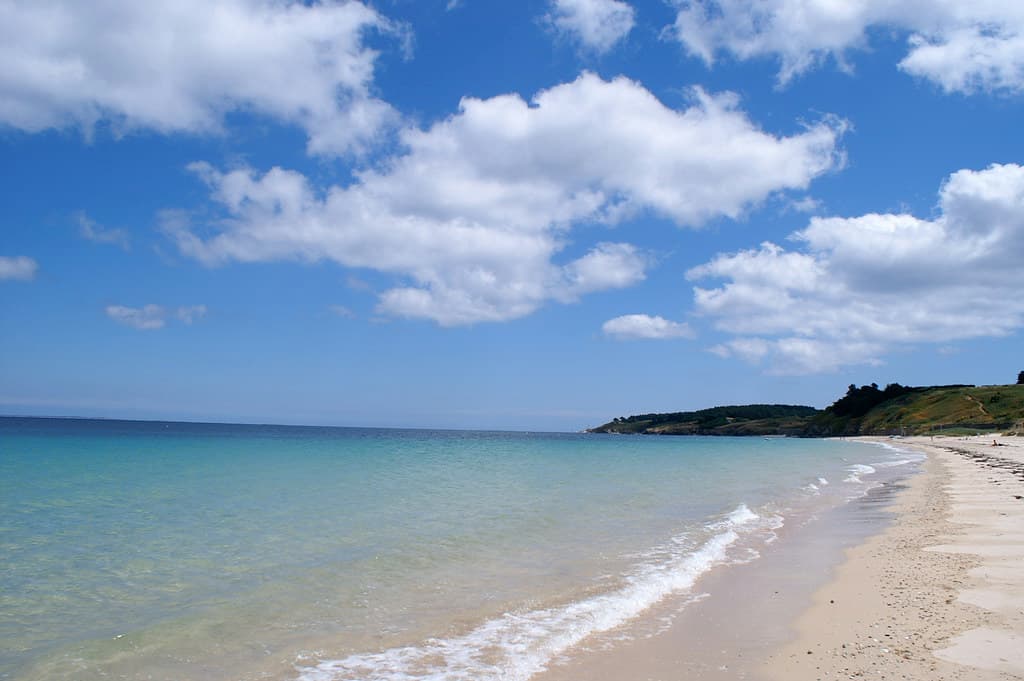
The beach does something no other strand in Europe manages: it curves outward, a convex arc that has migrated sixty meters eastward since the 1930s. You notice the garnet first—tiny ruby fragments mixed into the blonde sand, remnants of the island's mining past. The beach stretches four hundred meters between rocky points, shallow enough that children wade out thirty paces before the water reaches their waists, while kitesurfers skim the deeper channel beyond.
“Europe's only convex beach migrates eastward each year, a geological anomaly studded with garnet sand on a car-free island.”
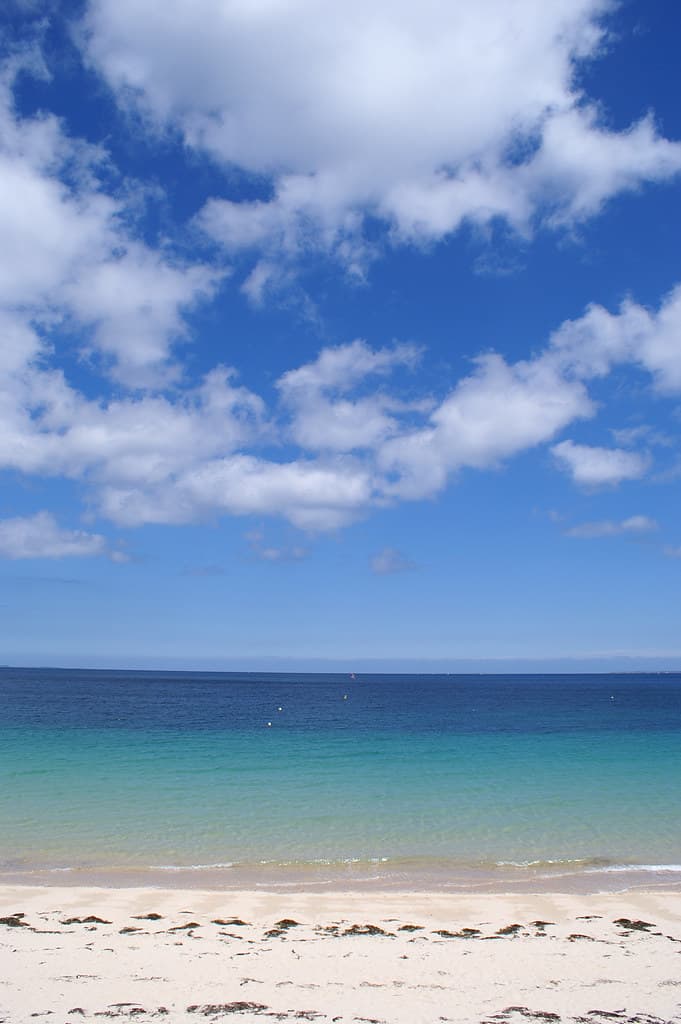 Credit: Flickr
Morbihan : Belle-île-en-mer : Locmaria (Lokmaria-ar-Gerveur), " plage des grands sables "
You reach Groix by ferry from Lorient, a forty-five-minute crossing that deposits you in Port-Tudy. Rent a bicycle or catch the island shuttle; the beach lies on the southeastern shore, sheltered by maritime pines that lean permanently eastward from prevailing winds. In summer, food trucks park behind the dunes selling galettes and cidre. In October, you might share the sand with a dozen locals and their dogs, watching the beach reclaim yet another meter from the sea.
The geological curiosity draws scientists, but families return for the shallow bay and the way the setting sun ignites the garnet grains into embers. At low tide, you can walk to exposed sandbars and watch crabs scuttle through tidal pools. The Maison de la Réserve, a five-minute walk inland, explains why this restless beach matters—its eastward creep documented in photographs spanning decades, a shoreline that refuses to stay still.


