
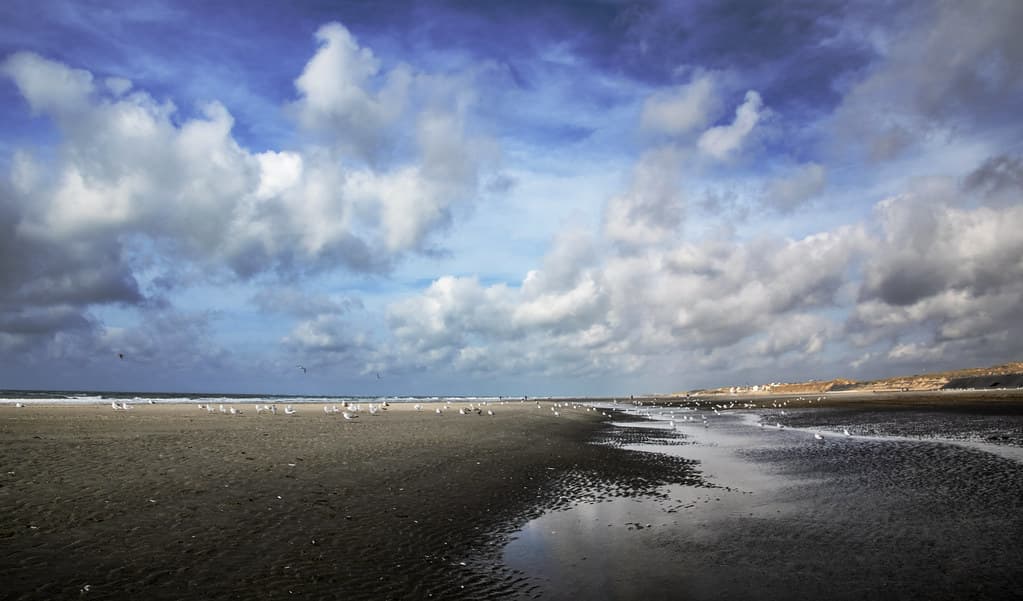
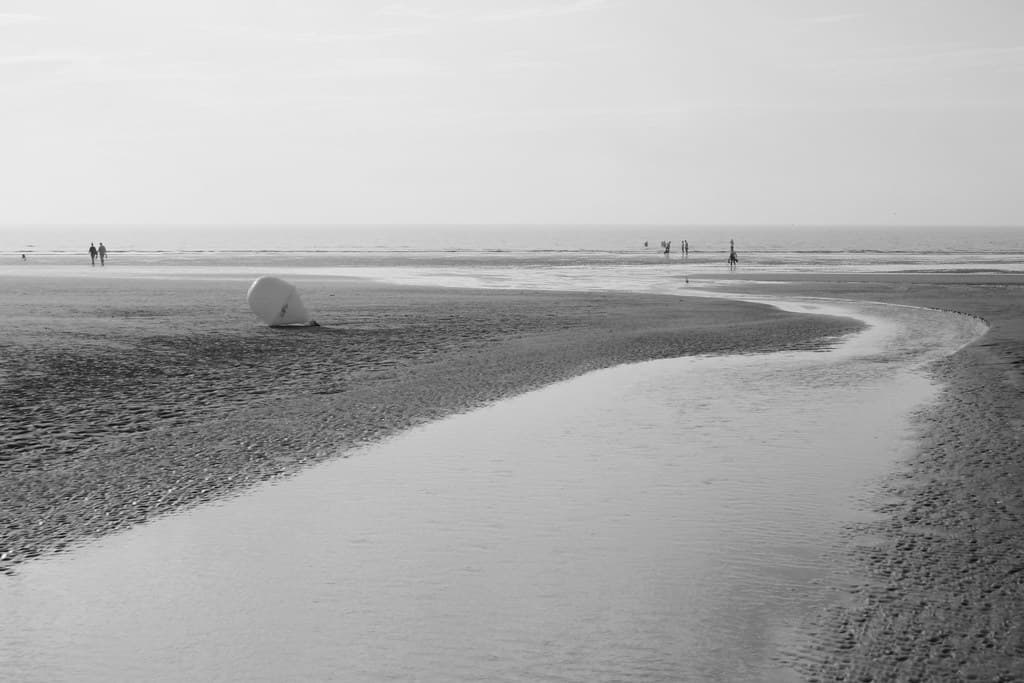
The Plage de Quend unfolds as a five-kilometer ribbon of pale sand wedged between the pine forests of the Marquenterre and the English Channel. You reach it by footpath through the Dunes de la Mollière, a nature reserve where sand sedges bow in the onshore wind and rabbits bolt between tussocks of beach grass. The beach itself is broad—so broad that at low tide you'll cross a hundred meters of rippled sand before the water finds you. Families plant windbreaks and kites tug at their strings; the flatness makes every figure visible against the pale sky.
“The five-kilometer expanse offers northern France's widest tidal flats, where low tide reveals a moonscape of shallow pools beneath endless sky.”
 Credit: Flickr
Plage de Quend, Quend
The light here is what photographers drive three hours from Paris to catch. Late afternoon gilds the dunes copper, and the shallow gradient of the shore reflects the sky in pools left by the receding tide. Sunsets bleed tangerine and mauve into the water, and the wind never quite dies. This is not the Mediterranean; bring a jacket even in July.
Quend sits on the quieter shoulder of the Baie de Somme, far enough from the resort bustle of Le Touquet yet accessible by regional train and bike path. The beach is supervised in summer, the sand firm enough for jogging, and the village behind it modest—a boulangerie, a few cafés, vacation rentals tucked among the pines. You come here not for glamour but for the elemental: sand, wind, tide, and a horizon unbroken by anything but sky.


