Counting the waves…
Counting the waves…
A refined fusion of water purity, environmental stability, and communal vibrancy for Morsum Kliff Beach.
View MethodologyAnalyzed via live sensors and environmental data.
Wave height, wind, and atmospheric stability.
Live footfall and crowd balance metrics.
Community reviews and curated sentiment.
“The cliffs glow like oxidized iron—bands of ocher, sienna, and charcoal marking twelve million years of sediment. Below, the beach reveals its Wadden Sea character: mud flats stippled with lugworm casts, channels…”
Limited recent visitor reports — live OBI telemetry is your best guide for current conditions.
You stand at the base of the Kliff, craning upward at striations that tell a story older than the North Sea itself. The cliffs rise thirty meters, their faces carved into buttresses and gullies by rain and wind. Tertiary clay—deposited when this land lay beneath a subtropical sea—alternates with Pleistocene sand and gravel from the last ice age. The colors shift with the light: burnt orange at dawn, deep umber under cloud cover, nearly crimson when wet from rain. Fences and warning signs keep you back from the crumbling edge above, where chunks of cliff face regularly calve into the scree below.
The beach here bears little resemblance to Sylt's Atlantic side. The Wadden Sea advances and retreats across tidal flats that stretch toward Föhr and the Danish mainland. At low tide, the water pulls back a kilometer, exposing ribbed sand glazed with algae and punctuated by blue mussel beds. Oyster shells crunch underfoot. Hermit crabs scuttle through tide pools where bladderwrack floats like deflated balloons. The air smells of brine and decomposition, the particular perfume of intertidal zones where life concentrates in the margins.
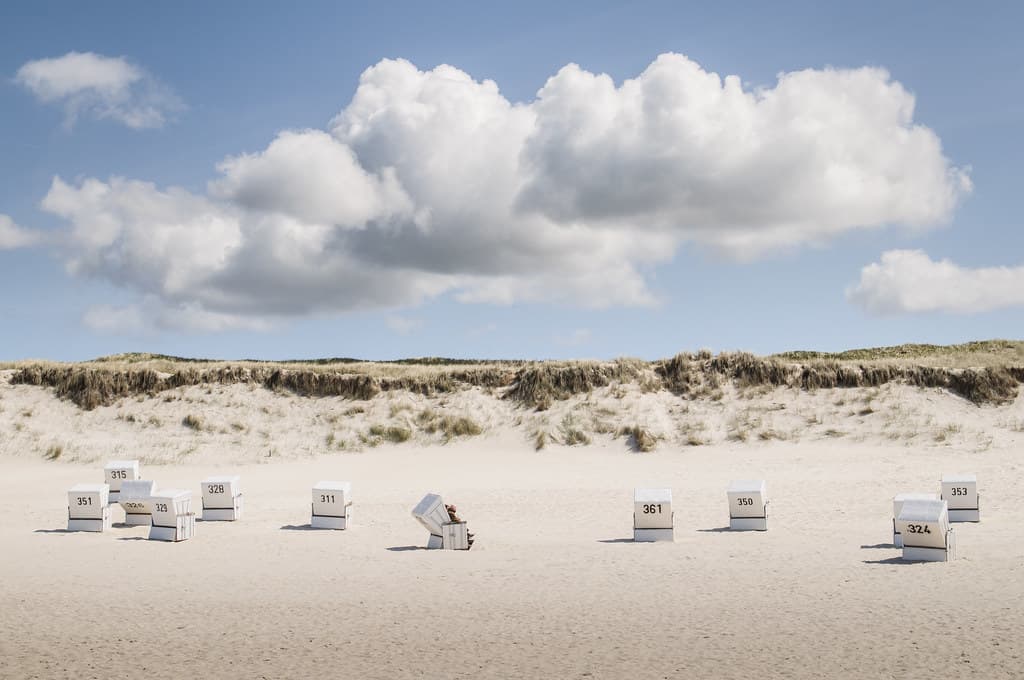
Wide white-sand beach with footprints
Cliff-edge cove with emerald water
Layered geology in afternoon light
Guided Wadden Sea expeditions
Reflective water foregrounds cliffs
Prime Visitation
Less Crowds
Where it is
Morsum Kliff Beach
Sylt, Schleswig-Holstein, Germany
54.878800°, 8.437900°
Weather
Loading…
Swell
—
Temp
Warm · Restorative
UV Index
Moderate
Wind
—
Tidal State
Last known
Max Sunlight
—
Ideal Shade
—
May - Sep (Peak)
Jan - Dec (Off-season)
Historical data suggests peak visibility and stable sea temperatures occur during the prime visitation window.
Near Morsum Kliff Beach
Explore dining, stays, nightlife, and activities near Morsum Kliff Beach in Sylt, Germany. Every listing below is a real place linked to this beach — open a card for reviews, maps, and booking options.
Food, cafés, and dining close to Morsum Kliff Beach — curated from places linked to this beach.
Stays and lodging options near Morsum Kliff Beach for your beach trip.
Bars and evening spots near Morsum Kliff Beach.
Activities, tours, and attractions near Morsum Kliff Beach.
Select a category to load nearby places.
Unlock restaurants, luxury stays and curated maritime experiences within 2km
Morsum Kliff Beach faces the Wadden Sea on Sylt's east side, offering calmer waters than North Sea beaches but swimming conditions vary with tides. The rocky shoreline and mudflats require caution. Strong tidal currents can be present, and the beach is less supervised than popular resort beaches. It's better suited for wading and exploring tide pools than serious swimming. Always check tide tables before visiting, as water depth changes dramatically.
Visit during shoulder seasons (May-June or September) for fewer crowds and excellent photography light at the distinctive cliff formations. The colorful 10-million-year-old cliff layers are stunning year-round, but spring and autumn offer milder weather and better conditions for walks. Sunset visits are particularly rewarding. Winter can be atmospheric but windy and cold. Low tide reveals more of the unique geological features and allows exploration of the Wadden Sea landscape.
Morsum Kliff is located in eastern Sylt, accessible by car or bicycle from the village of Morsum. If arriving by train at Westerland, take local bus connections toward Morsum or rent a bicycle for the scenic ride. Parking is available near the cliff viewpoint. From the parking area, it's a short walk to the beach. The location is more remote than Sylt's west coast beaches, requiring deliberate planning to reach.
The nearby village of Morsum offers limited dining options, including traditional Frisian restaurants and cafés. For broader choices, Westerland is about 15 minutes away with numerous hotels, guesthouses, and restaurants. Some visitors stay in Morsum's charming guesthouses or vacation rentals for a quieter Sylt experience. Pack snacks and water, as beach-side facilities are minimal. The historic village of Keitum nearby also has quality dining and accommodation options.
Morsum Kliff is Sylt's oldest geological formation, displaying 10 million years of earth history in colorful horizontal layers of clay, sand, and kaolin. This protected natural monument stands out dramatically on otherwise flat Sylt, showcasing red, black, white, and yellow strata. The cliff and surrounding Wadden Sea landscape offer completely different scenery from Sylt's famous North Sea beaches. It's an excellent spot for geology enthusiasts, photographers, and nature lovers seeking something beyond typical beach experiences.
Photos