
Step onto Kuta Beach at midday and the heat radiates through your soles—fine beige sand studded with shell fragments and the occasional tangle of plastic that volunteers sweep at dawn. Sarong vendors call out prices, surf instructors wax boards under faded umbrellas, and the Indian Ocean churns in shades of slate and jade. This is not a postcard cliché. It's a living, breathing town square that happens to front the sea, where package tourists share shoreline with Balinese families and surf pilgrims who arrived in the seventies and never left.
“Kuta remains the only Bali beach where mass tourism, authentic surf culture, and local daily life coexist without pretense.”
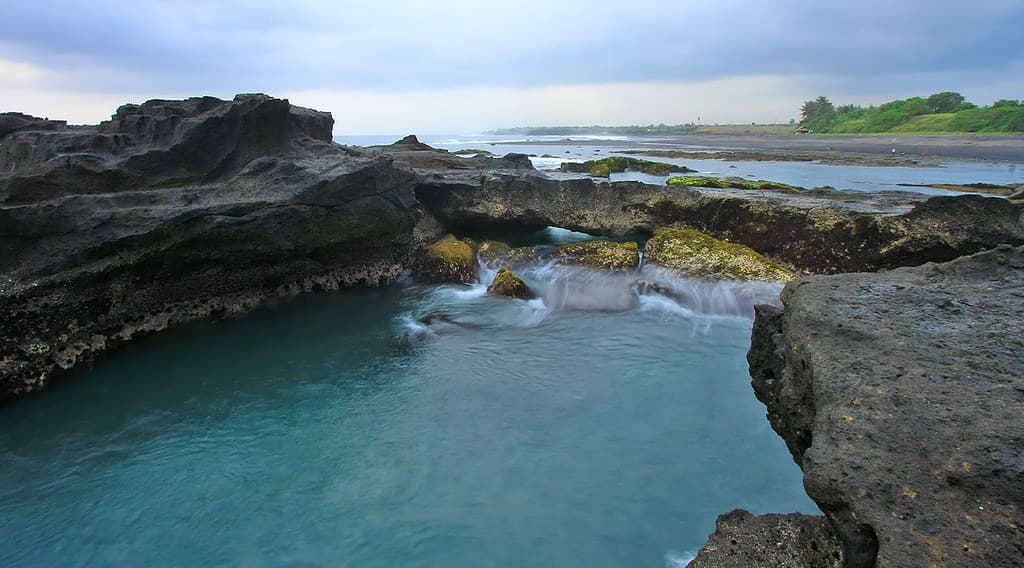 Credit: Flickr
Mengening Beach on Bali's southwest coast
The waves roll in with metronomic patience, each set building shoulder-high before crumbling into froth that chases squealing children up the slope. By late afternoon the light turns amber, softening the concrete skyline behind you—budget guesthouses and glass-walled clubs stacked like mismatched Lego. You'll find a stool at a beachfront warung, order a Bintang sweating condensation, and watch the sun drop into the horizon as silhouettes paddle out for one last ride.
Kuta earned its reputation not through exclusivity but accessibility. Anyone can walk here, rent a board for the price of lunch, and feel the pull of Bali's original surf break. The sand may bear footprints by the thousand, but every evening the tide erases them, and every morning the ritual begins again.


