
The beach spreads wide and dark beneath the Shakotan Peninsula's western shadow, a sweep of volcanic sand that absorbs heat in summer and turns slate-grey under winter storm light. You'll find the break busy most mornings—Sapporo's surf crowd makes the forty-minute drive before work, paddling out in five-millimeter rubber as steam rises from their breath. The waves here build from northwest swells, peeling left and right off sandbars that shift with typhoon season and winter gales.
“Japan's northernmost serious surf break delivers year-round swell in water cold enough to demand Arctic-grade neoprene.”
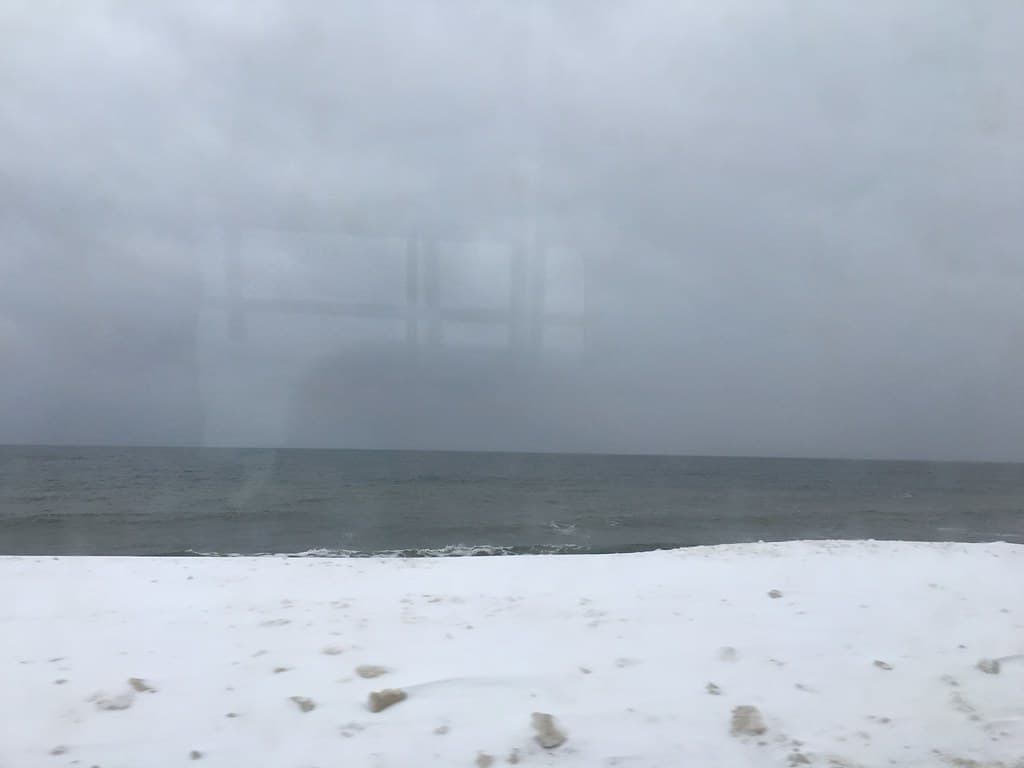 Credit: Flickr
Sea of Japan
Between sets, you can watch fishing boats chug toward Otaru's harbour while the Tenguyama ropeway glints on the hillside. The beach lacks the postcard charm of Okinawa's coral strands; instead, it offers something rarer in Japan—consistent surf within reach of a proper city. Locals pack onigiri and thermoses, settling on driftwood logs to watch their friends take off on shoulder-high walls that fold fast and punchy.
When the swell drops, the shore becomes a testing ground for new boards and a training spot for Hokkaido's small but dedicated surf community. You'll park along the coast road where vending machines dispense hot corn soup in cans, peel out of neoprene beside salarymen doing the same, and drive back through Otaru's narrow streets smelling of grilled atka mackerel. The beach doesn't ask you to relax—it asks you to earn your session.


