
Counting the waves…
Counting the waves…
A refined fusion of water purity, environmental stability, and communal vibrancy for Rausu Coast Beach.
View MethodologyAnalyzed via live sensors and environmental data.
Wave height, wind, and atmospheric stability.
Live footfall and crowd balance metrics.
Community reviews and curated sentiment.
“You'll find Rausu Coast Beach where the road clings to cliffs and the Shiretoko Peninsula's raw geography refuses to soften. Waves crash against basalt boulders while eagles circle overhead, and in winter, pack ice…”
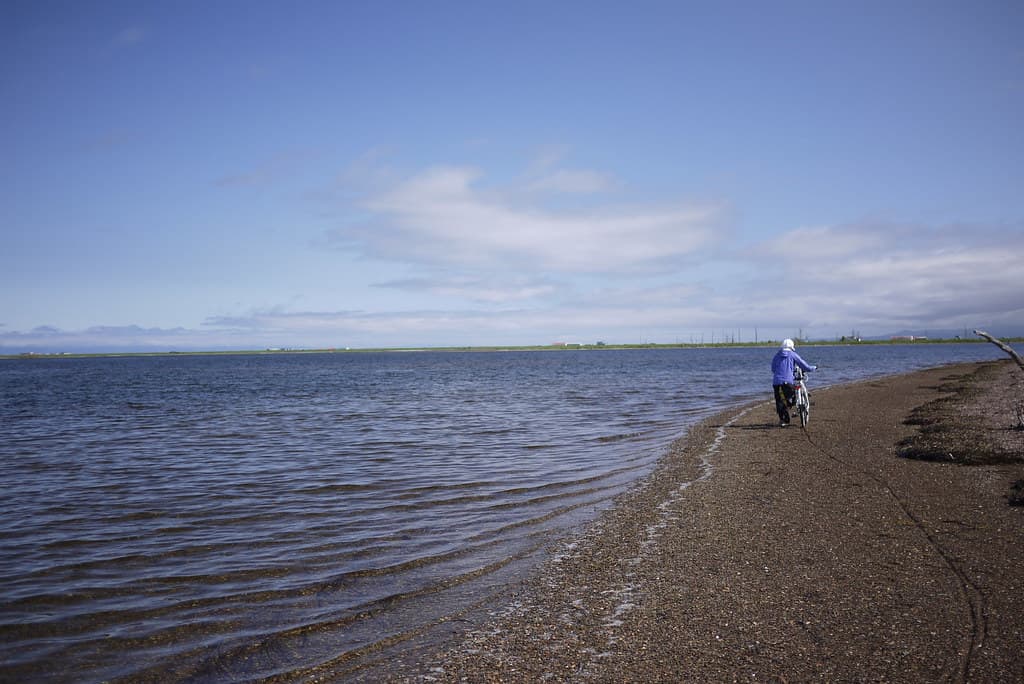
Limited recent visitor reports — live OBI telemetry is your best guide for current conditions.
The Rausu Coast unfolds along Route 87, a narrow ribbon of asphalt pressed between the Shiretoko Mountains and the grey-green expanse of the Sea of Okhotsk. You'll pull over at gravel turnouts where the shoreline staggers down in layers of dark volcanic rock, kelp clinging to tidal pools that smell of brine and cold. This is not a beach for laying towels—jagged stones replace sand, and the water temperature rarely climbs above frigid even in August. What draws you here is the unfiltered wildness: Steller's sea eagles perch on driftwood logs thicker than telephone poles, and when fog rolls in, the boundary between sea and sky dissolves into something ancient.
Winter transforms the coast entirely. From January through March, ryuhyo—drift ice broken from the Amur River delta—presses against Rausu in geometric chunks that groan and crack with the tide. You can walk to the ice edge, close enough to hear it breathe. The town behind you, a fishing village that smells perpetually of kombu seaweed, feels like the edge of the inhabited world.
Crystal lagoon with rocky outcrop
White cliffs over a desert beach
January to March ice floes
Volcanic cliffs and tide pools
Highest-grade kelp in Japan
Where it is
Rausu Coast Beach
Shari, Hokkaido, Japan
44.150500°, 145.265300°
Weather
Loading…
Swell
—
Temp
Warm · Restorative
UV Index
Moderate
Wind
—
Tidal State
Last known
Max Sunlight
—
Ideal Shade
—
May - Sep (Peak)
Jan - Dec (Off-season)
Historical data suggests peak visibility and stable sea temperatures occur during the prime visitation window.
Select a category to load nearby places.
Unlock restaurants, luxury stays and curated maritime experiences within 2km
Rausu Coast Beach is not recommended for swimming. The waters along this rugged Hokkaido coastline are cold year-round, with strong currents and unpredictable conditions typical of the Sea of Okhotsk. The beach is primarily known for its dramatic scenery and wildlife viewing rather than recreational swimming. The area experiences harsh weather, especially in winter when drift ice appears offshore. Visitors should admire the coastline from the shore and exercise caution near the water's edge, as waves can be powerful and the rocky terrain can be slippery.
While accessible year-round, the best time depends on your interests. Summer (June-August) offers the mildest weather for exploring the rugged coastline and spotting wildlife like whales and seabirds. Winter (January-March) attracts visitors hoping to see drift ice from the Sea of Okhotsk, though conditions are extremely cold. Spring and autumn provide fewer crowds and dramatic skies. The Shiretoko Peninsula area experiences significant seasonal variation, so dress appropriately. Wildlife enthusiasts may prefer summer, while photographers often favor the stark beauty of winter's ice-covered shores.
Rausu Coast Beach is located on the eastern side of the Shiretoko Peninsula in northeastern Hokkaido. The nearest town is Rausu, accessible by car from Shari or Utoro. Rental cars are recommended as public transportation is limited in this remote area. The drive from Sapporo takes approximately 6-7 hours. Parking availability varies depending on the specific coastal access point you choose, with some informal pull-offs along the coastal roads. The route can be challenging in winter due to snow and ice, so check road conditions before traveling.
The town of Rausu offers several accommodations including ryokans, minshukus (family-run guesthouses), and small hotels, many featuring local seafood in their meals. Rausu is famous for its kombu (kelp) and fresh seafood, particularly uni (sea urchin). You'll find local restaurants serving regional specialties, though options are limited compared to larger cities. Some coastal areas are quite remote with minimal facilities, so it's wise to arrange accommodation in Rausu town and bring water and snacks when exploring the coastline. The nearby Shiretoko region has additional lodging options.
Yes, Rausu Coast is exceptional for wildlife viewing. The area is part of the Shiretoko Peninsula, a UNESCO World Heritage site known for rich marine biodiversity. Visitors can spot orcas, sperm whales, and other cetaceans offshore, particularly during summer months. The coastline attracts numerous seabirds, and Steller's sea eagles and white-tailed eagles are common, especially in winter. Brown bears inhabit the region, so maintain awareness on coastal trails. Wildlife watching boat tours operate from Rausu harbor, offering closer encounters with marine life while respecting natural habitats.
Photos