
Counting the waves…
Counting the waves…
A refined fusion of water purity, environmental stability, and communal vibrancy for Funaki Beach.
View MethodologyAnalyzed via live sensors and environmental data.
Wave height, wind, and atmospheric stability.
Live footfall and crowd balance metrics.
Community reviews and curated sentiment.
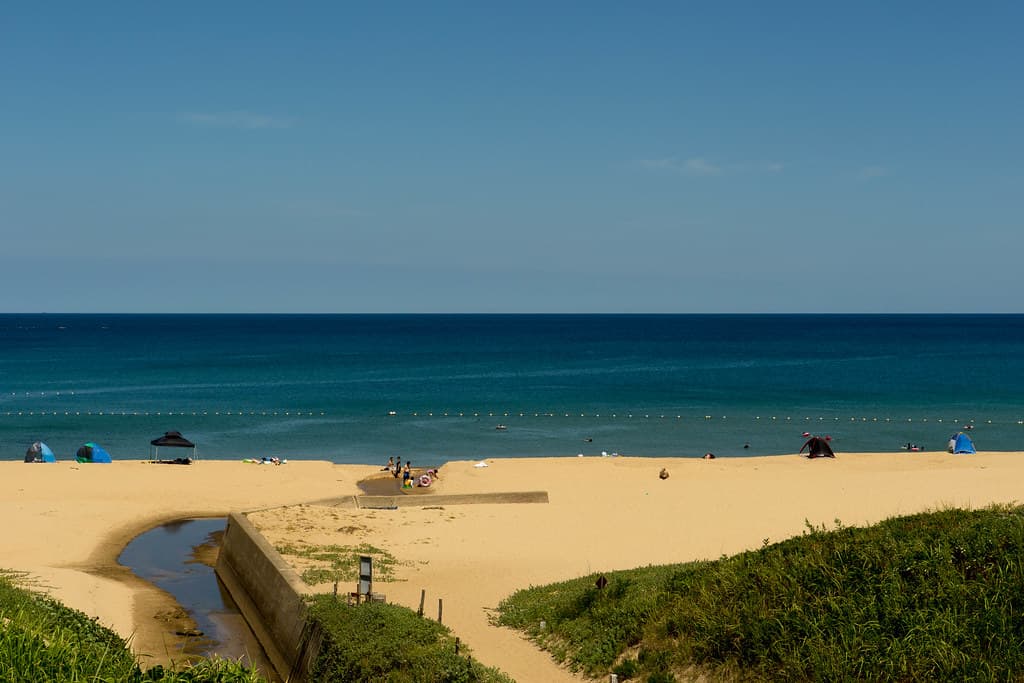
“You'll find no banners or rental umbrellas here—just a narrow band of sand cupped between forested hills and the Sea of Japan. The sort of place where the loudest sound is wavelets lapping pebbles.”
Limited recent visitor reports — live OBI telemetry is your best guide for current conditions.
The drive north from Kyoto city winds through rice terraces and fishing hamlets before depositing you at a beach barely wide enough for two dozen families. Pine trees lean over the sand, their roots exposed by winter storms, and the seafloor slopes gently—ideal for children who wade knee-deep while parents spread picnic blankets on sun-warmed sand.
Mid-morning light turns the water a murky jade, nothing like the turquoise of tropical postcards, but honest in its opacity. Fishing boats chug past the headland, trailing the smell of diesel and seaweed. By afternoon, elderly couples arrive with folding chairs and thermoses, settling in the shade to watch grandchildren collect shells worn smooth as river stones.
Long-tail boats moored in clear water
Crystal lagoon with rocky outcrop
Calm, gradual entry for kids
Natural canopy, soft needles underfoot
Forested cliffs meet open sea
Prime Visitation
Less Crowds
Where it is
Funaki Beach
Kyotango, Kyoto Prefecture, Japan
35.647300°, 134.996500°
Weather
Loading…
Swell
—
Temp
Warm · Restorative
UV Index
Moderate
Wind
—
Tidal State
Last known
Max Sunlight
—
Ideal Shade
—
May - Sep (Peak)
Jan - Dec (Off-season)
Historical data suggests peak visibility and stable sea temperatures occur during the prime visitation window.
Select a category to load nearby places.
Unlock restaurants, luxury stays and curated maritime experiences within 2km
Funaki Beach is a small, peaceful sandy beach particularly suited for families seeking a quiet atmosphere. Its smaller size and hidden nature typically mean calmer conditions than larger, more exposed beaches. Swimming is generally safe during summer months in designated areas, though facilities and lifeguard presence may be limited compared to major beaches. Always supervise children closely and check local conditions before swimming. The family-friendly tag suggests gentler waters, but standard ocean safety precautions apply. The peaceful environment makes it easier to keep track of children than at crowded beaches.
Funaki Beach is specifically noted for fewer crowds, making it appealing throughout the swimming season (July-August) when larger beaches become packed. Visiting on weekdays during summer provides the most peaceful experience. The shoulder seasons of June and September offer pleasant weather with minimal visitors, though water may be cooler. The beach's hidden nature means it rarely experiences heavy crowds even during peak summer weekends. Early mornings and late afternoons during summer provide the most serene atmosphere. Off-season visits offer complete solitude, though swimming won't be suitable and facilities will be closed.
Funaki Beach is a hidden beach in Kyotango on the Tango Peninsula, best accessed by car. From central Kyotango or major towns on the peninsula, follow local coastal roads—GPS navigation is recommended as signage to smaller beaches can be minimal. The beach's hidden classification suggests it may not be on main routes and could require navigating narrow local roads. Public transportation options are likely very limited or non-existent. Rental car is strongly advised for visiting this and other Tango Peninsula beaches. Allow extra time for navigation and confirm current access routes, as some coastal roads can be seasonal.
Funaki Beach's small, hidden nature means on-site facilities are likely minimal or absent. Bring food, drinks, and beach supplies with you. The wider Kyotango area offers various accommodations including ryokan, minshuku, and small hotels, many featuring local seafood cuisine. Nearby coastal villages may have small restaurants or shops, though options will be limited compared to larger towns. This beach works well as a day trip from accommodation in central Kyotango or other peninsula towns. Pack a picnic to enjoy the peaceful setting, and plan to return to larger settlements for substantial meals and overnight stays.
Funaki Beach's greatest distinction is its combination of peaceful atmosphere, small size, and hidden location that keeps it off most tourist itineraries. Unlike popular Kyotango beaches that can become crowded in summer, Funaki maintains a tranquil, almost private feel. Its family-friendly nature suggests gentle conditions perfect for young children without the overwhelming crowds of major beaches. The sandy beach type provides comfortable conditions for typical beach activities. For travelers seeking authentic local beach experiences away from tourist infrastructure, Funaki represents the quiet charm of lesser-known Tango Peninsula coastal gems, ideal for families wanting relaxation over entertainment.
Photos