
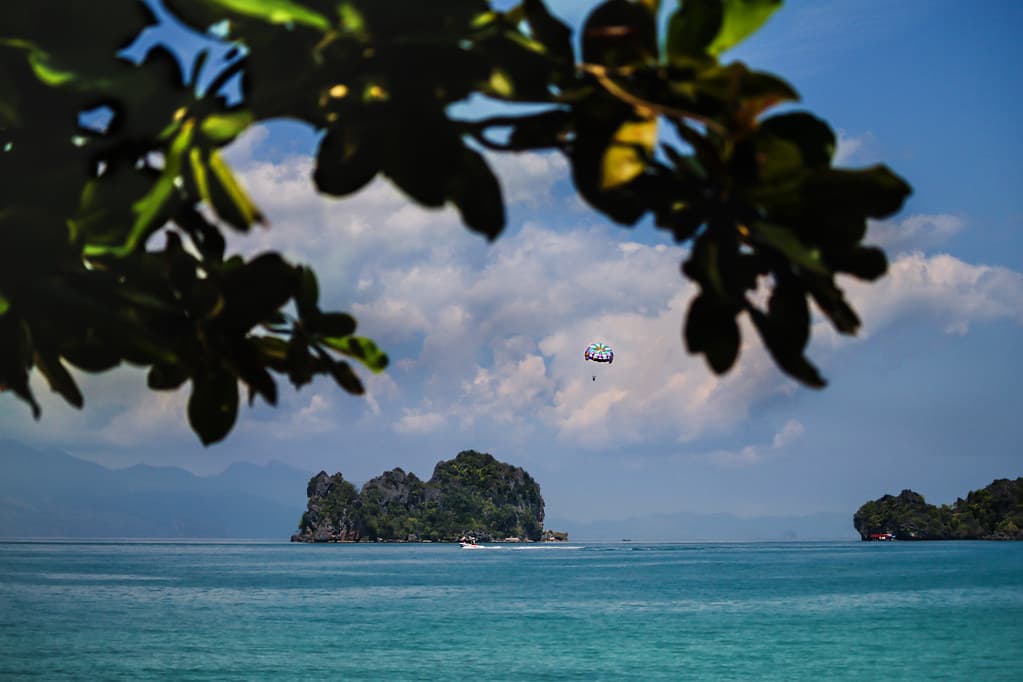
The sand at Tanjung Rhu compresses like cornstarch beneath your toes, so fine it squeaks with each step. This northeastern ribbon of Langkawi curves gently between jungle-clad headlands, facing a scatter of limestone islands that jut from the Andaman like broken teeth. At low tide, you can wade knee-deep toward these karst outcrops for what feels like a quarter-mile, the seabed firm and rippled, the water holding that particular cyan hue where tropical shallows meet white sand.
“The retreating tide exposes a vast wading platform toward limestone karsts, creating a walk-on-water illusion found nowhere else on Langkawi.”
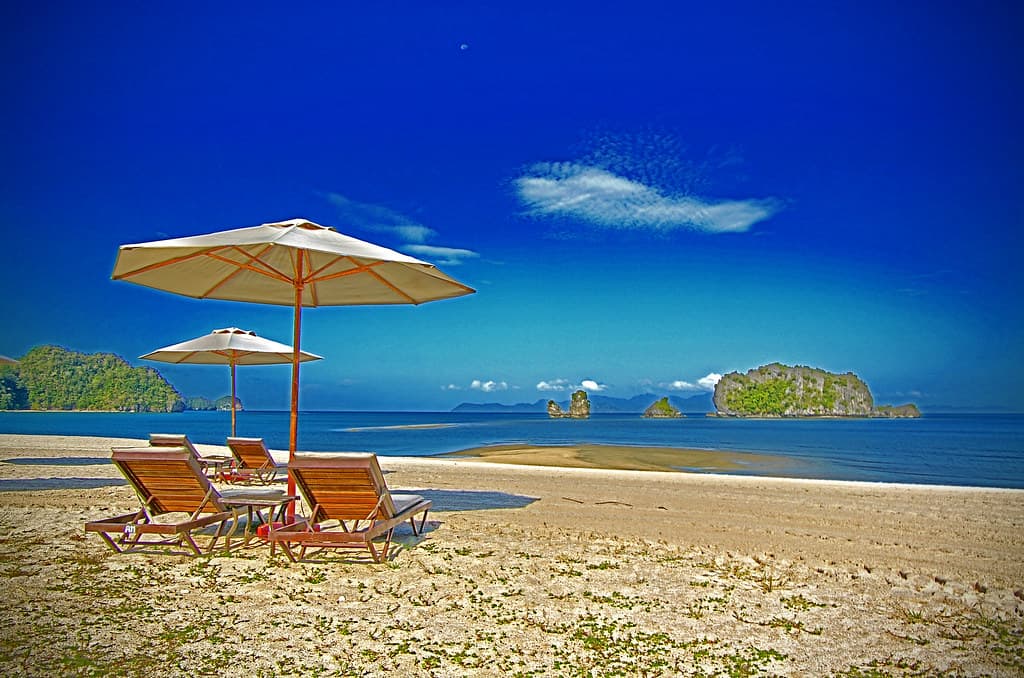 Credit: Flickr
The sun, sea, moon and a pair of parasol.....
Casuarina trees tilt landward along the upper beach, their needles carpeting the high-tide line and releasing a piney scent when crushed underfoot. Fishermen moor wooden boats in the bay's protected corners, and on weekday mornings you might share the entire strand with a handful of Malaysian families and the occasional monitor lizard crossing between treeline and dunes. The absence of jetskis and beach clubs feels deliberate here, preserved by distance from Pantai Cenang's hotel strip.
You'll find the light changes hourly—dawn brings rose-gold across the karsts, midday bleaches everything to near-white, and late afternoon casts the offshore islands in silhouette against bands of tangerine and violet. A narrow road through rubber plantations connects Tanjung Rhu to the rest of Langkawi, keeping foot traffic sparse even during school holidays. Bring water; the single resort restaurant closes between mealtimes, and shade thins past the casuarina fringe.


