Counting the waves…
Counting the waves…
A refined fusion of water purity, environmental stability, and communal vibrancy for Hicks Bay Beach.
View MethodologyAnalyzed via live sensors and environmental data.
Wave height, wind, and atmospheric stability.
Live footfall and crowd balance metrics.
Community reviews and curated sentiment.
“This is the beach at the edge—where State Highway 35 hugs the coast and breakers march in from the empty ocean between here and South America. Dark sand stretches north toward East Cape, backed by hills still scarred…”

Limited recent visitor reports — live OBI telemetry is your best guide for current conditions.
You're standing on the upper deck of New Zealand's geography here, where the country's easternmost roads cling to slopes above beaches that face nothing but open Pacific. Hicks Bay unfurls northward in a long, muscular arc of charcoal sand—volcanic grains that heat up fast under the January sun and stick to wet feet in a gritty crust. The waves roll in with the weight of fetch behind them, breaking in lines that march toward shore with mechanical regularity, their sound a constant low thunder audible from the road above.
The beach is wide at low tide, exposing a firm strand perfect for barefoot walking, scattered with pumice stones and the occasional Japanese float that's drifted across half the Pacific. At the southern end, a small stream cuts through the sand, its mouth shifting with each tide and storm. Driftwood accumulates in the upper beach—bleached macrocarpa logs from eroded coastal land, tangled with fishing net fragments and plastic flotsam that tells the story of ocean currents. Behind the beach, grassed slopes rise steeply, dotted with the occasional pine shelter belt and stock fences.
Sunset reflecting on wet sand
Person walking on a sand spit
Long dark sand stretches
Dramatic wave action captures
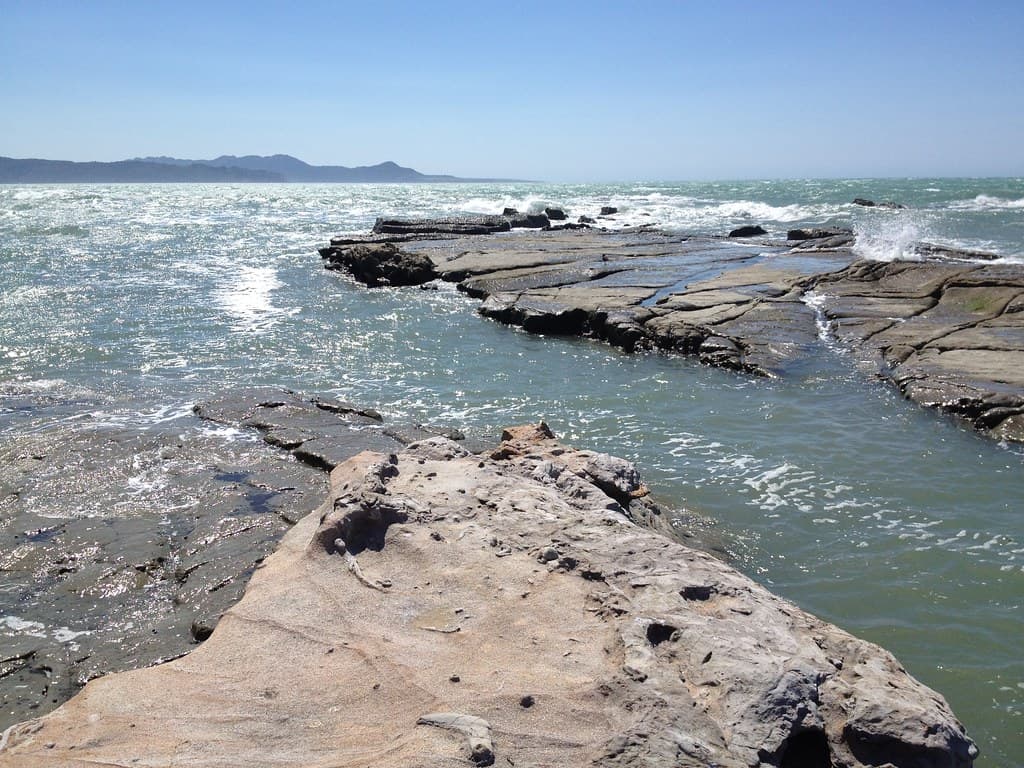
Rock platforms and tidelines
Prime Visitation
Best Weather|Budget Travel
Where it is
Hicks Bay Beach
Te Araroa, Gisborne / Tairāwhiti, New Zealand
-37.577900°, 178.300400°
Weather
Loading…
Swell
—
Temp
Warm · Restorative
UV Index
Moderate
Wind
—
Tidal State
Last known
Max Sunlight
—
Ideal Shade
—
Jan - Dec (Peak)
Mar - Nov (Off-season)
Best Weather|Budget Travel
Select a category to load nearby places.
Unlock restaurants, luxury stays and curated maritime experiences within 2km
Hicks Bay Beach is generally safe for swimming during calm summer conditions, particularly in the sheltered areas of the bay. However, it's an unpatrolled beach in a remote location, so swimmers should exercise caution and assess conditions before entering the water. The beach can experience variable currents and surf depending on weather and tides. Stay close to shore, swim during settled weather, avoid rough conditions, and never swim alone. Supervise children closely at all times. The broad, open nature of the beach means conditions can change, so local advice is valuable if available.
The best time to visit Hicks Bay Beach is during summer months (December-March) when weather is warmest and swimming conditions are most favorable. This period offers the best chance of calm seas and sunny days ideal for beach activities and sunbathing. The East Cape region experiences its driest weather in summer. Visiting during autumn (March-April) can provide pleasant conditions with fewer tourists at budget-friendly prices. The beach is scenic year-round, but winter brings cooler temperatures and more unpredictable weather. Consider visiting during the week rather than holidays for a quieter experience in this already-remote location.
Hicks Bay Beach is located on State Highway 35 near Te Araroa in the remote northern East Cape region, approximately 175 kilometers north of Gisborne. The drive takes around 2.5 to 3 hours through winding coastal roads with spectacular scenery. There's no public transport, so you need your own vehicle. The road is sealed but narrow and winding in sections, requiring careful driving. Ensure your vehicle is well-maintained and fueled, as services are limited on the East Cape. The journey itself is part of the experience, offering stunning coastal views throughout.
Hicks Bay has very limited facilities befitting its remote location. The Hicks Bay Motel Lodge offers accommodation and a restaurant/general store, providing basic meals and essential supplies. This is the main commercial facility in the immediate area. Additional accommodation includes holiday rentals and basic campgrounds. Te Araroa, a few kilometers away, has a general store and café. For greater choice, Gisborne is the nearest substantial town but hours away. Most visitors exploring the East Cape circuit plan to be self-sufficient with food and book accommodation well in advance, especially during summer holidays when options fill quickly.
Hicks Bay Beach is notable as one of the first places in the world to see each new day's sunrise, given its location on New Zealand's easternmost coast. The broad, sweeping bay offers classic East Cape scenery with a long sandy beach backed by rolling hills and pohutukawa trees. Its remoteness provides a peaceful, unspoiled atmosphere far from urban development. The beach serves as a gateway to the East Cape's northern region, including nearby East Cape Lighthouse and Te Araroa. The area's isolation, natural beauty, and cultural significance to local Māori communities make it a memorable destination for travelers seeking authentic coastal New Zealand.
Photos