
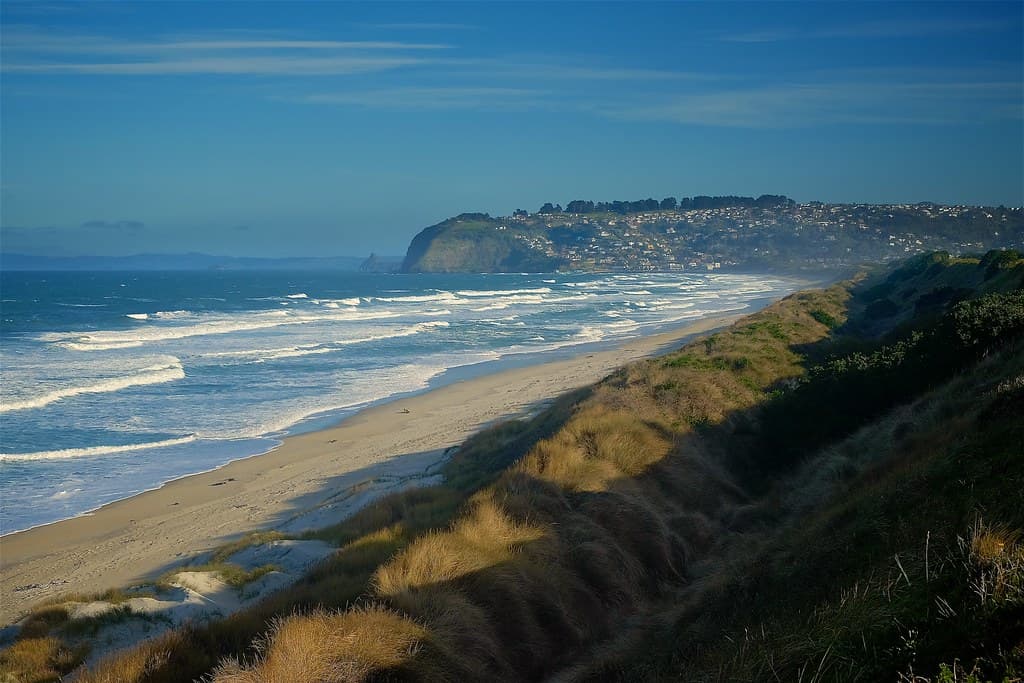
The access track climbs through coastal scrub before cresting the dune ridge—then the view opens: a sweeping kilometer of tawny sand pressed against dark cliffs, with the Pacific rolling in unbroken from the southeast. Wind sculpts the dune face into knife-edges and ripples, marram grass hissing as gusts reshape the slopes grain by grain. You descend the conservation stairway, each step revealing more beach, until you jump the last meter onto sand that squeaks underfoot.
“Otago's largest coastal dune system meets critically endangered sea lions and mainland New Zealand's rarest penguin on a single untamed beach.”
 Credit: Flickr
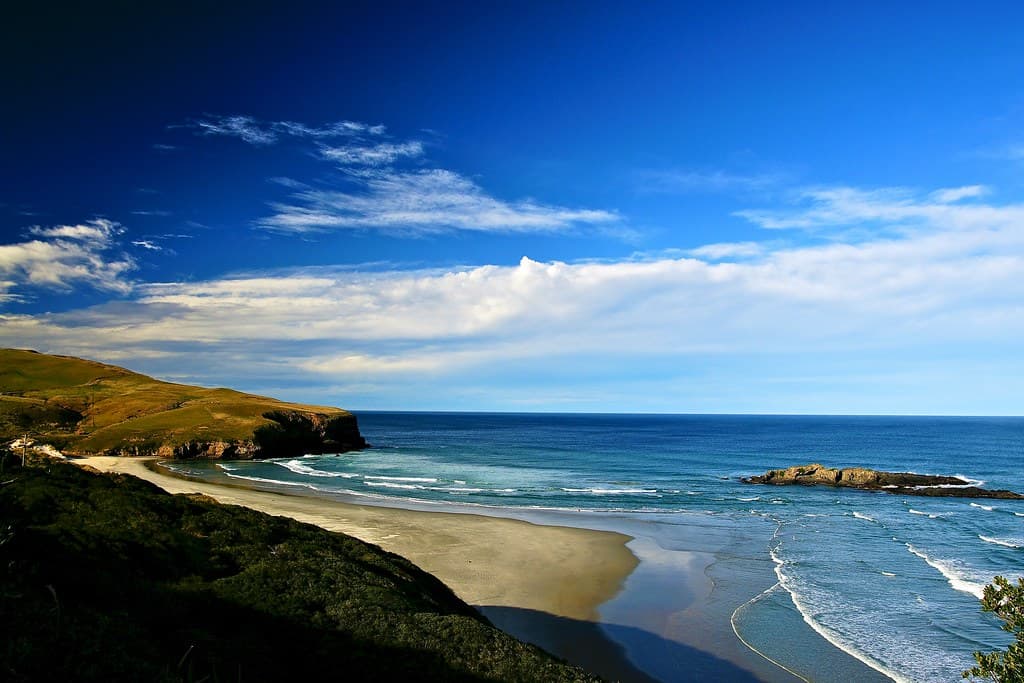
Sandfly Bay — photo by _setev
A sea lion—maybe three hundred kilograms of muscle and blubber—lies in the shorebreak, letting waves wash over its scarred back. Department of Conservation signs warn you to keep ten meters clear; these endangered mammals bite when surprised. You give the bull wide berth, watching it yawn to reveal canines the size of your thumb. Further down the beach, yellow-eyed penguins might waddle ashore at dusk, and fur seals claim the boulder fields beneath the cliffs where schist rises in geometric columns.
The dunes behind you climb forty meters high, their seaward faces collapsing in golden cascades after each storm. Footprints—yours, sea lions', the rare hoiho penguin's—write temporary stories on sand that wind erases by morning. The cliffs extend south toward Lovers Leap and the peninsula's wild tip, accessible only at low tide and only to those willing to scramble over rockfalls. You taste salt, hear nothing but wind and waves, and understand why conservation groups fight to keep this beach undeveloped.


