

The beach stretches for nearly two kilometers of dark sand that absorbs heat quickly under summer sun, making the dash across it to the water a test of foot toughness. Surf breaks along the entire length, with the most consistent peaks forming near the central patrol area where a subtle sandbar focuses incoming swell. The shore break can be punishing—heavy, hollow, and unforgiving of mistimed exits—but beyond the impact zone, the waves organize into workable walls that appeal to intermediate surfers willing to handle the paddle-out.
“A surf beach that has resisted gentrification and maintained its working-class holiday village character despite Peninsula-wide property pressure.”
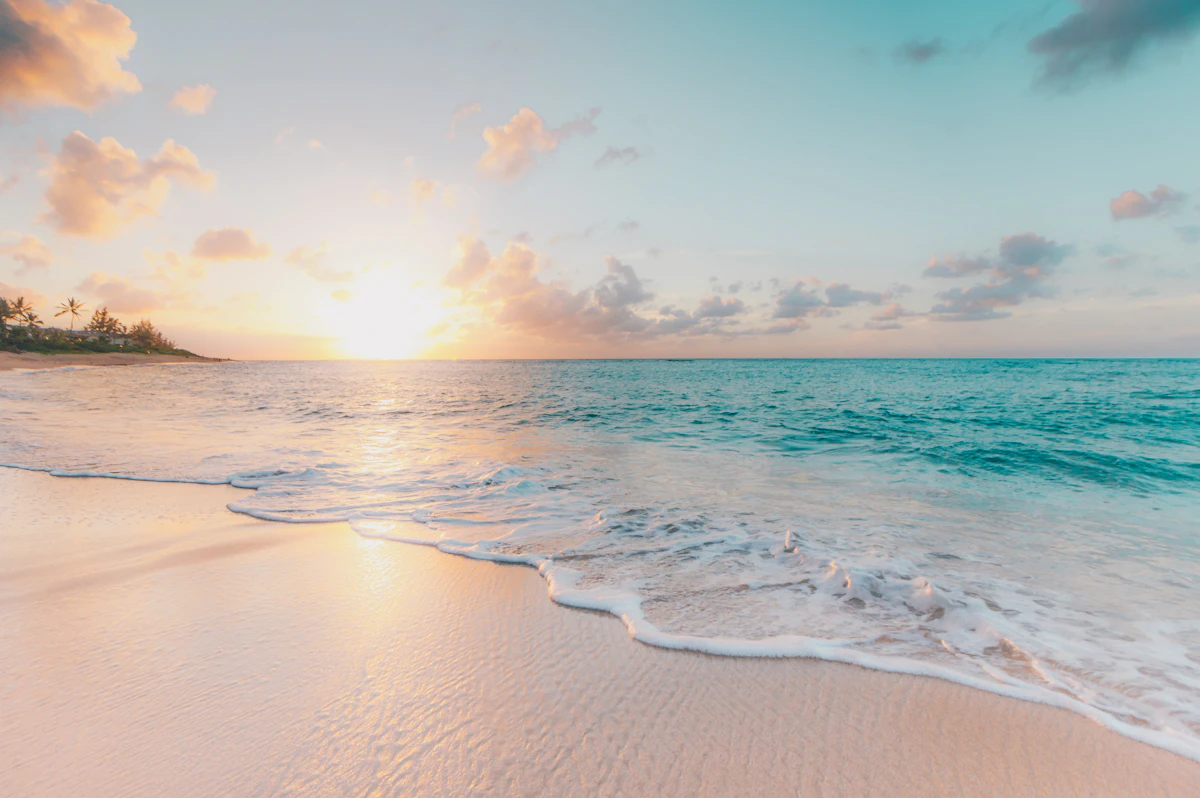 Credit: Unsplash
Aerial view of turquoise tropical bay
Water here tends murky, stirred by constant wave action and the fine sediment composition of the seabed. Don't expect tropical visibility; instead, you'll navigate by feel and timing, reading the water's surface texture to predict what's building behind you. The beach faces northwest into the Hauraki Gulf, catching swells that wrap around the Coromandel's bulk and refract through the channel between the mainland and offshore islands.
The village itself is purely functional: a surf club, fish-and-chip shop, small general store, and rows of holiday homes built to withstand salt air and the occasional king tide that pushes into the lower streets. There's no pretense here, no boutique galleries or artisan coffee roasters—just a beach community that fills completely in January and empties to skeletal occupancy by March, leaving only the permanent residents who prefer the quiet months.


