
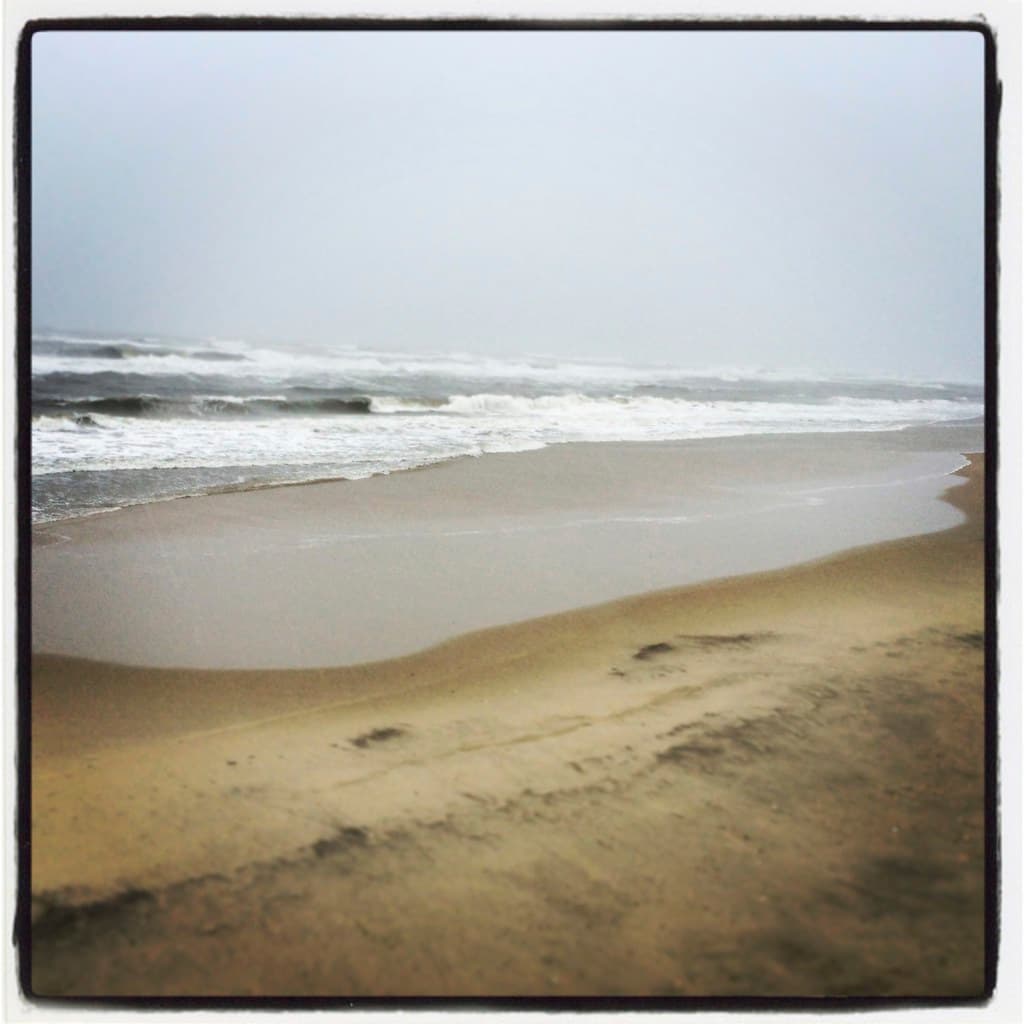
Frisco Beach sprawls along a seven-mile stretch of Cape Hatteras National Seashore where the Outer Banks narrows to a ribbon of sand barely wider than the highway. You park in sandy lots beside weathered split-rail fences, then walk over low dunes threaded with sea oats that hiss in the perpetual wind. The beach itself stretches wider than you expect, a broad apron of tan sand that darkens near the waterline, scattered with whelk shells, driftwood silvered by sun and salt, and the occasional rust-stained timber from some forgotten wreck.
“This is one of the few remaining undeveloped stretches of the Atlantic coast where you can still drive along the beach itself with a permit, fishing rod mounted, as islanders have for generations.”
 Credit: Flickr
Spring Rains at the Ocean
The water here churns with the collision of currents—the warm Gulf Stream brushing against cold Labrador flows—creating conditions that draw serious surfers and shore fishermen who plant rods in PVC holders and wait for drum and bluefish. In summer the ocean warms enough for swimming, though the undertow commands respect. Autumn brings the clearest light, when nor'easters sculpt the dunes and the beach empties to just you, the piping plovers, and the lighthouse visible to the north.
What Frisco lacks in amenities—no boardwalk, no chair rentals, no lifeguards—it repays in solitude and a shoreline that feels as raw as it did when Blackbeard prowled these waters. You bring what you need, pack out what you carry in, and earn your swim in an Atlantic that has never been tamed.


